
7-Day Self-Hypnosis Challenge For Sleep, Calm, And Better Habits
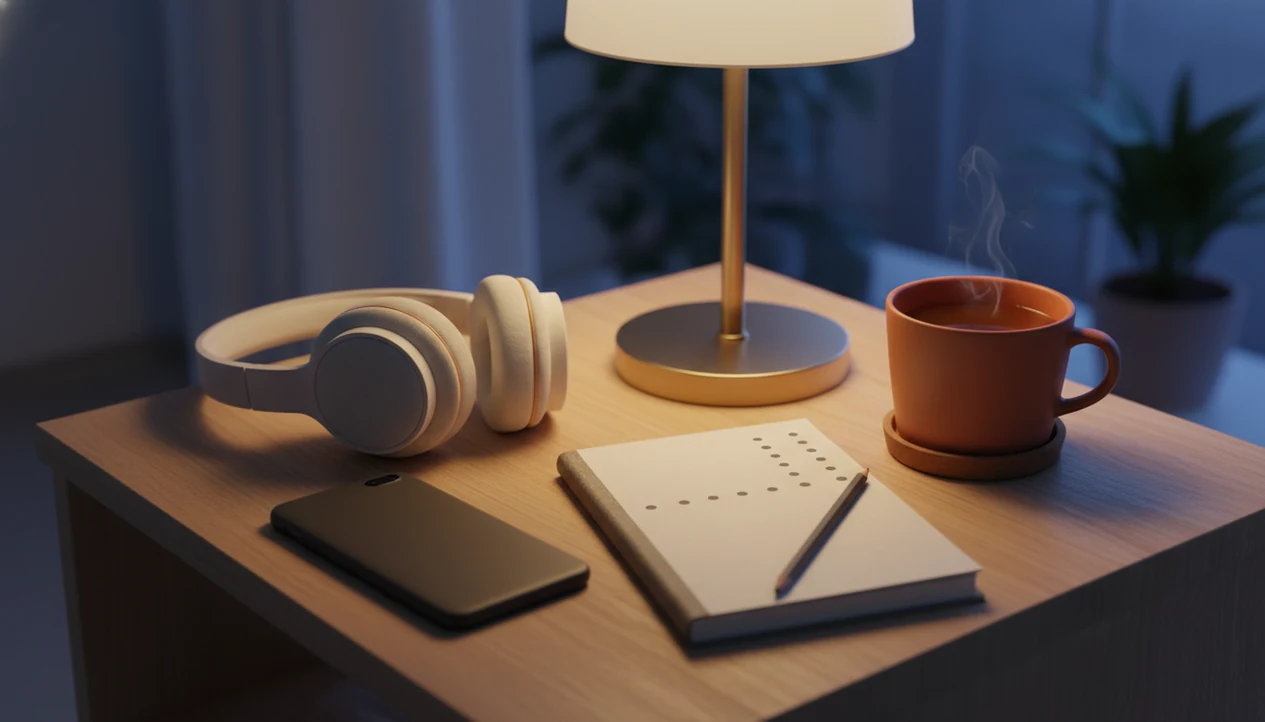
A 7-day self-hypnosis challenge is a beginner-friendly one-week routine where you practice short guided sessions, repeat realistic suggestions, and reflect on what changes each day. It works best when you choose one goal, practice at the same time daily, and treat the week as a starting point rather than a guaranteed fix.
> A self-hypnosis challenge is a structured practice plan that helps adults enter a relaxed, focused state and use repeated suggestions to support sleep, calm, or habit change.
TL;DR
- Pick one goal for the full week, such as better sleep, calmer evenings, or less procrastination.
- Use a simple daily hypnosis routine: quiet setting, body relaxation, focused attention, positive suggestions, and a clear return to alertness.
- Track a short reflection after every session so the challenge becomes a habit-building experiment, not just seven audio plays.
7-Day Self-Hypnosis Challenge At A Glance
A 7-day self-hypnosis challenge is seven short daily sessions where adults use self-hypnosis or guided audio to practice relaxation, focused attention, and one chosen suggestion. For beginners, 10 to 20 minutes is usually enough to repeat daily without turning the plan into another chore.
The point is consistency, not instant transformation. Pick one beginner goal: sleep wind-down, everyday calm, procrastination, confidence before an event, or one small habit like starting a walk after work. A phone face down on the nightstand often works better than scrolling through choices in bed.
Tools like HypnoApp can provide guided audio, reminders, and structured sessions, but the real practice is still yours. Good hypnosis and self-hypnosis mobile apps with guided meditation, sleep sessions, anxiety relief, and habit-building audio programs deliver structure and repetition, not guaranteed medical outcomes or overnight personality change.
Daily Hypnosis Routine Mechanism
Self-hypnosis is a self-induced state of relaxed, focused attention where you remain aware and use repeated suggestions to support a specific goal.
In practice, the sequence is plain. You settle the body, narrow attention, repeat a believable suggestion, then return to normal alertness. Many sessions include a narrator asking you to loosen your jaw and drop your shoulders. That moment is not magic. It is a relaxation cue, which means a signal your body can learn to associate with slowing down.
Repetition matters because it links a cue, a response, and a small next action. That is basic habit-loop work: the cue appears, you notice it, and you rehearse a better response. For sleep, the cue may be the pillow. For study, it may be opening the laptop. The full experience of what happens when you practice self-hypnosis is usually subtle.
Some adults respond strongly to hypnosis. Others notice only mild relaxation. Both can still use the week as low-pressure practice.
Beginner Hypnosis Plan Requirements Before Day 1
Before Day 1, set up the challenge so it is safe, repeatable, and specific. A beginner hypnosis plan works better when the decision-making is done before the first session.
- One goal: Choose sleep, calm, procrastination, confidence, or one small habit for the full week. Switching goals daily makes the notes hard to read.
- One time: Pick bedtime, after lunch, or after work. A closed office door at lunch can be enough if you have privacy.
- One safe place: Practice where you will not drive, multitask, cook, or operate machinery.
- One kit: Prepare headphones, a timer, a journal, and a guided hypnosis app if desired.
- One suggestion: Write it in your own words, such as “When I notice tension, I pause and breathe before I respond.”
Keep it ordinary. Earbuds, a chair, and three honest lines in a notebook are enough.
5 Steps To Use This 7-Day Self-Hypnosis Challenge
Use this challenge as a small daily experiment. Stop if the practice feels distressing, disorienting, or emotionally unsafe, and seek professional support when needed.
- Set one goal for the week and write a short suggestion you can believe.
- Choose a daily time, then use app reminders or a calendar alert so you do not rely on memory.
- Listen to a 10-to-20-minute guided audio session, or guide yourself through breathing and body relaxation.
- Repeat the same suggestion during the session and track your streak only as a consistency cue, not a scorecard.
- Review a quick mood check-in after each session and adjust the setting, volume, or timing if needed.
Short sessions win here. An offline session on a train seat may work for general relaxation, but only if you are not responsible for anything that needs full attention.
Day-By-Day Self-Hypnosis Challenge Schedule
Follow the same goal all week, but change the skill focus each day. That keeps the challenge fresh without scattering your attention.
Days 1-2: Relaxation Foundation
Day 1: Define your goal and learn a simple breathing induction. Try four slow breaths, then count down from five while relaxing your face, shoulders, and hands.
Day 2: Add progressive muscle relaxation. Gently tense and release one muscle group at a time, then notice the difference between effort and release.
Days 3-5: Goal Suggestions
Day 3: Practice one focused suggestion for your chosen goal. Keep the wording present-tense and believable.
Day 4: Rehearse a real-life cue, such as bedtime, a craving moment, or opening an exam timetable taped above a laptop.
Day 5: Add sensory detail. Picture the room, the sound, the posture, and the first small action.
Days 6-7: Reset And Review
Day 6: Handle resistance or distraction with a reset phrase, such as “notice and return.”
Day 7: Review your notes and decide whether to repeat, extend, or change the plan.
Self-Hypnosis Suggestions For Sleep, Calm, And Habits
Self-hypnosis suggestions should be positive, present-tense, believable, and specific. Avoid absolute promises like “I end all anxiety forever” or “I instantly change a lifelong habit.”
- Sleep suggestions: “I release the day one breath at a time.” “When my mind wanders, I return to breathing.” “My body knows how to ease into rest.”
- Calm suggestions: “I pause before responding.” “My shoulders soften as I breathe out.” “I can slow the next moment down.”
- Habit suggestions: “When I notice the cue, I choose the next small action.” “A lapse is a signal to restart, not quit.”
- Confidence suggestions: “I speak one sentence at a time.” “I can feel nervous and still begin.”
For sleep goals, the most common medically supported way to improve a bedtime routine is steady sleep hygiene combined with relaxation practice. A dimmed screen beside chamomile tea may help the cue feel familiar, but the suggestion still needs repetition.
Daily Hypnosis Routine Reflection Journal
A reflection journal turns a daily hypnosis routine into a learning loop. It helps you track triggers, emotions, small wins, and the conditions that make practice easier.
Use a three-minute format after every session:
- Before mood: one word or a 1-to-10 rating.
- Session note: what audio, induction, or suggestion you used.
- After mood: one word or a second rating.
- Next adjustment: change the time, location, volume, or wording.
Match the tracking to your goal. Sleep users can note sleep quality and bedtime resistance. Calm users can track tension level. Habit users can track urge strength, completion streak, or the first action taken. App mood check-ins and reminders can support consistency, especially when the day gets crowded.
No scolding. The journal is for pattern recognition, not self-criticism. For longer timelines, self-hypnosis benefits after 30 days are easier to judge than changes after one week.
Evidence Behind A Beginner Hypnosis Plan
Research on hypnosis is supportive for some outcomes, but a seven-day challenge is shorter than most studied programs. Treat this plan as a practical starting experiment, not proof of treatment success.
- A meta-analysis of randomized trials on hypnosis for medical procedures found a medium effect versus control conditions, with Cohen’s d = 0.67: https://pubmed.ncbi.nlm.nih.gov/18569185/.
- The NIH’s National Center for Complementary and Integrative Health describes hypnosis as a mind-body practice with evidence strongest for selected uses such as pain, anxiety, and procedure-related symptoms, not as a guaranteed treatment: https://www.nccih.nih.gov/health/hypnosis.
- A randomized self-hypnosis stress-management study in medical students reported a 33% reduction in perceived stress scores after an 8-week program.
- Most research programs use repeated practice over several weeks, not just seven days.
- Hypnosis outcomes vary by goal, setting, suggestion quality, and individual responsiveness.
Clinicians typically recommend using self-hypnosis alongside professional care when symptoms are severe, persistent, or impair daily functioning. For many adults, a beginner plan is often easier than an open-ended routine because it has a clear finish line.
Common Self-Hypnosis Challenge Mistakes
Common self-hypnosis challenge mistakes usually come from expecting too much, changing too much, or practicing in the wrong situation. The fix is to make the week narrower and safer.
Trying to fix sleep, anxiety, exercise, food choices, and confidence in one week creates noise. Pick one. Another mistake is waiting to feel unconscious, asleep, or dramatically altered. A skeptical beginner may ask, “Am I supposed to feel hypnotized?” Often, the answer is no. Subtle focus still counts.
Vague suggestions also weaken the plan. “I am better at everything” gives the mind little to rehearse. Skipping reflection creates another problem because you cannot tell what helped.
Never practice while driving, operating machinery, or doing anything that needs full attention. Self-hypnosis is also not a substitute for professional help with severe anxiety, trauma symptoms, addiction, psychosis, depression, or self-harm risk.
7-Day Self-Hypnosis Challenge Completion Check
Did the 7-day self-hypnosis challenge help? Compare your Day 1 and Day 7 notes without expecting perfection, dramatic trance, or a completely changed habit.
Review five signals: completion rate, mood shifts, sleep patterns, habit cues, and ease of entering relaxation. Maybe your shoulders dropped faster by Day 5. Maybe your session ended too loudly and irritated you. That counts as useful data because it tells you what to change.
From here, choose one of three next steps. Repeat the same week if the structure worked. Extend to 21 or 30 days if the goal still matters. Change the goal only if your notes show the first target was too broad or not relevant.
Keep the same suggestion if it is helping. Constantly rewriting it can break the rehearsal effect. If symptoms are severe, persistent, or impairing, use self-hypnosis alongside professional care rather than as your only support.
Limitations
A one-week self hypnosis challenge has real limits. It can introduce a practice, but it cannot promise deep change in seven days.
- A week is usually too short to retrain deep habits, trauma responses, or long-standing beliefs.
- Not everyone responds strongly to hypnosis; research suggests about 10-15% of adults are highly hypnotizable, about 20% are low, and many fall in the middle. For background on variability in hypnotic responsiveness, see Stanford Medicine’s summary of high and low hypnotizability estimates: https://med.stanford.edu/news/all-news/2012/10/stanford-study-identifies-brain-areas-altered-during-hypnotic-trances.html.
- Self-hypnosis apps are adjuncts, not substitutes for medical or psychological care.
- People with untreated PTSD, psychosis, severe depression, self-harm risk, or addiction should seek professional guidance before using hypnosis audio.
- Do not listen while driving, operating machinery, supervising children near hazards, or doing anything requiring full attention.
- Evidence is stronger for some outcomes than for rapid weight loss, manifestation, or instant personality change.
- Unrealistic suggestions can create disappointment, resistance, or a feeling that you “failed” the practice.
Apps such as HypnoApp, Calm, Headspace, and Reveri can help with structure, but they cannot decide what is clinically safe for your situation.
FAQ
Does self-hypnosis really work?
Self-hypnosis has mixed but supportive evidence for some outcomes, including relaxation, pain coping, stress, and habit support. Results vary by person, goal, suggestion quality, and practice consistency.
Is self-hypnosis dangerous?
Self-hypnosis is generally low risk for many adults when used in a safe setting. Do not use it while driving, and do not treat it as a replacement for medical or psychological care.
Can beginners do self-hypnosis?
Yes, beginners can start with short guided sessions, simple breathing, body relaxation, and realistic suggestions. Guided audio tools can provide structure if self-guiding feels awkward.
How long should self-hypnosis sessions last?
For a beginner challenge, self-hypnosis sessions usually work best at about 10 to 20 minutes. The session should be short enough to repeat daily.
What should I focus on during self-hypnosis?
Focus on one clear goal for the week, such as sleep, calm, procrastination, or one small habit. Avoid changing the target every day.
Can hypnosis help with sleep?
Hypnosis may support sleep by pairing relaxation, focused attention, and bedtime suggestions with a consistent wind-down routine. It should not be presented as a cure for insomnia or medical sleep disorders.
Do hypnosis apps work?
Hypnosis apps can support structure, reminders, tracking, and guided audio sessions. Outcomes still vary, and HypnoApp should be used with reasonable expectations.
What if I feel nothing during self-hypnosis?
Feeling nothing dramatic is common. Many people notice only subtle relaxation, quieter attention, or easier breathing during early practice.
Should I continue self-hypnosis after seven days?
Review your journal before deciding. You can repeat the week, extend the practice to 21 or 30 days, or adjust the goal if your notes show a better target.