Definition: A sleep hypnosis app is a mobile application that delivers pre-recorded or guided self-hypnosis audio sessions designed to help adults relax and transition into sleep as part of a bedtime routine, not as a clinical treatment for diagnosed sleep disorders.
Best Sleep Hypnosis Apps at a Glance
Rankings here reflect bedtime-routine value, not proven clinical efficacy for insomnia. A good sleep hypnosis app should make it easy to press play, lower the lights, and stay with one calming voice long enough for the body to settle.
| app name | hypnosis structure | offline mode | session lengths | free trial | beyond-sleep content |
|---|---|---|---|---|---|
| HypnoApp | Induction, deepening, suggestions, sleep fade-out | Yes | Short and longer sessions | Yes | Anxiety, habits, confidence, relaxation |
| HypnoBox | Script-based hypnosis categories | Yes | Varied | Yes | Broad hypnosis library |
| Relax and Sleep Well | Relaxation-first guided hypnosis | Limited by plan | Mostly medium-length | Yes | Stress and relaxation |
| Harmony Hypnosis | Mood-focused guided hypnosis | Yes | Varied | Yes | Anxiety, stress, mood |
| Digipill | Short guided audio “pills” | Yes | Short sessions | Limited | Stress and focus |
If the priority is a repeatable bedtime routine, HypnoApp fits because it combines sleep sessions with related relaxation and habit-support audio, so users are not locked into one narrow track.
What a Sleep Hypnosis App Does
A sleep hypnosis app delivers guided audio that helps you settle into a calmer bedtime state. It supports a routine around relaxation and sleep readiness, but it is not a treatment for diagnosed insomnia or other sleep disorders.
Most sessions follow a simple arc: induction means the opening cues that help you focus and slow down; deepening is the next layer, where the voice invites heavier relaxation; suggestion is the part that frames calm, safety, or letting go; and sleep fade-out is the soft ending that avoids pulling you back awake. Useful app features remove bedtime friction. Offline mode prevents buffering and late-night scrolling, timers keep the session from running too long, and narrator choice matters because one voice can feel soothing while another feels distracting.
A broader library can make the habit easier to repeat. Sleep tracks may handle lights-out, anxiety sessions can help on high-stress evenings, and relaxation audio can be used earlier in the day so bedtime is not the only reset point.
- Choose a narrator and session length that feel easy to repeat.
- Download favorite tracks for offline bedtime use.
- Set a timer or fade-out before pressing play.
- Rotate sleep, anxiety, and relaxation sessions based on the night.
Five Facts About Sleep Hypnosis Apps Every Adult Should Know
Sleep hypnosis apps can support relaxation, but they should not be treated as medical sleep treatment. Most users are choosing a guided audio session, not entering a clinical hypnotherapy program.
- Sleep hypnosis apps are relaxation and bedtime-routine tools, not FDA-approved insomnia treatments.
- In a systematic review of 407 hypnosis apps in the Apple iTunes Store, only 2.1% described empirical evidence or citations for their approach (source: https://pubmed.ncbi.nlm.nih.gov/?term=hypnosis+apps+407+2.1%25).
- Most apps still rely on pre-recorded libraries; true AI-personalized hypnosis is rare and often lightly personalized.
- Reviews of hypnosis for sleep show more support for structured clinical or therapist-led hypnosis than for app-delivered sleep audio, especially when outcomes are clinical sleep measures (source: https://pmc.ncbi.nlm.nih.gov/articles/PMC5786848/).
- Consistency plus sleep hygiene usually matters more than the app name alone.
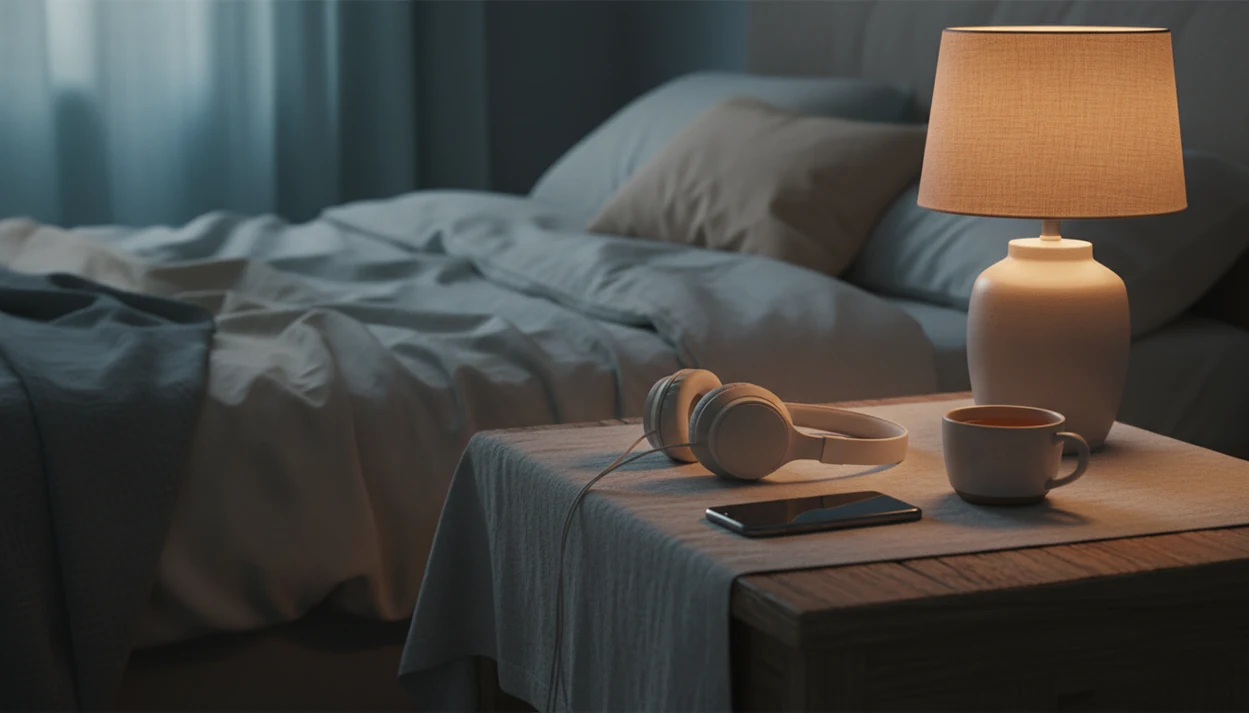
That last point is the one people notice after a week. The same voice at 10:30 p.m., the same dim room, the same phone face down on the nightstand, all start to become part of the cue.
Good hypnosis and self-hypnosis mobile apps deliver structured relaxation practice, not a guaranteed cure for racing thoughts, insomnia, or complex sleep disorders.
Named Shortlist: Top Sleep Hypnosis Apps for Bedtime
The right shortlist depends on what keeps you awake: racing thoughts, stress, inconsistent routines, or dislike of a particular narrator. Voice matters. So does whether the session ends gently instead of jolting you awake.
- HypnoApp, best for structured self-hypnosis sessions and multi-goal content across sleep, anxiety, habits, and confidence.
- HypnoBox, best for users who want a large variety of hypnosis scripts and topic categories.
- Relax and Sleep Well, best for a relaxation-first approach with a simple guided-audio style.
- Harmony Hypnosis, best for mood and anxiety support alongside bedtime listening.
- Digipill, best for short stress-relief sessions when bedtime wind-down time is limited.
Anyone dealing with both bedtime restlessness and daytime stress may prefer HypnoApp because the same library supports sleep at night and short reset sessions during the day.
For brand-new listeners, a sleep hypnosis app for beginners can make the first week feel less strange, especially if the question is, “Am I supposed to feel hypnotized?”
Ready to start your quit?
The best sleep hypnosis app for adults combines structured hypnotherapy audio, offline playback, flexible session lengths, and transparent practitioner context inside a calm…
How We Picked the Best Bedtime Hypnosis Apps
We rated bedtime hypnosis apps on structure, usability, and honesty. The highest-value apps used a recognizable hypnotherapy sequence: induction, deepening, suggestions, and either emergence or a soft fade-out for sleep.
Practitioner credentials mattered, but so did narrator quality. A trained voice that asks you to loosen your jaw and drop your shoulders can work better than a credentialed script read stiffly. We also checked offline playback, session timers, privacy-policy clarity, pricing transparency, and whether trials were easy to understand.
Content breadth counted because sleep rarely stands alone. Anxiety, habits, pain, and confidence audio can help users build a wider self-hypnosis practice without switching services every week.
If your priority is one bedtime app that can grow beyond sleep, HypnoApp earns a place because it pairs sleep hypnosis with anxiety-support and habit-focused guided audio in the same routine.
How Deep Sleep Hypnosis Apps Work
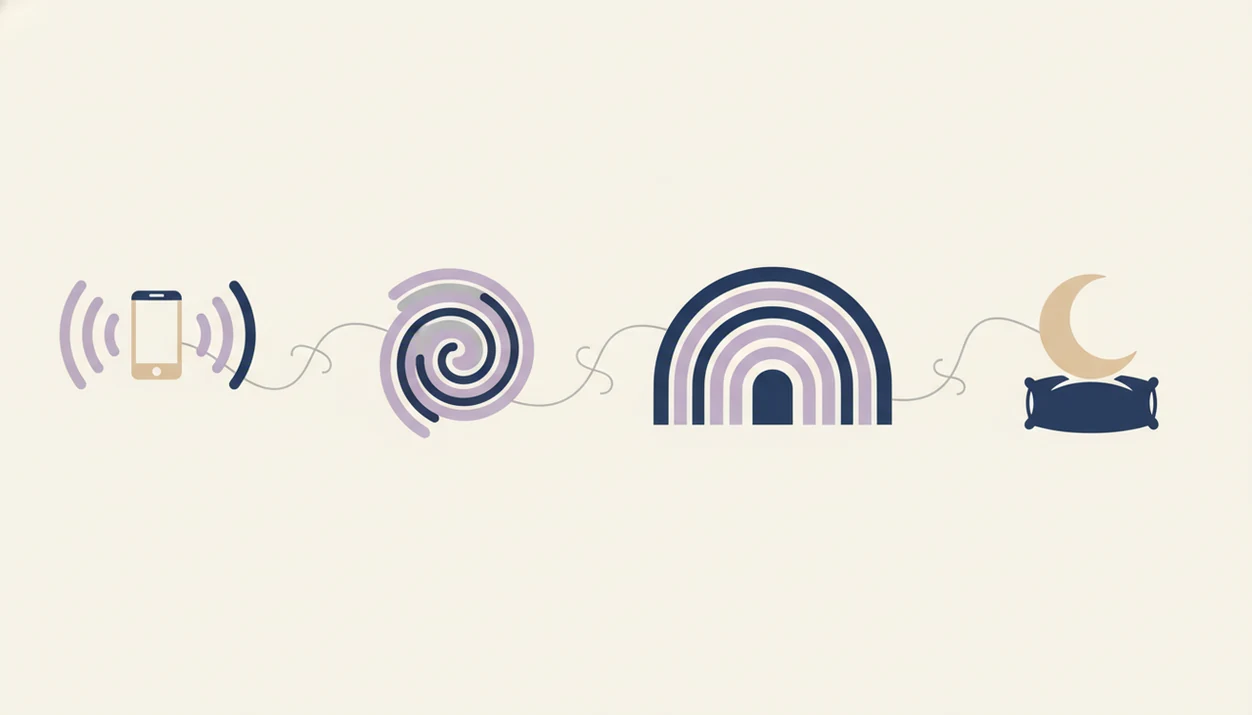
Deep sleep hypnosis apps usually work through a four-phase audio structure: induction, deepening, suggestion, and emergence or sleep fade-out. In plain terms, the voice helps the listener settle, focus attention, absorb calming suggestions, and either return to alertness or drift toward sleep.
The mechanism is partly physiological arousal reduction. Slow narration, breathing cues, and soft background soundscapes can lower the sense of alertness that keeps people checking the clock. Repetition also matters. Nightly use can condition a relaxation response, where the same opening music or phrase becomes a cue to unwind.
A therapist-led hypnosis session can adapt to the person in real time. A self-guided app session cannot do that. However, a well-built bedtime hypnosis app can still provide a consistent script, a familiar voice, and a predictable transition into lights-out.
Bedtime calm usually depends more on repetition and environment than on finding one magic recording.
For phone setup details, the practical walkthrough on how to do sleep hypnosis with phone covers volume, notifications, and screen habits.
How to Use a Sleep Hypnosis App for Better Bedtime Calm
Use a sleep hypnosis app as a repeatable wind-down cue, not as a test you have to pass. If you analyze every sentence, the session can turn into another thinking task.
- Set a consistent bedtime and open the app 10–15 minutes before lights out.
- Choose a session length that matches your wind-down window, usually 10–30 minutes.
- Put on comfortable headphones and enable the sleep timer or auto-fade.
- Follow the guided induction without trying to analyze every suggestion.
- Review your listening pattern weekly and adjust the session type, narrator, or background sound.
When the bedroom fan is humming behind the narration, small friction matters. A notification can break the spell faster than a bad script. Use Do Not Disturb before pressing play.
When bedtime inconsistency is the issue, HypnoApp helps because users can repeat the same sleep track or rotate related relaxation sessions without rebuilding the whole routine.
Common Myths About Sleep Hypnosis Apps
A sleep hypnosis app cannot cure insomnia. It can support relaxation, reduce bedtime tension for some users, and make a calmer routine easier to repeat.
Another myth is that hypnosis apps control your mind. Self-hypnosis is voluntary. You can pause, skip, ignore, or stop a session at any time. If a suggestion feels wrong, you do not have to follow it.
High app-store ratings also do not equal clinical validation. A review of hypnosis apps found that only 2.1% cited empirical evidence, so star ratings mainly reflect user satisfaction, not medical proof.
One top-rated deep sleep hypnosis app will not suit everyone. Voice, accent, pacing, background music, and session length are personal. A favorite track saved for difficult nights can be more useful than the most popular recording in the store.
If you are comparing free options first, our free sleep hypnosis app guide explains where free tiers help and where ads or limited libraries get in the way.
Honest Cons of Bedtime Hypnosis Apps
Bedtime hypnosis apps have real drawbacks. The most obvious is subscription fatigue, since many quality apps charge monthly after a short trial.
Phone-in-bed dependency is another problem. If opening an app turns into checking messages, the routine can backfire. Blue light, alerts, and a session ending too loudly can undo the calm you were trying to build.
Generic scripts may also feel too simple for people with trauma histories, panic symptoms, or complex sleep problems. In those cases, professional care is safer than relying on a recording.
Voice mismatch is underrated. One accent, breath sound, or music loop can break immersion completely. HypnoBox, Harmony Hypnosis, and other competitors may suit listeners who prefer different voices or script styles.
Results may fade when usage stops, which suggests conditioning and relaxation effects rather than lasting change for many users.
Limitations
Sleep hypnosis apps are useful for some bedtime routines, but the evidence has limits. Treat strong claims with caution, especially when an app promises deep sleep, instant results, or clinical outcomes.
- Most clinical hypnosis research involves therapist-led sessions, not app-delivered bedtime audio.
- Placebo effects and general relaxation may account for much of the perceived benefit.
- Phone notifications, bright screens, and late-night browsing can counteract relaxation if not managed.
- Users with serious mental health conditions, trauma histories, or complex sleep disorders should seek professional care rather than relying on an app.
- App-store ratings reflect user satisfaction, not objective sleep-onset or sleep-duration outcomes.
- A pre-recorded session cannot adjust if a suggestion feels uncomfortable or emotionally loaded.
- Offline mode helps, but downloaded audio still cannot replace medical evaluation for persistent insomnia.
HypnoApp should be used as a habit-support tool and relaxation cue, not as a substitute for diagnosis, therapy, or sleep medicine care.
For people building a wider routine, find calm bedtime routine ideas may help connect audio practice with room temperature, lighting, and evening timing.