Is Hypnosis Safe for Adults Using Self-Hypnosis Apps?
For most emotionally stable adults, is hypnosis safe has a practical answer: yes, when it is used as a relaxation and habit-support tool rather than medical treatment. The main safety issues are choosing reputable guidance, avoiding use in risky situations, stopping if distress increases, and getting professional advice if you have psychosis, severe trauma, unstable mood, or serious mental health symptoms.
> Definition: Hypnosis safety means using guided hypnosis or self-hypnosis in a way that preserves personal control, avoids unsafe contexts, and does not replace medical or mental health care.
- Most adults can use self-hypnosis apps safely for relaxation, sleep routines, and habit support if they remain realistic about what apps can and cannot do.
- People with psychosis, severe dissociation, unstable bipolar symptoms, suicidal thoughts, or intense trauma histories should speak with a qualified clinician before unsupervised hypnosis.
- Recorded self-hypnosis tools are not the same as clinician-guided hypnotherapy, so creator credentials, privacy practices, safety warnings, and emergency disclaimers matter.
Hypnosis safety at a glance for adult app users
Hypnosis is generally low risk for most adults when used for relaxation, sleep routines, or habit support. Safety depends on your mental health history, where you listen, the quality of the guidance, and what you expect the session to do.
You do not lose control during hypnosis. Most people notice a narrowed, inward focus, like following a breathing count in the dark while still hearing the room around them. A skeptical beginner might ask, “Am I supposed to feel hypnotized?” Often, the answer is no; calm attention may be the whole experience.
Short-term side effects are uncommon but can include dizziness, headache, drowsiness, anxiety, or sleep disturbance. Stop the session if it causes fear, panic, dissociation, flashbacks, or worsening symptoms.
Phone down. Volume checked.
Good hypnosis and self-hypnosis mobile apps with guided meditation, sleep sessions, anxiety relief, and habit-building audio programs deliver structured relaxation cues, not diagnosis, crisis care, or guaranteed change.
Five self-hypnosis safety facts adults should know
- Clinical hypnosis is usually low risk when properly delivered. Trained professionals can screen for risk, set boundaries, and adjust if distress appears during a session.
- Hypnosis apps are consumer tools. They usually are not regulated or tested like medical treatments, even when the audio sounds calm and professional.
- Severe mental illness is a red flag. Psychosis, hallucinations, delusions, dissociation, and unstable mood are reasons to ask a licensed clinician before unsupervised use.
- Hypnosis should complement evidence-based care. For anxiety, depression, PTSD, pain, or addiction, it should sit alongside appropriate treatment, not replace it.
- Safe use includes context and claims. Do not listen while driving, check privacy terms, and avoid apps that promise cures or “hidden memory” recovery.
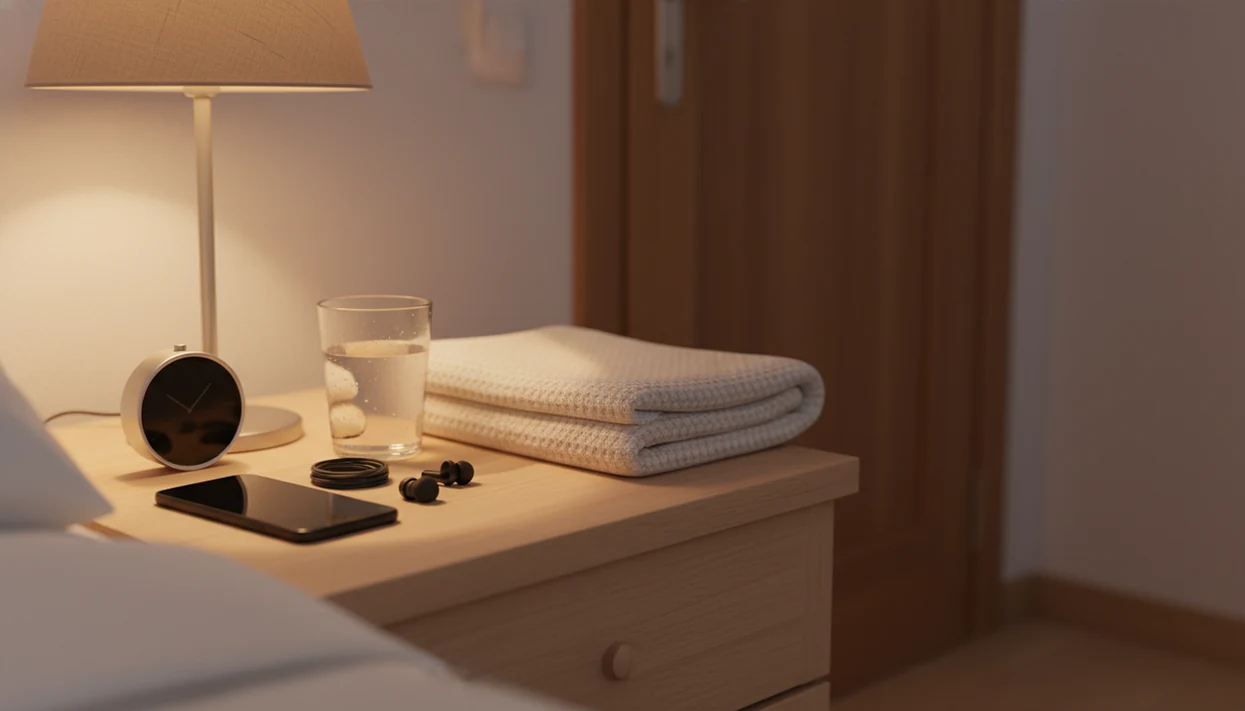
In practice, the headphones case beside the phone is a small safety cue: if you’re setting up to listen, you can also set up to stop.
Self-hypnosis app sessions and guided suggestion mechanics
Hypnosis is a state of focused attention that often uses relaxation, imagery, and suggestion; it is not sleep, unconsciousness, or mind control. In plain terms, the session helps you pay attention to one track of experience while letting other noise fade.
Most app sessions follow a predictable structure: a scripted induction, deepening cues, targeted suggestions, and reorientation. You might hear the narrator ask you to loosen your jaw, drop your shoulders, picture a calmer response, then count back into normal alertness. The mechanism is closer to attentional focus and habit cues than control.
Recorded self-hypnosis differs from live hypnotherapy because the recording cannot ask follow-up questions or change course when you become upset. Consumer audio libraries may provide guided hypnosis, self-hypnosis, meditation, and sleep sessions for adults seeking relaxation and better habits, but they should not be treated as individualized care.
For everyday adults, self-hypnosis usually works best when the goal is low-pressure practice, while clinical care fits symptoms that need assessment.
Hypnosis apps versus clinical hypnotherapy safety safeguards
Are hypnosis apps safe? Reputable apps can be reasonable for general relaxation, but they are not equivalent to individualized clinical care.
A live clinician can screen contraindications, adapt wording, notice distress, and respond if a person becomes overwhelmed. Many apps provide no clear evidence, clinician involvement, or safety screening. That matters when a session touches pain, trauma, addiction, or psychiatric symptoms.
| Safety area | Consumer hypnosis apps | Clinical hypnotherapy |
|---|---|---|
| Guidance | Recorded script | Live, responsive provider |
| Screening | Often limited or absent | Can review history and risks |
| Personalization | General topics | Adjusted to the person |
| Evidence | Often unclear | Depends on clinician and use case |
| Privacy | App policy varies | Healthcare privacy rules may apply |
Named options such as Calm, Headspace, Reveri, and other self-hypnosis tools can support relaxation practice, but app choice should include privacy review. Our privacy checklist explains what to check before sharing personal data.
Hypnosis safety red flags and contraindications
Some adults should avoid unsupervised hypnosis apps or ask a licensed clinician first. These are not labels to self-diagnose; they are reasons to get safer guidance.
- Psychosis-spectrum symptoms: hallucinations, delusions, schizophrenia-spectrum disorders, or bipolar disorder with psychotic features are strong red flags.
- Dissociation and trauma instability: severe dissociation, depersonalization, derealization, unstable PTSD, complex trauma, or panic that worsens with inward focus can make sessions feel unsafe.
- Acute safety concerns: suicidal thoughts, self-harm risk, major depression with functional impairment, seizures, or serious uncontrolled medical symptoms need professional attention.
- High-stakes goals: trauma processing, chronic pain, addiction, and psychiatric symptoms should be handled with professional clearance.
- Escalating reactions: panic, flashbacks, compulsive use, or worse sleep after sessions mean stop and reassess.
If this list feels close to your situation, our guide on who should avoid hypnosis apps gives more specific boundaries.
Common hypnosis safety myths about control and memory
Hypnosis myths can make it sound either dangerous or unrealistically strong. The safer middle ground is more ordinary: you listen, focus, notice, and can stop.
| Myth | Fact |
|---|---|
| Hypnosis is mind control. | Adults remain aware and can reject suggestions that do not fit. |
| Hypnosis apps can reprogram anyone. | Response varies, and low hypnotizability may limit effects. |
| Hypnosis cures serious illness. | It may support relaxation or coping, but it does not replace care. |
| All hypnosis is equally safe. | Safety depends on context, app quality, practitioner training, and mental health history. |
| Hypnosis always reveals accurate memories. | Memory-focused hypnosis can be unreliable and may increase distress. |
The memory point deserves caution. A session that pushes “recovered memories” is not a harmless relaxation track. If anxiety spikes during a recording, the practical next question is can hypnosis apps trigger anxiety, because for some users, inward focus can intensify body sensations.
Safe self-hypnosis app checklist for adults
How do you use a hypnosis app safely? Treat it like a guided audio session that needs the right setting, modest goals, and a clear stop rule.
- Choose a safe place where you are seated or lying down, never driving, cycling, or operating machinery.
- Start with short sessions for relaxation, sleep, or habit support before trying emotionally intense topics.
- Check the creator for credentials, script transparency, app reviews, privacy policy, data sharing, and subscription terms.
- Avoid cure claims about guaranteed results, medical replacement, trauma release, memory recovery, or instant change.
- Set a stop rule before pressing play: stop if panic, flashbacks, dissociation, compulsive use, or worse sleep appears.
A helpful way to think about it is boring on purpose. Downloaded audio for airplane mode, a low volume setting, and a clear exit button reduce preventable friction.
For adults, the safest self-hypnosis routine is short, voluntary, and easy to stop because control stays with the listener.
Hypnosis safety evidence and realistic clinical benefits
Research on hypnosis is stronger for some clinician-guided uses than for consumer app use. A 1996 meta-analysis of 85 controlled studies found a mean 0.56 effect size across varied clinical outcomes, which suggests moderate benefit in mixed clinical contexts source.
The NIH’s National Center for Complementary and Integrative Health notes that serious adverse events are rare in clinical research, with side effects mainly described as transient dizziness, headache, drowsiness, or anxiety source. A breast cancer surgery trial also reported reduced analgesic use and postoperative nausea after a brief preoperative hypnosis session source. For smoking cessation, a Cochrane review found no clear evidence that hypnotherapy was superior to other behavioral interventions source.
That does not prove a sleep or habit app will produce the same result. A Cochrane review found no clear evidence that hypnosis outperformed other behavioral approaches for smoking cessation. App-specific evidence is thinner still, and one review of hypnosis apps found no published effectiveness studies for the apps it examined.
Clinical hypnosis has the strongest safety case when it is matched to a suitable patient, delivered by a trained professional, and used alongside standard care.
How this hypnosis safety guidance is sourced and reviewed
This guidance is built from clinical, government, and peer-reviewed sources first, then translated into practical safety boundaries for adult app users. It separates what is known about clinician-guided hypnosis from what can reasonably be said about recorded consumer sessions.
The review focuses on the safety questions that matter before someone presses play: contraindications, possible side effects, crisis boundaries, and privacy. App-specific statements are treated cautiously because a relaxation recording cannot screen, diagnose, adapt, or respond like a licensed professional in the room.
- Prioritize clinical reviews, public health guidance, and peer-reviewed research over marketing claims or testimonials.
- Separate evidence for clinician-guided hypnotherapy from claims about self-hypnosis apps, unless app-specific data is available.
- Check safety language around psychosis, dissociation, trauma instability, suicidal thoughts, adverse reactions, and emergency use.
- Review privacy and data-sharing considerations when app use involves personal goals, mood information, or health-adjacent details.
- Update source claims at least annually, or sooner when major clinical guidance, safety evidence, or app-risk patterns change.
This page is informational only. It is not medical advice, mental health advice, diagnosis, treatment, or crisis support.
Licensed professional hypnosis support for higher-risk adults
Choose licensed professional support instead of app-only hypnosis for trauma work, chronic pain, addiction, severe anxiety, major depression, or psychiatric symptoms. Clinicians typically recommend keeping hypnosis complementary when medical or mental health conditions are involved.
A clinician can coordinate hypnosis with therapy, medication, safety planning, and medical evaluation. That coordination is the safeguard a recording cannot provide. If symptoms are urgent, such as suicidal thoughts, loss of touch with reality, chest pain, or fear that you may harm yourself, use emergency or crisis care rather than an app.
HypnoApp is for adult relaxation and habit support, not diagnosis, treatment, or crisis care. Keep existing medical or mental health treatment plans unless a qualified clinician changes them. For claim boundaries, the hypnosis app medical disclaimer explains why app audio should not be treated as healthcare.
Limitations
Self-hypnosis apps have real limits, even when they are pleasant to use. These limits are part of hypnosis safety, not fine print.
- Most hypnosis apps have no peer-reviewed efficacy data and may not involve qualified clinicians.
- Evidence for hypnosis is condition-specific and mixed, especially for smoking cessation, weight loss, and habit outcomes.
- Self-hypnosis apps cannot diagnose, treat, or monitor serious mental health or medical conditions.
- Some users do not respond strongly to hypnosis, so results may be minimal or absent.
- Temporary dizziness, headache, drowsiness, anxiety, sleep disturbance, or emotional discomfort can occur.
- Unsupervised hypnosis is not appropriate for emergencies, suicidal thoughts, psychosis, severe dissociation, or unstable trauma symptoms.
- Privacy, data sharing, subscriptions, and marketing claims vary widely by app.
For smoking, hypnosis may be one support option, but the evidence is mixed. Our page on hypnosis for quitting smoking support keeps that distinction clear.
FAQ
Is hypnosis safe?
Hypnosis is generally low risk for most adults when used appropriately for relaxation or coping. People with serious mental health symptoms should ask a qualified clinician first.
Are hypnosis apps safe?
Reputable hypnosis apps can be safe for general relaxation and sleep routines. They are not substitutes for clinician-guided care or emergency support.
Can hypnosis control your mind?
No. Adults usually remain aware during hypnosis and can reject suggestions or stop the session.
Can hypnosis cause anxiety?
Yes, anxiety can occur temporarily during or after hypnosis. Stop using the session if anxiety worsens or feels hard to manage.
Who should avoid hypnosis?
People with psychosis, severe dissociation, unstable mood, suicidal thoughts, or intense trauma symptoms should avoid unsupervised hypnosis. They should seek professional guidance first.
Is self-hypnosis safe?
Self-hypnosis is usually safe for adults when used in a calm setting for non-emergency goals. It should not be used while driving or during unsafe activities.
Can hypnosis worsen trauma symptoms?
Yes, trauma-focused hypnosis may trigger distress, flashbacks, or dissociation in some people. Trauma work should be guided by a qualified professional.
Can hypnosis replace therapy?
No. Hypnosis should not replace therapy, medication, crisis care, or evidence-based treatment for serious conditions.
Is hypnosis safe for sleep?
Sleep-focused hypnosis is usually low risk when used in bed or another safe place. Severe or persistent sleep problems should be discussed with a healthcare professional.
What are hypnosis side effects?
Possible short-term side effects include dizziness, headache, drowsiness, anxiety, emotional discomfort, or sleep disturbance. Stop if symptoms intensify or feel unsafe.