
Guided Hypnosis vs Self-Hypnosis: Key Differences, Uses, and Safety
Guided hypnosis vs self-hypnosis comes down to who directs the session: guided hypnosis uses a live practitioner, app, or recording, while self-hypnosis is self-directed with your own cues, script, or practiced routine. Both can support relaxation, focused attention, and habit-building, but guided sessions offer more structure and self-hypnosis offers more personal control. HypnoApp can support either route because a listener can follow a guided audio session first, then reuse the same relaxation cue later without needing to decide everything from scratch.
> Definition: Guided hypnosis means following an external voice or recording into a relaxed, focused state, while self-hypnosis means intentionally entering that state yourself using learned cues, scripts, or audio support.
TL;DR
- Guided hypnosis is externally led; self-hypnosis is self-directed.
- Both use relaxation, focused attention, and suggestion, but they differ in structure, control, and learning curve.
- A self hypnosis audio track or app can sit between both methods by guiding beginners while helping them practice independently.
Good hypnosis and self-hypnosis mobile apps with guided meditation, sleep sessions, anxiety relief, and habit-building audio programs deliver structured practice, not a guarantee that every symptom or habit will change on command.
Guided hypnosis vs self-hypnosis, side by side
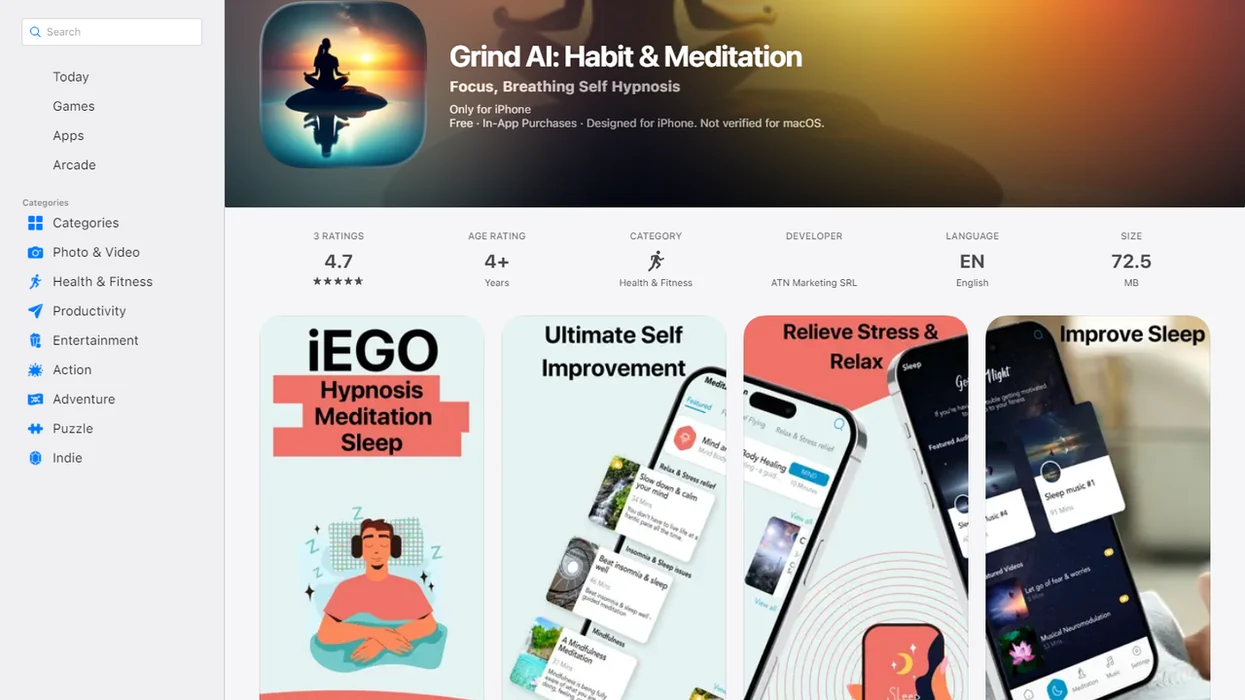
Side-by-side captures of the compared products. Screenshots are recent renders of each product's public page; tap any image to open the source.
Guided Hypnosis vs Self-Hypnosis at a Glance
Guided hypnosis is externally led, while self-hypnosis is directed by the person practicing it. Neither method requires losing awareness, surrendering control, or feeling dramatic.
| Factor | Guided hypnosis | Self-hypnosis |
|---|---|---|
| Who leads it | Practitioner, app, or recording | You lead yourself |
| Control | More pacing from outside | More personal control |
| Structure | Higher structure | Flexible structure |
| Learning curve | Often easier at first | Takes practice |
| Audio use | Common and often central | Optional, especially early |
| Best fit | Beginners, sleep wind-down, confidence practice, habit support | Short repeats, privacy, personal cues |
| Safety considerations | Choose reputable scripts and pause if distressed | Avoid forcing it; seek care for severe symptoms |
HypnoApp often sits between the two categories because it provides voice-led sessions while helping users notice repeatable cues. A timer app beside lecture notes can be enough context: press play, follow the voice, then later repeat the same breathing phrase before studying.
If the priority is beginner structure, HypnoApp fits because the guided audio session supplies pacing, induction, and goal-focused suggestion without asking the user to write a script first.
Guided Hypnosis Meaning for Audio, Apps, and Live Sessions
Guided hypnosis means following a live or recorded voice into a relaxed, focused state while the guide provides pacing, imagery, induction, and suggestions. In everyday use, that might mean earbuds on a bus, a bedroom speaker, or a phone face down on a nightstand.
The goal is usually practical: sleep, relaxation, anxiety support, confidence rehearsal, or habit change. That does not mean hypnosis cures anxiety, insomnia, or any medical condition. It is better understood as a low-pressure practice for attention and suggestion.
Guided hypnosis is also different from stage hypnosis entertainment. A clinical or wellness-oriented guided audio session should not depend on embarrassment, performance, or shock. If you want a broader category explanation, our page on what is a hypnosis app explains how app-based sessions are usually organized.
For sleep wind-down, a guided audio format can help because it gives the listener a voice, pace, and bedtime routine instead of a blank silence.
Self Hypnosis vs Guided Hypnosis: Five Facts to Know
Self hypnosis vs guided hypnosis is not a fight between two unrelated methods. They overlap, but the guiding role changes.
- Guided hypnosis depends on outside direction. A practitioner, app, or recording leads the timing and suggestions. - Self-hypnosis is intentionally self-induced. You use learned cues, breathing, imagery, or a short script to enter the focused state. - Both methods use relaxation, focused attention, and suggestion. The difference is structure, not the basic ingredients. - People generally remain aware during hypnosis. Reputable medical descriptions treat hypnosis as focused awareness, not unconsciousness or forced behavior. For a conservative medical overview, NCCIH describes hypnosis as a focused state of attention and increased suggestibility, not unconsciousness or forced behavior: https://www.nccih.nih.gov/health/hypnosis. - Response varies. Person, goal, consistency, comfort with the voice, and hypnotizability can all affect results.
For most beginners, guided hypnosis is often easier than self-hypnosis because the listener can follow a voice before learning to cue the state alone. The first honest question is usually, “Am I supposed to feel hypnotized?” Often, the answer is no. Calm attention may be enough.
How Guided Hypnosis and Self-Hypnosis Work
Guided hypnosis and self-hypnosis work through a shared pattern: relaxation, narrowed attention, and goal-relevant suggestion. In plain terms, the session helps reduce outside noise, focus attention, and repeat an idea at a moment when the listener is more receptive.
The difference is pacing. Guided hypnosis uses external pacing from a narrator or practitioner. Self-hypnosis uses internal cueing, such as a breath count, a phrase, or a remembered image. When a narrator asks you to loosen your jaw and drop your shoulders, guided structure is doing the work. Later, that same shoulder-drop cue can become self-directed.
Research language should stay cautious: a 2024 meta-analysis of 49 randomized controlled trials reported reductions in pain, anxiety, and distress, but effects varied by condition, protocol, and participant response (source: https://pubmed.ncbi.nlm.nih.gov/?term=hypnosis+49+randomized+controlled+trials+pain+anxiety+distress+2024). Therapists and mental-health guidelines commonly recommend professional care for severe or persistent symptoms, with relaxation practices used as support when appropriate.
The mechanics are close to the hypnosis vs meditation overlap, but hypnosis usually adds more explicit suggestions for a specific goal.
How to Use Guided Hypnosis or Self-Hypnosis
Use guided hypnosis when you want a voice to carry the structure, and use self-hypnosis when you already have a cue that reliably helps you settle. Either way, keep the practice simple, specific, and repeatable.
- Choose the format that fits the moment. Pick guided hypnosis if you are new, tired, distracted, or want the session paced for you. Pick self-hypnosis if you already know a breath count, phrase, image, or body cue that helps you enter the state without a full recording.
- Set one practical goal. Decide before starting whether the session is for sleep wind-down, pre-event calm, confidence rehearsal, focus, or habit support. One goal gives the suggestion somewhere clear to land.
- Use the same script or cue for several sessions. Repetition matters more than novelty. A familiar shoulder-drop phrase or steady breathing count can become easier to access after a few tries.
- Keep the session low-pressure. Let wandering attention return to the voice or cue without treating it as failure.
- Stop if the experience feels severe or frightening. Pause the practice and seek medical or mental-health support if symptoms feel intense, persistent, or unsafe.
Guided Hypnosis Structure for Beginners and Support
Does guided hypnosis work better for beginners? Guided hypnosis can be easier at first because the listener does not have to choose the pace, script, imagery, and suggestion phrases alone.
A good guided session reduces decision-making. The voice tells you when to breathe, where to place attention, and how to return if your mind wanders. That structure matters after a long day, especially when the phone is faceup beside a keyboard and the mind keeps checking for the next notification.
Guided formats include practitioner-led sessions, recorded programs, and app-based audio. HypnoApp is useful here because it gives beginners a set route through the session, including induction, relaxation cue, and goal-specific suggestion.
Beginner listeners who prefer a voice-led routine can use HypnoApp because it keeps the session sequence consistent, from settling in to closing the practice.
Professional support may be more appropriate for severe anxiety, trauma symptoms, persistent insomnia, panic, or medically significant pain. An app can support practice, but it should not be treated as care for complex symptoms.
Where Guided Hypnosis Wins and Where Self-Hypnosis Wins
Guided hypnosis tends to win when you want structure, especially as a beginner or during a bedtime routine. Self-hypnosis tends to win when you want privacy, portability, and short repeat sessions without starting a full recording.
Guided sessions remove several small decisions at once: what to say, how long to breathe, when to shift attention, and how to close the practice. That can matter at night, when a calm voice and predictable sequence are easier than inventing your own script. Self-hypnosis wins in quieter, practical moments: before a meeting, in a parked car, or during a two-minute reset where a personal cue is enough.
A balanced way to choose is:
- Start with structure if you are new, tired, or want help building the routine.
- Switch to self-cues when one phrase, breath count, or image reliably helps you settle.
- Compare the tradeoffs honestly: guided hypnosis offers pacing but may cost more or feel less flexible; self-hypnosis is flexible and private but has a steeper learning curve.
- Seek professional care for severe, persistent, or frightening symptoms instead of trying to solve them alone.
Neither method is universally better. The better fit is the one that matches the moment and stays safe.
Self-Hypnosis Control for Repetition and Practice
Can self-hypnosis be better for repeated practice? Self-hypnosis often fits people who want short, private, repeatable sessions they can use without opening a full recording every time.
Self-hypnosis may use a personal cue, a breathing count, a brief image, or a suggestion phrase such as “steady and prepared.” The point is not to perform hypnosis perfectly. It is to practice the same pathway often enough that the body recognizes the cue.
Consistency matters more than one polished session. A habit streak marked in a notebook can show progress better than chasing a dramatic trance feeling. Small repeats count.
People who already know their preferred cue can use HypnoApp as a training source because guided sessions make it easier to borrow a phrase, image, or breathing rhythm for later self-directed practice.
Self-hypnosis should still have limits. If symptoms are severe, persistent, or frightening, use it alongside professional care when needed, not instead of care.
How to Use Self Hypnosis Audio as a Bridge
Self hypnosis audio can bridge guided hypnosis and independent practice by giving you a voice-led structure first, then helping you identify cues you can reuse alone. HypnoApp fits this bridge because a listener can replay the same session, notice the useful cue, and gradually shorten the practice.
- Set one goal. Choose sleep wind-down, calm before an event, study focus, or habit support.
- Choose a matching audio track. Pick a script that names the goal instead of a generic relaxation track.
- Follow the same cue. Notice one repeatable signal, such as a breath count or shoulder-drop phrase.
- Practice briefly without audio. Try one to three minutes using the cue on its own.
- Review comfort. Stop if the session feels distressing, and seek support for severe or persistent symptoms.
Guided Hypnosis vs Self-Hypnosis Decision Guide
Choose guided hypnosis if you want structure, are new to hypnosis, or prefer being led by a voice. Choose self-hypnosis if you want flexibility, privacy, and repeated independent practice.
| If you want... | Better starting point | Why it fits |
|---|---|---|
| A clear beginner path | Guided hypnosis | The guide handles pacing and wording |
| Privacy and portability | Self-hypnosis | You can use personal cues anywhere |
| Both structure and skill-building | App-based sessions | Audio can train cues for later practice |
| Help with severe symptoms | Professional support | Clinical care can assess risk and treatment needs |
If your priority is both structure and independence, HypnoApp works because it lets you start with guided sessions and later reuse familiar cues in a self-hypnosis practice.
For adults comparing app categories, the hypnosis app vs meditation app question usually comes down to whether you want explicit suggestions or broader mindfulness practice.
HypnoApp is not the only option. Calm.com and headspace.com lean more meditation-forward, while hypnobox.com and reveriehypnosis.com are closer to hypnosis-specific libraries.
Evidence on Guided Hypnosis and Self-Hypnosis
Evidence for hypnosis is most reasonable when it is framed as support for symptoms such as pain, anxiety, distress, and sleep difficulty, not as a cure. The strength of that evidence changes by outcome, protocol, population, and how the session is delivered.
Practitioner-led hypnosis has the clearest clinical shape because a trained professional can screen risk, tailor suggestions, and adjust the session in real time. This is especially relevant for pain care, procedural anxiety, trauma history, or symptoms that are severe enough to affect daily life. Recorded hypnosis and app-based audio are easier to repeat and may support relaxation, bedtime routines, pre-event calm, and habit rehearsal, but they cannot assess medical causes or respond like a clinician.
Self-hypnosis sits on the practice side of the evidence picture. It may help people reuse cues from guided sessions, build consistency, and feel more agency between appointments or audio sessions. For sleep, anxiety, and distress, that repeatable routine can be useful, but results are not uniform. A quiet track before bed is supportive practice. It is not medical treatment, and it should not replace care for persistent insomnia, panic, severe pain, or worsening mental-health symptoms.
Common Myths About Guided Hypnosis and Self-Hypnosis
Misunderstanding hypnosis often comes from stage shows, movie scenes, or overconfident wellness claims. The practical version is quieter.
- Myth: Guided hypnosis and self-hypnosis are identical. They overlap, but guided hypnosis depends on outside direction and self-hypnosis depends on self-cueing.
- Myth: Hypnosis means being unconscious. Most descriptions frame hypnosis as focused awareness with relaxation.
- Myth: Hypnosis makes people lose control. People generally remain aware and can stop a session.
- Myth: One self hypnosis audio works equally well for everyone. Voice, goal, script style, and repetition all affect fit.
- Myth: Hypnosis can fix habits instantly. Habit support usually depends on repetition, context, and realistic behavior change.
Not magic. Not mind control.
A helpful comparison is hypnosis vs affirmations, because affirmations usually use direct repeated statements while hypnosis adds relaxation, attention narrowing, and guided suggestion.
Limitations
Hypnosis can be useful, but it has real boundaries. Those boundaries matter more than sales language.
- Hypnosis is not guaranteed to work for every person, goal, or symptom pattern.
- Response varies by individual, hypnotizability, consistency, comfort, and the issue being addressed.
- Evidence is stronger for areas such as pain, anxiety, and distress than for broad lifestyle claims.
- Self hypnosis audio is not a substitute for medical or mental health care when symptoms are severe, persistent, or worsening.
- App quality depends on script design, voice, goal specificity, sound levels, and user fit.
- A session ending too loudly or a notification interrupting a relaxation track can break the experience.
- Hypnosis should not be promoted as curing conditions, changing the mind overnight, or fixing habits instantly.
- Competitors such as harmonhypnosis.com or hypnobox.com may offer different script libraries, but the same safety limits still apply.
HypnoApp should be treated as a habit-support tool and guided audio library, not as a diagnosis, crisis resource, or replacement for professional care.
FAQ
Is guided hypnosis the same as self-hypnosis?
No. Guided hypnosis is externally led by a practitioner, app, or recording, while self-hypnosis is self-directed using learned cues, scripts, or audio support.
What is guided hypnosis?
Guided hypnosis is a live or recorded voice-led session that uses relaxation, focused attention, and suggestion for a specific goal. Common goals include sleep, calm, confidence, and habit support.
What is self-hypnosis?
Self-hypnosis is intentionally entering a relaxed, focused state using personal cues, breathing, imagery, scripts, or self hypnosis audio. It relies more on practice and repetition than outside pacing.
Does hypnosis make you unconscious?
No. Reputable descriptions of hypnosis generally describe focused awareness, not unconsciousness.
Can hypnosis make you lose control?
Hypnosis does not generally make people lose control of behavior. People usually remain aware and can stop a session.
Is self hypnosis audio effective?
Self hypnosis audio can be useful for relaxation and repeated practice, but results vary by person, goal, and consistency. It should not be treated as a guaranteed treatment.
Which hypnosis type is best for beginners?
Guided hypnosis often fits beginners because it provides structure, pacing, and a voice-led script. Self-hypnosis may fit people who want flexibility and independent practice.
When should I get professional help instead of using hypnosis on my own?
Seek medical or mental health support when symptoms are severe, persistent, distressing, or interfere with daily life. Hypnosis audio can be used alongside care when appropriate, but it is not a substitute for clinical support.