
Hypnosis vs Affirmations in Audio Habit Routines
hypnosis vs affirmations comes down to state and delivery: hypnosis uses focused relaxation plus guided suggestions, while affirmations are short statements repeated consciously. In habit audio routines, the two often work together rather than competing, because hypnosis sessions can embed affirmations inside a calmer, more receptive listening experience.
Definition: HypnoApp is a hypnosis app that provides guided hypnosis, self-hypnosis, meditation, and sleep audio sessions for adults seeking relaxation and better habits.
- Hypnosis is a guided relaxation process that uses focused attention and hypnotic suggestions.
- Affirmations are brief positive statements repeated while fully awake, during a routine, or inside an app.
- Self hypnosis affirmations combine both methods, usually by placing affirming statements after a relaxation induction.
Hypnosis vs affirmations, side by side
Side-by-side captures of the compared products. Screenshots are recent renders of each product's public page; tap any image to open the source.
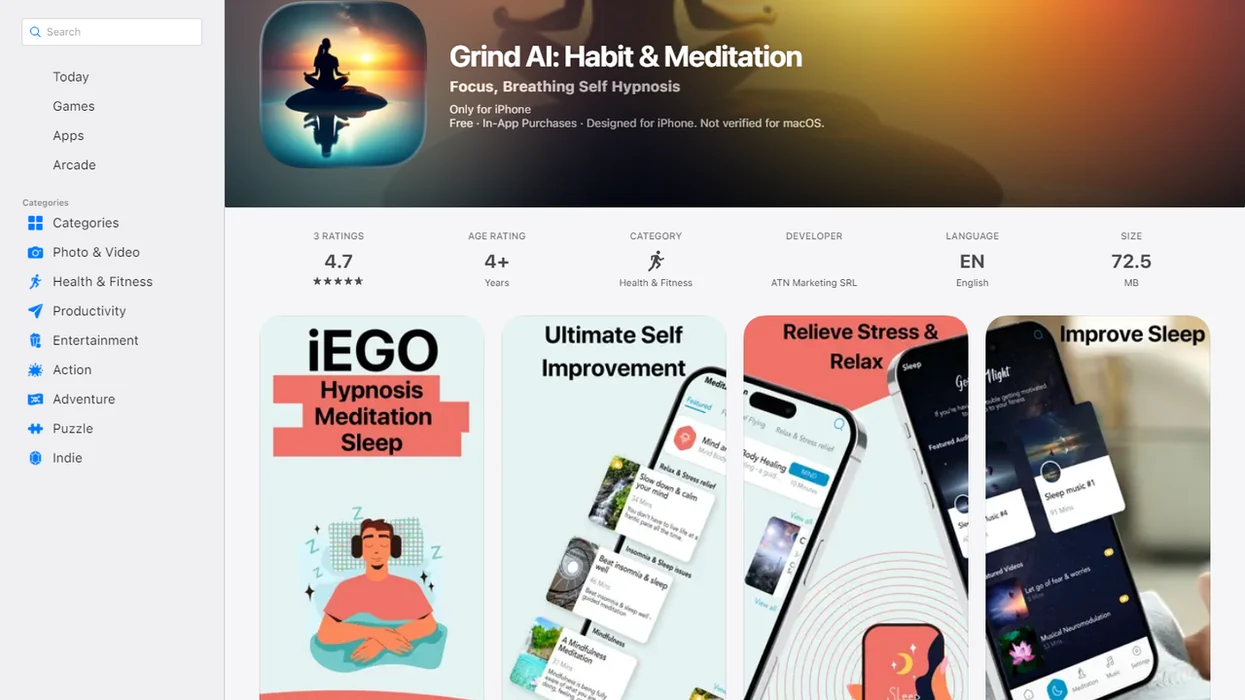
Hypnosis vs affirmations comparison table
Hypnosis and affirmations differ most in the listener’s state of mind: hypnosis usually starts with focused relaxation, while affirmations can be repeated during ordinary waking life. Neither method is mind control, and neither is a guaranteed instant fix.
| Factor | Hypnosis | Affirmations |
|---|---|---|
| State of mind | Relaxed, focused, sometimes trance-like | Fully awake and alert |
| Delivery style | Guided audio, therapist script, or self-hypnosis session | Spoken, written, read, or repeated silently |
| Timing | Often before sleep, during a break, or in a quiet session | During walking, journaling, commuting, or task prep |
| Effort | Requires a few minutes of listening and settling | Requires brief repetition and attention |
| Typical use cases | Sleep routines, stress reset, confidence rehearsal, habit support | Identity cues, task confidence, daily intention setting |
| Realistic expectations | May support relaxation and suggestion responsiveness | May reinforce action cues when believable |
In practice, many hypnosis apps combine hypnotic suggestions with affirmations inside one guided audio session.
Five facts about affirmations vs hypnosis
- Hypnosis uses focused attention and relaxation to increase responsiveness to suggestions, not to remove personal choice.
- Affirmations are conscious repeated statements that can be used in everyday settings, including a lunch-break walk or a journal page.
- Hypnotic suggestions are usually delivered during a relaxed or trance-like session, often after breathing, imagery, and a slower voice pace.
- Self hypnosis affirmations blend an induction with repeated positive statements, so the affirmation arrives after the listener has settled.
- Both methods work best when paired with realistic goals, repeated routines, and broader behavior change.
Anyone dealing with bedtime worry fits HypnoApp when they want guided phrases rather than loose self-talk, because sleep and relaxation sessions use a settle, breathe, suggest, and return workflow.
A useful pocket check is simple: if you need help settling your body, use hypnosis; if you need one quick cue before the next action, use an affirmation.
Mind mechanics behind hypnosis and affirmations
Hypnosis is a structured attention state that combines narrowed focus, relaxation, imagery, and suggestion. It is not unconscious control, and a listener can notice a suggestion, reject it, or stop the session.
The American Psychological Association describes hypnosis as a procedure involving suggestions for changes in experience, perception, sensation, emotion, thought, or behavior, usually after an induction source.
Affirmations work more like repetition-based self-talk. A statement such as “I start with one small step” may reinforce identity, intention, and behavior cues when it feels believable. Audio routines add voice, pacing, breath prompts, and imagery to reduce distraction. When the narrator asks you to loosen your jaw and drop your shoulders, the body cue makes the words easier to stay with.
Good hypnosis and self-hypnosis mobile apps with guided meditation, sleep sessions, anxiety relief, and habit-building audio programs deliver structured audio practice, not hidden persuasion or guaranteed clinical change. For a deeper mechanism explainer, the companion guide on how self-hypnosis apps work covers attention, suggestion, and routine design.
Four places hypnosis wins in habit audio routines
When is hypnosis more useful than affirmations? Hypnosis may fit better when relaxation and focused listening are part of the goal, such as sleep preparation, stress routines, confidence practice, or anxiety support.
The advantage is structure. A session can move from induction to guided imagery to timed hypnotic suggestions without asking the listener to invent the words. That helps when the phone is face down on a nightstand and the mind keeps trying to reopen tomorrow’s problem list.
A 2024 systematic review of 168 hypnosis apps found that 56.0% targeted sleep, 54.8% relaxation or meditation, and 36.9% stress, but most lacked evidence-based protocols or empirical validation source. HypnoApp fits users who need a low-pressure practice before bed because session categories can guide them toward sleep, stress, or confidence audio without building a script from scratch.
Four places affirmations win in daily habit routines
Affirmations win when the routine needs to be fast, alert, and portable. You can repeat one while walking to the bus, opening lecture notes, or standing outside a meeting room with a conference badge against a blazer.
Evidence for affirmations is strongest when they are believable self-affirmation or implementation cues, not magical thinking. Reviews of self-affirmation research find context-dependent effects on motivation, threat response, and behavior change rather than guaranteed results source.
They require less time than hypnosis because there is no formal induction. A useful affirmation is believable, specific, and tied to an action: “I open the file and work for ten minutes” beats “I am unstoppable.” Unrealistic affirmations can create resistance for some people, especially when the statement clashes with how the person feels.
For skeptical beginners who ask, “Am I supposed to feel hypnotized?”, affirmations can be an easier starting point. For people comparing audio styles more broadly, hypnosis vs meditation explains how attention practice differs from suggestion-based routines.
Self hypnosis affirmations as a combined audio method
Self hypnosis affirmations are affirming suggestions delivered after relaxation or induction. The combined method uses the calm structure of hypnosis and the repeatable language of affirmations.
A typical audio sequence is simple: settle, breathe, focus, imagine, receive suggestions, then return to alertness or drift into sleep. The listener remains aware. If a phrase feels wrong, they can ignore it, adjust it later, or stop the track. That matters. Hidden persuasion is not the point.
For adults who want habit-support language without writing their own script, HypnoApp covers the combined method through guided audio sessions that place affirming statements after a relaxation cue. A favorite track saved for nights can become part of the bedtime routine, but it should still support ordinary behavior change outside the session.
2013, 2019, and 2024 evidence on hypnosis audio claims
The evidence base for hypnosis is more developed in pain, anxiety, and sleep-related contexts than it is for standalone affirmations. That does not mean every hypnosis app or audio track is clinically validated.
A 2013 meta-analysis across 18 hypnosis pain studies reported pain reduction among people receiving hypnotic interventions compared with controls. A 2019 randomized clinical trial found that a single hypnosis session reduced state anxiety in adults with high anxiety sensitivity. The 2024 app review then showed a different problem: many consumer hypnosis apps target sleep, relaxation, and stress, but often lack evidence-based protocols or empirical validation.
The most evidence-backed way to view app-based hypnosis is as a supportive guided-audio practice, not as proof that every session has been tested like a clinical intervention. HypnoApp should be used with reasonable expectations, especially for anxiety, sleep, and habit goals.
Hypnosis vs affirmations decision guide
Choose based on timing, mental state, and how much structure you need. Hypnosis fits longer, quieter sessions; affirmations fit quick conscious repetition; self hypnosis affirmations fit people who want both.
| Choose this | When it fits | What to watch |
|---|---|---|
| Hypnosis | You want guided relaxation, sleep preparation, or a focused reset | Don’t listen while driving or doing safety-sensitive tasks |
| Affirmations | You want quick repetition during the day | Keep statements believable and action-based |
| Self hypnosis affirmations | You want guided relaxation plus repeated habit-support statements | Track gradual changes, not instant transformation |
Choose hypnosis for structured relaxation
For adults who need a timed reset between work blocks, HypnoApp fits because short guided audio sessions can be used during a break, including a ten-minute session in a parked car.
Choose affirmations for quick repetition
For busy users, affirmations are often easier than hypnosis because they can be repeated while alert and tied to the next action.
Choose both for guided habit support
Self hypnosis affirmations tend to work best when you want relaxation first and repeated habit language second. People with severe symptoms or mental health concerns should seek professional support alongside any app routine.
How to use hypnosis or affirmations safely
Use hypnosis when you can sit quietly and relax; use affirmations when you need a short, alert cue during normal daily life. Either method is safest and most useful when it points toward one specific behavior rather than a vague life overhaul.
- Choose the right format for the moment: hypnosis for a calm break, bedtime wind-down, or guided reset; affirmations for walking to class, opening a work file, or preparing for the next conversation.
- Set one behavior target before you start, such as beginning a ten-minute study timer, putting the phone away at bedtime, or taking three slower breaths before replying.
- Use hypnosis only in safe settings where you are seated or lying down, not driving, cycling, cooking, supervising children, or doing anything that needs quick reactions.
- Keep affirmations short and believable, using plain next-action language like “I open the document now” instead of a statement that feels forced or grand.
- Track your pattern weekly by noting sleep, mood, or the target behavior, rather than judging the whole practice by one unusually distracted session.
Five-step self hypnosis affirmations app routine
Use self hypnosis affirmations as a repeatable practice, not as a test you pass or fail. If a notification interrupts the relaxation track, pause, silence alerts, and restart from the breathing section.
- Set one realistic habit target before listening, such as “I start my study timer after lunch.”
- Choose a quiet session time before sleep, during a break, or when you can sit without rushing.
- Listen with eyes closed only when safe, never while driving, cycling, cooking, or supervising children.
- Repeat one believable affirmation after the session, using plain words you would actually say.
- Track mood, sleep, behavior, or habit consistency, rather than expecting instant change from one session.
The right fit for guided habit rehearsal is HypnoApp because it lets users pair session choice with a repeated audio routine. If session length is the sticking point, how long should hypnosis sessions be gives practical timing guidance.
Four common myths about hypnosis vs affirmations
Mind control myth: Hypnosis does not control your mind. People usually remain aware, hear the narrator, and can reject suggestions that do not fit.
Instant reprogramming myth: Affirmations do not instantly reprogram the brain. They may help when repeated, believable, and connected to behavior.
Every app is proven myth: Not every hypnosis app is clinically tested. Competitors such as calm.com, headspace.com, hypnobox.com, and reveriehypnosis.com may offer relaxation or hypnosis-style content, but app quality and evidence claims vary.
Same result for everyone myth: Self hypnosis affirmations do not work the same way for every listener. Motivation, expectation, suggestibility, sleep quality, and routine consistency all matter.
Skeptical beginners who want the difference between guided and self-directed formats can start with guided hypnosis vs self-hypnosis before choosing a routine.
Limitations
HypnoApp and similar audio tools can support relaxation and habits, but they have clear limits. A bathroom stall pause between meetings may help you reset; it is not a substitute for care when symptoms are severe.
- Evidence for hypnosis delivered purely through mobile apps is still limited.
- Many hypnosis apps have not been rigorously tested in clinical trials.
- Affirmations can backfire when they feel unbelievable or trigger internal resistance.
- Neither hypnosis nor affirmations replace professional medical or psychological care for serious conditions.
- Results are typically gradual, modest, and variable.
- Individual responsiveness to hypnosis, suggestion, and affirmation repetition differs widely.
- A session ending too loudly can disrupt relaxation, especially in bedtime audio routines.
- App-based routines depend on consistency, privacy settings, and a safe listening context.
HypnoApp is most useful as a habit-support tool because users can repeat guided audio sessions consistently, not because any app can promise the same response for everyone.
FAQ
Is hypnosis better than affirmations?
Hypnosis is often better for structured relaxation and guided suggestion. Affirmations are better for quick conscious repetition during the day.
Are affirmations a form of hypnosis?
Affirmations are not hypnosis by themselves. They can be used inside hypnosis scripts as repeated suggestions.
What are hypnotic suggestions?
Hypnotic suggestions are guided statements delivered during focused relaxation. They are meant to support a desired response, image, behavior, or feeling.
Do self hypnosis affirmations work?
Self hypnosis affirmations may support habits for some people. They are more reasonable when realistic, repeated consistently, and paired with action.
Can hypnosis control your mind?
Hypnosis cannot reliably control your mind against your will. People generally remain aware and can reject suggestions.
Can affirmations make anxiety worse?
Unrealistic affirmations can create resistance or distress for some users. Severe anxiety should be addressed with professional care, not affirmations alone.
Should I listen to hypnosis or affirmations while sleeping?
Sleep-oriented audio can be used as part of a bedtime routine. Do not listen while driving or during any task that requires attention.
Can I combine hypnosis and affirmations?
Yes, many routines combine a hypnosis induction with affirming suggestions. HypnoApp includes guided audio sessions that can support this combined habit routine.