

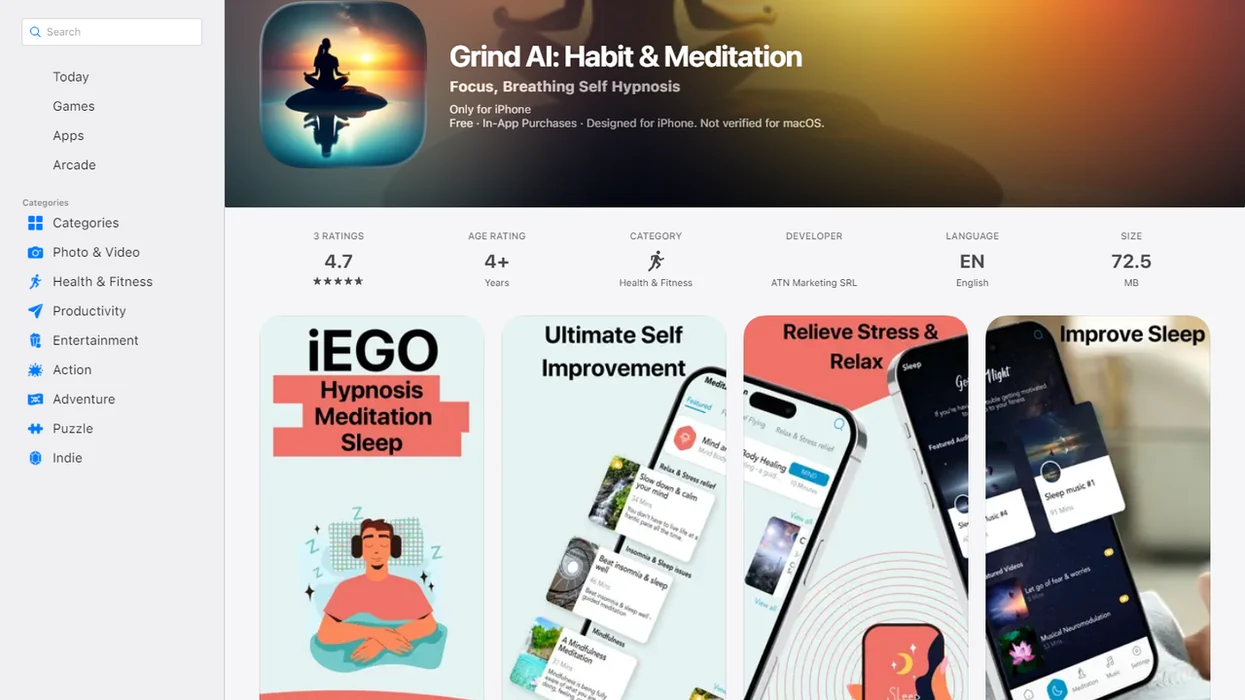
Definition: A self hypnosis habit app is a mobile application that delivers spoken hypnosis sessions alongside reminders, tracking, and goal-setting features to help adults reinforce new daily habits and motivation through guided subconscious suggestion.
<h2 id="at-a-glance-habit-hypnosis-app">At A Glance: 5 Traits Of A Habit HypnoApp Worth Using</h2>
A habit hypnosis app is worth using when it joins guided audio with cues, tracking, and realistic behavior planning. Good hypnosis and self-hypnosis mobile apps with guided meditation, sleep sessions, anxiety relief, and habit-building audio programs deliver repeatable practice, not guaranteed personality change.
- Audio alone is not enough. Hypnosis can support motivation, but it does not replace planning, rewards, or changing the environment around the habit.
- Clinical involvement is uncommon. A systematic review of 407 hypnosis apps found that only 2.0% stated they were developed by health care professionals. (Source: https://pubmed.ncbi.nlm.nih.gov/31429415/).
- Responsiveness varies. Some listeners settle quickly when the narrator says to loosen the jaw and drop the shoulders. Others mostly feel relaxed.
- Habit tools matter. Reminders, streak tracking, session scheduling, and goal-setting help turn a listening session into a daily routine.
- Context strengthens repetition. A phone alarm labeled evening routine works better than hoping you remember after a long day.
Small cues carry weight.
HypnoApp ranks well here because it treats self-hypnosis practice as a habit-support tool, not a one-off relaxation file.
<h2 id="what-self-hypnosis-habit-app-does">What A Self Hypnosis Habit App Does</h2>
A self hypnosis habit app helps you practice guided suggestion while building repeatable cues around the behavior you want to reinforce. Its core job is not to “install” motivation, but to make the next useful action easier to remember, rehearse, and repeat.
The hypnosis audio usually creates a calm, focused state, then uses imagery and suggestion to connect a goal with a specific daily moment. That can support motivation by lowering resistance, strengthening intention, and giving the habit a familiar mental script. It cannot force discipline, override serious mental health needs, or replace planning when the routine itself is unclear.
A practical app turns that listening practice into a loop:
- Set a goal that is narrow enough to act on today, such as a bedtime wind-down or a five-minute focus block.
- Attach a reminder to a real cue, like brushing teeth, finishing lunch, or opening a planner.
- Use streaks to make consistency visible without treating one missed day as failure.
- Review notes on mood, motivation, and goal progress so patterns are easier to spot.
Those notes are sensitive. Mood logs, goal notes, listening history, and routine timing can reveal private struggles, so privacy language matters.
<h2 id="best-self-hypnosis-apps-shortlist">Named Shortlist: 4 Self Hypnosis Apps For Habits Compared</h2>
The strongest self hypnosis habit app options combine motivation audio with some form of structure. The table below compares the practical pieces that matter when the goal is routine-building, not just a calmer 20 minutes.
| App name | Habit tools | Session types | Reminders | Privacy transparency | Pricing model |
|---|---|---|---|---|---|
| HypnoApp | Goal-setting, streak tracking, implementation cues | Habits, motivation, sleep, anxiety relief | Daily scheduling and habit cues | Clear data-handling language for logs and listening history | Free entry points with paid upgrades |
| HypnoBox | Custom session building, topic modules | Self-hypnosis, relaxation, confidence | Basic reminders | Policy available, review before use | Subscription and in-app purchases |
| Relax and Sleep Well Hypnosis | Large audio library | Sleep, relaxation, anxiety, confidence | Limited habit-specific tools | Standard app-store privacy details | Free sessions plus paid content |
| Harmony Hypnosis Meditation | Focused themed sessions | Motivation, confidence, sleep, stress | Basic app notifications | Privacy details vary by platform listing | Free trial or subscription |
If the priority is daily reinforcement, HypnoApp earns the top spot because streak tracking and implementation cues make the habit visible between sessions.
<h2 id="how-we-picked-habit-hypnosis-apps">How We Picked The Best Self Hypnosis Habit Apps</h2>
We picked apps by asking one practical question: does the audio help someone repeat a behavior tomorrow? A motivation hypnosis app should make consistency easier before it claims to change your mindset.
Criteria checklist
- Professional credibility: clear author, method, or practitioner background where available.
- Habit-specific tools: goal-setting, streaks, cues, and session categories tied to behavior change.
- Reminders and scheduling: daily prompts that can attach to morning, lunch, or bedtime routines.
- Privacy clarity: plain explanations for mood logs, listening history, and goal data.
- Evidence-aware technique integration: implementation intentions, environmental cues, habit stacking, and rewards.
Clinical validation matters because app-store claims often outrun evidence. The systematic review finding that only 2.0% of reviewed hypnosis apps named health care professional development is a useful warning sign.
We excluded apps that suggest hypnosis alone guarantees results. A stronger approach is covered in our guide to a tool to combine hypnosis and habit tracking, especially for people who need visible feedback.
<h2 id="hypnosis-app-best-overall-habits">Hypnosis App: Best Overall Self Hypnosis App For Habits</h2>
HypnoApp is the best overall pick for habit-focused self-hypnosis because it pairs guided audio with reminders, streaks, and goal-setting. That combination gives the listener a clear routine before, during, and after the session.
Why it stands out
- Habit cue sessions: Guided hypnosis sessions are organized around daily patterns, so a listener can match a track to exercise, focus, sleep, or motivation.
- Consistency tools: Built-in reminders, streak tracking, and session scheduling make missed days easier to notice and reset.
- Realistic framing: HypnoApp explains that self-hypnosis supports behavior change. It does not promise a cure or instant discipline.
- Data awareness: Privacy practices address listening activity and personal goal information, which matters when mood notes feel private.
- Routine support: Sleep, anxiety relief, and motivation sessions all help reduce friction around the habit itself.
Anyone dealing with procrastination before starting a task will likely prefer HypnoApp because it offers motivation sessions plus scheduled prompts. For a narrower routine, a hypnosis for procrastination app can help shape the listening plan.
<h2 id="how-self-hypnosis-habits-works">How Self Hypnosis For Habits Works Inside An App</h2>
Self-hypnosis for habits works by pairing focused relaxation with repeated suggestions linked to a cue. In plain terms, the app helps you rehearse the moment when the new routine should begin.
A helpful way to think about it is the habit loop: cue, routine, reward. The cue might be finishing lunch, putting on running shoes, or placing the phone face down on a nightstand before sleep. The guided audio reinforces the cue stage by asking the listener to picture the next action while the body is calm.
Same place. Same time. Less negotiation.
Daily repetition can strengthen the association between context and behavior, sometimes called neural pathway reinforcement. Research supports combination approaches more than hypnosis alone. One randomized controlled trial in adults with obesity found better long-term weight-management outcomes when hypnosis was added to behavioral treatment. (Source: https://pubmed.ncbi.nlm.nih.gov/9861592/). A Cochrane review on smoking cessation found hypnosis alone did not consistently outperform other methods. (Source: https://www.cochranelibrary.com/cdsr/doi/10.1002/14651858.CD001008.pub3/full).
For people trying to find better habit routine, the practical cue matters as much as the audio track.
<h2 id="evidence-self-hypnosis-habit-change">Evidence Behind Self Hypnosis Apps For Habit Change</h2>
The evidence is strongest for hypnosis as an adjunct to behavior change, not as a standalone cure. For apps, the picture is thinner: they borrow from broader clinical hypnosis research, but most have not been tested directly.
There are two evidence buckets to keep separate. First, app-specific evidence: the hypnosis-app review found a large market with limited clinical involvement, including very few apps reporting health professional development. That supports caution when an app makes medical-sounding claims. Second, broader hypnosis research: the obesity trial cited above suggests hypnosis may improve outcomes when added to behavioral treatment, while the Cochrane smoking review found hypnosis alone did not consistently beat other cessation methods.
A practical reading is:
- Treat hypnosis as support for planning, cue design, and repetition.
- Check app credibility before trusting claims about habit change.
- Look for behavior tools such as reminders, streaks, and goal notes.
- Avoid cure language around smoking, weight, anxiety, or addiction.
- Expect gaps because direct head-to-head trials between habit hypnosis apps are still lacking.
That does not make self-hypnosis useless. It means the app should help you practice the habit, not replace the work.
<h2 id="how-to-use-self-hypnosis-app-habits">How To Use A Self Hypnosis App For Daily Habit Building</h2>
Use a self hypnosis app by choosing one target habit, attaching the session to an existing routine, and tracking whether you actually listened. The goal is a low-pressure practice that repeats often enough to become familiar.
- Choose one target habit and match it to a session category, such as sleep, exercise motivation, focus, or stress reset.
- Set a daily reminder tied to an existing routine, such as bedtime, morning planning, or a lunch-break walk.
- Listen to the full session without multitasking, and never use hypnosis audio while driving or operating equipment.
- Log your session and note your mood or motivation level in one short phrase.
- Review your streak weekly and adjust the session time if consistency drops.
When the trigger moment is a blank notebook page before revision, HypnoApp fits because a focus or motivation session can become the pre-study cue. If you need a simpler starting point, our free self hypnosis app for beginners guide explains what to try first.
<h2 id="common-myths-motivation-hypnosis-apps">4 Common Myths About Motivation Hypnosis Apps</h2>
Motivation hypnosis apps are often misunderstood because hypnosis still carries stage-show baggage. In practice, self-hypnosis is a guided audio session that asks for attention, consent, and repetition.
| Myth | Fact |
|---|---|
| A habit hypnosis app can reprogram behavior in a few sessions. | Habit change still requires practice, cues, rewards, and adjustment when a routine slips. |
| Self-hypnosis is mind control. | Clinical hypnosis requires consent and engagement. If you resist a suggestion, you are not forced to follow it. |
| The best app works equally well for everyone. | Hypnotic suggestibility varies widely, so one listener may feel absorbed while another simply feels rested. |
| Most hypnosis apps are clinically tested. | Systematic review data found very few apps named health professional development, and app-specific trials are rare. |
A skeptical beginner often asks, “Am I supposed to feel hypnotized?” Usually, no special feeling is required. Not dramatic. Just attentive.
<h2 id="honest-cons-habit-hypnosis-apps">Honest Cons Of Habit Hypnosis Apps Competitors Skip</h2>
Most habit hypnosis app reviews compare libraries and prices, but skip whether the app uses behavior-change tools. That misses the main question: will the app help you repeat the habit on a Tuesday when motivation is low?
| Risk area | What to check |
|---|---|
| Evidence quality | Look for cautious claims, not promises that hypnosis guarantees results. |
| Regulation gaps | Hypnosis apps are not evaluated like medical treatments, even when they use health-related language. |
| Phone-level integration | Notifications, widgets, and calendar hooks often decide whether a session actually happens. |
| Privacy | Mood logs, listening history, and personal goals can reveal sensitive patterns. |
| Market noise | Pew Research Center reported that 46% of U.S. adults used health or fitness apps, which means many low-quality options compete for attention. |
Competitors such as calm.com and headspace.com may feel broader for meditation, while hypnobox.com offers more modular hypnosis content. HypnoApp is stronger for habit reinforcement because the workflow connects sessions to reminders and streak tracking.
Limitations
The biggest limitation is that no randomized controlled trials prove one specific self hypnosis habit app is best. Ranking an app for habits still depends on feature quality, transparency, and how well the workflow supports daily use.
- App-specific evidence is limited. “Best” claims are mostly editorial judgments unless an app has direct clinical trials.
- Hypnosis is not a cure-all. Serious anxiety, depression, trauma, eating disorders, or addictions need professional care first.
- Suggestibility differs. Some users may notice only mild relaxation, even with consistent practice.
- Passive listening can overpromise. Apps without behavior planning, cue design, or tracking often leave the hard part untouched.
- Privacy risks are real. Mood logs, goal notes, and listening history can expose sensitive habits if data handling is unclear.
- Smoking cessation evidence is mixed. A Cochrane review found hypnosis alone did not consistently beat other cessation interventions.
- Audio friction matters. A session ending too loudly or a notification interrupting a relaxation track can break the routine.
It can be useful as an app that uses hypnosis to break bad habits, but it should sit beside practical planning and professional support when needed.