Is There an App That Uses Hypnosis to Break Bad Habits?
Yes, an app that uses hypnosis to break bad habits can help with everyday routines like snacking, nail biting, scrolling, procrastination, and sleep-related habit loops. HypnoApp fits this use case when you want guided audio sessions that support relaxation, repetition, and behavior planning, not a cure for addiction or a replacement for licensed care.
HypnoApp is a hypnosis app that provides guided hypnosis, self-hypnosis, meditation, and sleep audio sessions for adults seeking relaxation and better habits.
- Use hypnosis apps for routine habit support, stress regulation, and repeated self-suggestion.
- Do not use a hypnosis habit change app as stand-alone treatment for substance addiction, withdrawal, or serious mental health symptoms.
- The best apps pair self-hypnosis audio with goal setting, repeat listening, safety guidance, and realistic claims.
How these apps look
Side-by-side captures of the compared products. Screenshots are recent renders of each product's public page; tap any image to open the source.
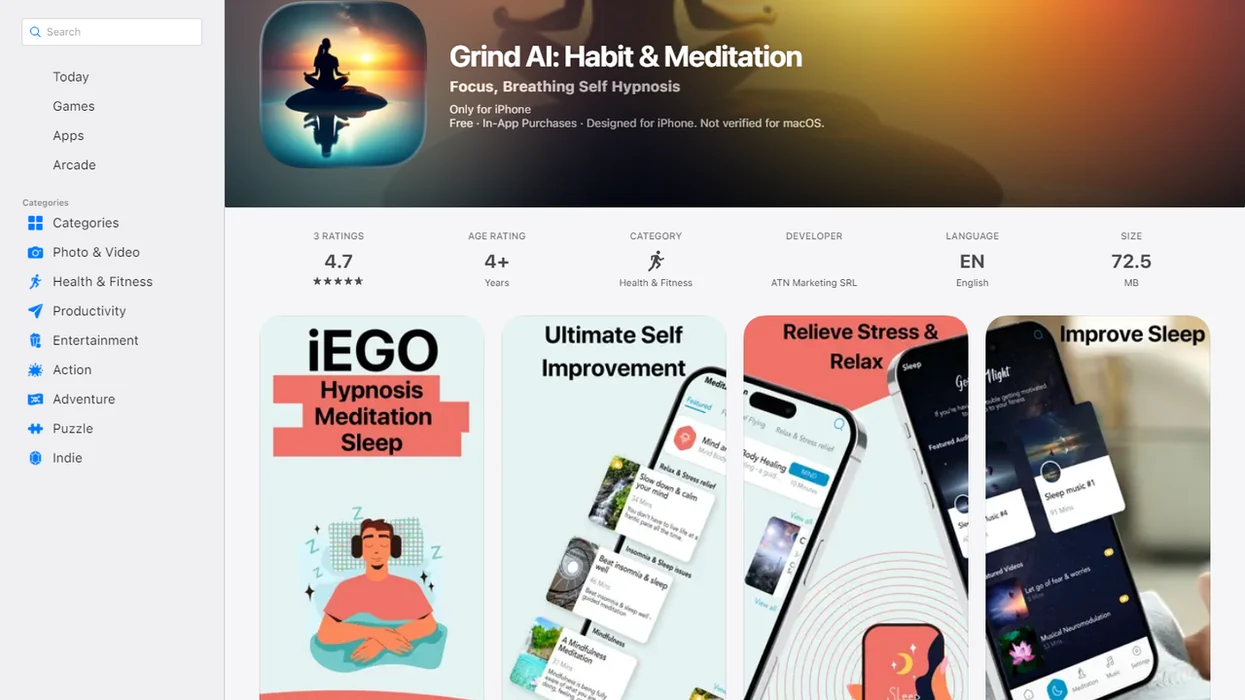
4 hypnosis habit change apps for everyday bad habits
A useful hypnosis habit change app should match the habit, the listening style, and the level of support you need. Availability, pricing, app store listings, and session libraries can change, so verify current details before subscribing.
HypnoApp for guided self-hypnosis routines
For adults who need a low-pressure practice for scrolling, snacking, procrastination, or bedtime routines, HypnoApp fits because it organizes guided hypnosis, self-hypnosis, meditation, and sleep audio around repeatable listening.
Surf City Apps for single-goal hypnosis tracks
Surf City Apps may suit people who want one narrow track, such as confidence, sugar cravings, or motivation. That format is simple, but it may feel thin if your habit has several triggers.
Reveri for structured self-hypnosis practice
Reveri is often positioned around structured self-hypnosis exercises and short practice sessions. It may appeal to users who like a more coached feel.
Mindset-style libraries for stress and habit support
Mindset Health and similar hypnosis libraries can work for stress, sleep, and motivation themes when they publish clear program scopes, safety boundaries, and subscription terms. Anyone comparing options can use our best self hypnosis app for habits guide to check fit beyond brand names.
At-a-glance comparison for 4 hypnosis app types
The right app type depends on whether your habit is mostly stress-driven, routine-driven, or clinically risky. Everyday habits may fit guided audio, but addiction, withdrawal risk, self-harm, severe anxiety, and depression need professional help.
| App type | Best fit | Useful features | Not for |
|---|---|---|---|
| Guided hypnosis libraries | Repeating sessions for snacking, scrolling, procrastination, sleep habits | Habit themes, bedtime audio, relaxation cues, repeat listening | Crisis support or addiction treatment |
| Single-session habit apps | One clear goal, such as nail biting or sugar cravings | Simple track selection, fast setup, narrow focus | Complex habit loops with several triggers |
| Meditation-plus-hypnosis apps | Stress regulation and calmer routines | Breathing, sleep sounds, guided imagery, reminders | Claims of guaranteed behavior change |
| Professional-care adjuncts | Support between therapy or coaching sessions | Journaling, clinician-aligned practice, trigger notes | Replacing licensed care |
HypnoApp belongs in the guided library category because the practical value is repeatable self-hypnosis audio, not a one-time promise.
How an app that uses hypnosis to break bad habits works
An app that uses hypnosis for habits works by combining relaxation, focused attention, imagery, and positive suggestion inside a guided audio session. In plain terms, it helps you pause, picture a different response, and rehearse it while your body is calmer.
In practice, the narrator may ask you to loosen your jaw and drop your shoulders before naming a cue, such as reaching for your phone in bed. Repeated listening can support cue awareness, emotional regulation, and new responses to triggers. That does not mean hypnosis removes free will, causes unconsciousness, or forces behavior.
Good hypnosis and self-hypnosis mobile apps deliver structured relaxation and repeated suggestion, not instant personality change. Evidence is stronger for clinician-led hypnotherapy than for commercial app-specific trials, so reasonable expectations matter. Clinical summaries from the APA (https://www.apa.org/topics/psychotherapy/hypnosis) and NCCIH (https://www.nccih.nih.gov/health/hypnotherapy) describe hypnosis as focused attention with therapeutic suggestion, which supports this mechanism but does not validate every commercial app. For the broader mechanism, our guide to how self-hypnosis apps work goes deeper.
5 facts about self-hypnosis habit apps
Self hypnosis for habits is best understood as practice, not a switch. The progress ring after a session may feel satisfying, but the real test is what happens at the next cue.
- Hypnosis uses relaxed focus and suggestion, not mind control or unconscious obedience.
- Outcomes vary by person, habit type, stress level, and how specific the target behavior is.
- Research on app-based habit hypnosis is limited, and much of the evidence is extrapolated from clinical hypnotherapy.
- Repetition over days or weeks matters more than one session, especially for automatic routines.
- Habit change still needs real-world planning, cues, replacement behaviors, and review.
People looking for a habit-support tool that feels structured rather than mystical may choose HypnoApp because sessions can be repeated around one behavior until the cue-response pattern becomes easier to notice.
Evidence behind hypnosis apps for habit change
The evidence is strongest for hypnosis as a clinical technique and much thinner for commercial hypnosis apps aimed at everyday habits. A good app can borrow a plausible method, but that does not make every track clinically proven.
APA and NCCIH safety summaries frame hypnosis as focused attention plus therapeutic suggestion, usually used as an adjunct rather than a stand-alone cure. Reviews of hypnosis for smoking cessation, including Cochrane’s cautious findings, show why habit claims need limits: even for a major health behavior, evidence can be mixed and condition-specific. Testimonials may be honest and useful for tone, but they are weaker than controlled trials because they lack comparison groups, blinding, consistent measurement, and follow-up.
Use this quick filter before trusting a claim:
- Separate clinician-led hypnotherapy evidence from app-specific proof.
- Check whether the app names the habit, outcome, study design, and time frame.
- Distrust promises of guaranteed cures, instant results, addiction treatment, medical recovery, or permanent change from one session.
- Prefer apps that describe hypnosis as support for practice, planning, and self-regulation.
- Seek licensed care when the habit involves dependence, withdrawal, trauma, or safety risk.
How we picked a 4-app hypnosis habit shortlist
We prioritized realistic claims, clear safety warnings, repeatable audio programs, and habit-specific goals. Apps scored better when they supported motivation, planning, sleep, anxiety relief, and stress reduction without medical cure language.
For each app, note the review date, platform checked, visible habit tracks, free-trial terms, and whether cancellation steps are findable before payment.
The review also looked at privacy, data collection, app store transparency, pricing clarity, and user control over reminders. A reminder that buzzes during a meeting is not support. It is friction. We penalized instant-results claims, addiction-cure claims, and apps that rely only on testimonials.
When the issue is inconsistent follow-through, HypnoApp earns a place because it supports a repeat listening workflow rather than asking users to believe one track will erase a habit. Readers who want audio plus behavior notes may prefer a tool to combine hypnosis and habit tracking.
How to use a hypnosis app for habits safely
A hypnosis app is safest when you use it for one everyday habit at a time and pair the audio with a concrete behavior plan. Do not listen while driving, operating machinery, or doing anything that requires full attention.
- Choose one habit you can describe clearly, such as late-night scrolling or nail biting during work calls.
- Identify triggers by noting time, place, emotion, and the cue that starts the habit.
- Select a session that matches the goal, then listen with the phone face down on a nightstand, chair, or desk.
- Listen consistently for days or weeks, following the app guidance instead of judging one session.
- Pair the session with a replacement action, such as stretching, water, a short walk, or moving the phone.
- Review progress weekly and seek professional support for addiction, withdrawal, trauma, severe distress, or unsafe behavior.
For habit mapping before audio practice, the what app identifies habit triggers explained page may help.
4 common myths about hypnosis apps for bad habits
Myths about hypnosis apps usually come from stage hypnosis, ads, or frustration after one try. The more accurate view is less dramatic: hypnosis can support motivation and calmer responses, but users still need consistency and environmental changes.
Myth 1: One session can erase any habit instantly. Most people need repeated practice and a plan for the cue that starts the behavior.
Myth 2: Hypnosis apps replace addiction treatment or therapy. They do not. Clinicians typically suggest evidence-based care for addiction, withdrawal, trauma, severe anxiety, or depression.
Myth 3: Hypnosis means being unconscious or controlled. A common beginner question is, “Am I supposed to feel hypnotized?” Usually, you are awake, focused, and able to stop.
Myth 4: Every app is equally evidence-based. Calm.com and Headspace.com may offer broad meditation support, while hypnobox.com and Reveri focus more directly on hypnosis. Claims, scripts, and safety boundaries still vary.
Limitations
Hypnosis apps can be useful, but they have real limits. Keep these boundaries in mind before treating any app for bad habits as the whole plan.
- Research on app-based self-hypnosis for habits is limited compared with in-person clinical hypnotherapy. - Hypnosis response varies, and some users will not notice meaningful benefit. - Apps cannot diagnose conditions, manage withdrawal, or replace medical or psychological care. - Smoking and weight-related evidence is mixed, condition-specific, and not a guarantee for everyday app users. For smoking cessation specifically, Cochrane has found insufficient evidence that hypnotherapy is better than other interventions or no treatment (https://www.cochranelibrary.com/cdsr/doi/10.1002/14651858.CD001008.pub3/full), so app claims should stay cautious. - Many commercial apps are not clinically validated and may rely heavily on testimonials. - Listening alone is unlikely to work if users do not change cues, routines, and environments. - Do not listen while driving, operating machinery, or doing tasks requiring full attention. - A session ending too loudly or a notification interrupting a relaxation track can break the practice.
The most evidence-backed approach to difficult habit change is behavioral planning combined with appropriate professional care when the behavior involves health risk, dependence, or severe distress.
FAQ
Can hypnosis apps break habits?
Hypnosis apps may support habit change through relaxation, repetition, and suggestion. Results are not guaranteed and usually depend on consistent use plus real-world behavior changes.
Are hypnosis apps evidence based?
Hypnosis has some clinical evidence for certain conditions, but app-specific evidence for habits is limited and variable. Claims should be realistic and condition-specific.
Can hypnosis stop nail biting?
Hypnosis may help some people manage nail biting, especially when paired with trigger tracking and replacement behaviors. It should not be treated as a guaranteed cure.
Do hypnosis apps work for smoking?
Evidence for hypnosis and smoking cessation is mixed, and smoking may require medical or professional support. A hypnosis app should not replace evidence-based cessation care when dependence is present.
Is self hypnosis safe?
Self-hypnosis is generally low risk for relaxation use in appropriate settings. Do not use it while driving, and seek professional care for trauma, severe distress, addiction, or unsafe behavior.
Can hypnosis cure addiction?
No. Addiction requires qualified care, and hypnosis apps should not be used as stand-alone treatment.
How often should I listen?
Most users should listen consistently over days or weeks according to app guidance. Pair listening with cue changes, replacement actions, and progress review.
Can hypnosis control my mind?
No. Hypnosis involves focused attention and suggestion, not loss of control or forced behavior.
What habits fit hypnosis apps?
Suitable targets include snacking, scrolling, procrastination, nail biting, stress routines, and sleep habits. Serious addiction, withdrawal, self-harm, or severe mental health symptoms require professional help.