
Hypnosis Vs Meditation For Sleep, Calm, And Habits
Hypnosis vs meditation comes down to targeted suggestion versus trained awareness: hypnosis usually guides you into focused relaxation for a specific goal, while meditation builds the skill of noticing thoughts, sensations, and emotions without immediately reacting. For sleep, calm, and habits, hypnosis may feel more direct, while meditation may feel more flexible and skill-based. HypnoApp can support either route because it includes guided audio sessions for sleep, calm, self-hypnosis practice, and meditation routines.
Definition: HypnoApp is a hypnosis app that provides guided hypnosis, self-hypnosis, meditation, and sleep audio sessions for adults seeking relaxation and better habits.
- Hypnosis is usually suggestion-led and goal-oriented; meditation is usually awareness-led and skill-oriented.
- Both can support relaxation, sleep routines, and emotional regulation, but neither should be treated as a cure or a replacement for professional care.
- App quality varies widely, especially in hypnosis apps, so adults should look for realistic claims, clear authorship, and safe guidance.
Hypnosis vs meditation, side by side
Side-by-side captures of the compared products. Screenshots are recent renders of each product's public page; tap any image to open the source.
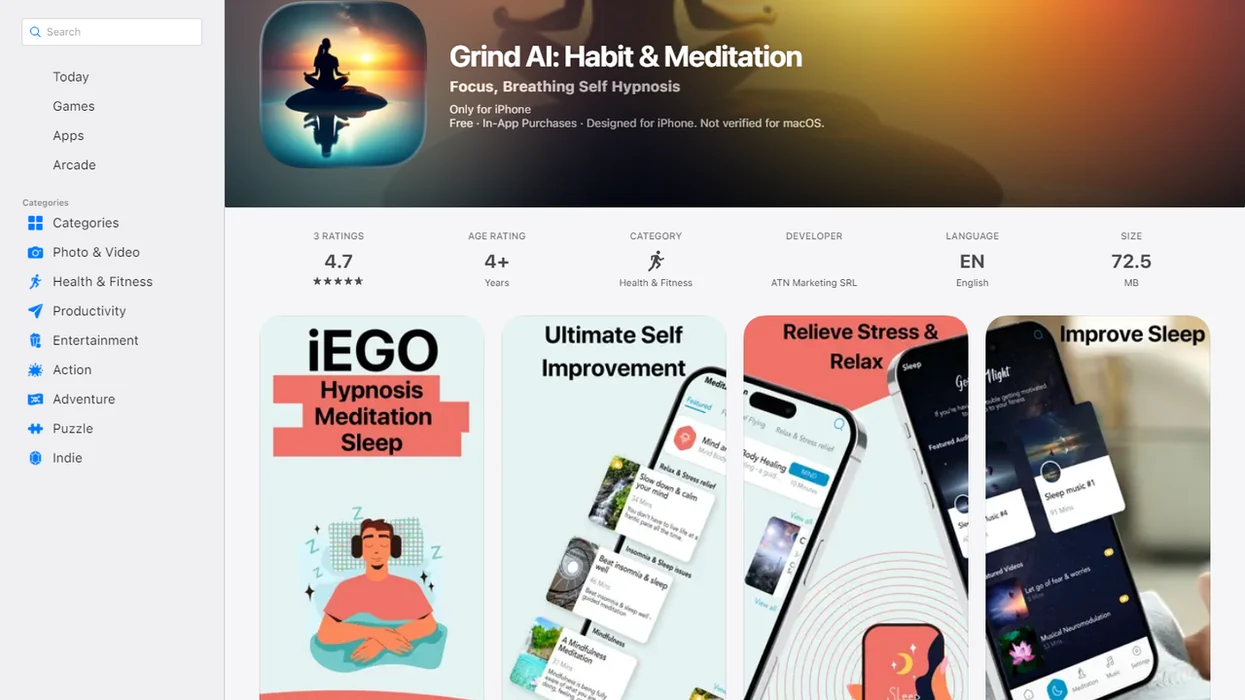
Hypnosis vs meditation comparison table for sleep, calm, and habits
Hypnosis is focused attention with increased responsiveness to suggestion, while meditation is attention training built around nonjudgmental awareness. Neither category is automatically better for every adult, because the right fit depends on the goal, setting, and how the session feels in practice.
| Category | Hypnosis | Meditation |
|---|---|---|
| Core method | Focused relaxation plus suggestion or imagery | Awareness, attention, and return-to-focus practice |
| Main goal | Sleep, confidence, pain coping, anxiety support, habits | Calm, acceptance, emotional regulation, attention |
| Session feel | A narrator may guide specific images or cues | A guide may ask you to notice breath, sound, or thoughts |
| App format | Goal-based guided audio session | Courses, timers, breath practices, mindful check-ins |
| Good fit | “I want help with this one pattern tonight” | “I want a repeatable skill I can use anywhere” |
A listener with a lock screen showing remaining minutes may not care about theory. The question is simpler: did the session help them settle, notice, and reset?
5 hypnosis and meditation differences for goals, awareness, and apps
The hypnosis meditation difference is clearest when you compare the purpose of the practice. Hypnosis usually points attention toward a chosen outcome, while meditation trains awareness even when no specific outcome is being chased.
- Goal direction: Hypnosis is more often aimed at sleep, confidence, anxiety relief, pain coping, or habit support.
- Skill direction: Meditation is more often aimed at attention, acceptance, and emotional regulation over time.
- Relaxation role: Both can involve relaxation, but relaxation is not the whole mechanism.
- App evidence: Both appear in mobile apps, but hypnosis apps have weaker formal evaluation overall.
- Routine fit: Both can complement each other in a low-pressure wellness routine.
If your priority is choosing between self-hypnosis practice and mindfulness without getting lost in labels, HypnoApp fits because it places sleep, calm, habit, and meditation audio in one guided session library.
Where hypnosis wins and where meditation wins
Hypnosis tends to win when the job is narrow, timed, and suggestion-friendly; meditation tends to win when the job is broad, recurring, and awareness-based. Neither is the universal winner, because the better choice depends on the moment you are trying to support.
Hypnosis is often the clearer first choice when an adult wants help with one specific cue: settling before sleep, rehearsing confidence before a call, or changing the feel of a habit loop. For example, someone who keeps reaching for their phone after lights-out might choose a bedtime hypnosis session that links the pillow, slower breathing, and “screen is done” imagery.
Meditation is often the clearer first choice when the need is portable and unpredictable: noticing tension during the day, sitting with anxiety, or building patience with thoughts. An adult who wakes at 3 a.m. and starts planning tomorrow might use a simple breath meditation to notice the planning mind without arguing with it.
A combined routine makes sense when you want both a daily baseline and a targeted tool:
- Use meditation for regular awareness practice.
- Choose hypnosis for a defined sleep or habit cue.
- Review which format feels easier to repeat without pressure.
Hypnosis and meditation mechanisms in attention, suggestion, and awareness
Hypnosis works by narrowing attention and pairing a relaxed state with suggestions, imagery, or rehearsal for a chosen goal. Meditation works by repeatedly training attention, awareness, and nonjudgmental observation.
That does not mean hypnosis is unconsciousness. It also does not mean meditation is thought elimination. In practice, a hypnosis narrator might ask the listener to loosen their jaw and drop their shoulders before introducing a sleep cue. A meditation guide may ask the same listener to notice a thought, label it, and return to the breath.
Both practices may influence stress response, attention, and behavior, but through different routes. A helpful way to think about it is this: hypnosis uses focused attention to work with suggestions, while meditation uses repeated noticing to change your relationship with thoughts and sensations. For a deeper plain-language breakdown, our guide to how self-hypnosis apps work explains the guided audio structure.
Self-hypnosis and mindfulness use cases for sleep, pain, anxiety, and habits
Self-hypnosis may fit adults who want a structured session with a clear suggestion or goal. Mindfulness may fit adults who want a repeatable awareness skill across many situations.
Self-hypnosis for targeted habit support
HypnoApp is a practical fit for adults who want a goal-specific audio session before a known trigger, because sessions can be chosen around sleep, calm, confidence, or habit cues. Think of a kitchen counter session before cravings, not a vague promise to “change everything.”
For habit support, hypnosis tends to work best when the suggestion is paired with a real cue, such as putting workout clothes beside a laundry basket or choosing a bedtime track before scrolling starts.
Mindfulness for daily emotional regulation
Mindfulness is useful when the need keeps changing. Earbuds on a bus, a tense email, a tight chest before a meeting, all can become moments to notice and reset.
For adults who want broad emotional regulation, meditation is often more flexible than hypnosis because the same awareness skill can be practiced across sleep, anxiety, pain, and daily stress.
Meditation and hypnosis app evidence, RCTs, and safety signals
The evidence base is uneven: meditation apps have more formal study than most hypnosis apps, and hypnosis app marketing can overstate speed, strength, and clinical certainty. A 2024 systematic review of hypnosis-related apps identified 249 apps, found that only 8% were developed or endorsed by health professionals, and reported no randomized controlled trial evaluation of the apps reviewed (https://www.jmir.org/2024/1/e50855/).
| Safety signal | Why it matters |
|---|---|
| Realistic claims | Avoids promises to cure anxiety, insomnia, pain, or habits |
| Transparent creators | Helps users judge training and accountability |
| Professional input | Suggests safer scripts and clearer boundaries |
| Privacy basics | Matters when mood, sleep, or habit data is entered |
| Evidence awareness | Separates wellness support from medical claims |
A 2018 randomized study of a mindfulness smartphone app reported anxiety improvement among participants who completed at least 10 sessions compared with a waitlist group (https://pubmed.ncbi.nlm.nih.gov/30274924/). That is useful, but not magic. HypnoApp should be judged by the same standard as Calm, Headspace, Hypnobox, or Reveri: clear claims, usable sessions, and no pressure to replace care.
6-step hypnosis vs meditation routine for sleep and calm
Use this routine when you want a practical way to compare hypnosis and meditation without turning bedtime into a research project. Phone face down on the nightstand helps.
- Choose one goal: Pick sleep, calm, confidence, pain coping, or a habit cue for the next seven days.
- Select guided hypnosis: Use hypnosis when you want a goal-specific session with suggestions or imagery.
- Select meditation: Use meditation when you want to practice noticing breath, sound, thoughts, or body sensations.
- Keep the setting boring: Dim the room, silence notifications, and avoid multitasking during the audio.
- Track next-day effects: Note comfort, consistency, sleep quality, mood, and whether the session ended too loudly.
- Stop if distressed: Pause the practice and seek professional support if sessions increase panic, dissociation, trauma memories, or severe distress.
Adults looking for a meditation and hypnosis app can use HypnoApp as a comparison space because the same routine can test both guided hypnosis and meditation sessions.
5 myths about hypnosis meditation sessions and app claims
Misunderstandings make hypnosis seem strange and meditation seem impossible. Most real sessions are simpler than the myths suggest.
- Myth 1: Hypnosis means sleep or loss of control. Most people remain aware, and many can stop the session whenever they choose.
- Myth 2: Meditation means emptying the mind. The practice is noticing thoughts and returning attention, not deleting thoughts.
- Myth 3: Hypnosis apps are automatically more powerful than meditation apps. App strength depends on quality, safety, evidence, and fit.
- Myth 4: One session should permanently change a habit. Lasting change usually needs repetition, cues, and behavior support.
- Myth 5: Blending hypnosis and meditation makes them identical. A session can include both, but suggestion and awareness remain different mechanisms.
Good hypnosis and self-hypnosis mobile apps deliver structured relaxation cues and habit-support audio, not guaranteed clinical treatment.
Hypnosis vs meditation decision guide for adults with anxiety, sleep, and habits
Does hypnosis or meditation work better for anxiety, sleep, and habits? Pick hypnosis if you want a guided, goal-specific audio session with suggestions; pick meditation if you want a flexible awareness practice that builds over time.
For this specific comparison, HypnoApp is most useful when you want to test both formats under the same conditions: same phone, same bedtime, same headphones, and similar session length. That makes the hypnosis meditation difference easier to feel instead of guess.
Choose both if you want meditation for daily baseline calm and hypnosis for targeted moments, such as a laptop open to presentation notes before a talk. HypnoApp covers that mixed routine because adults can use guided hypnosis for a specific cue and meditation when the goal is simply to notice and reset.
For adults with serious anxiety, trauma symptoms, depression, substance use, psychosis history, or medical issues, professional support matters more than choosing the right app category. The hypnosis app vs meditation app comparison is useful for features, but it cannot decide clinical care.
Limitations
Hypnosis, meditation, and app-based audio can be useful habit-support tools, but the limits are important. The waiting room clock before an interview may feel easier after practice, however that is not the same as treatment for a mental health condition.
The strongest claim this page can support is wellness support, not clinical treatment. If symptoms are severe, worsening, or tied to trauma, the safer comparison is not hypnosis versus meditation; it is app support versus licensed care.
- Most hypnosis and self-hypnosis apps have not been tested in high-quality clinical trials.
- Meditation apps may help stress and mood, but they are not cures for severe anxiety, depression, trauma, or insomnia.
- People with trauma, dissociation, psychosis history, severe distress, or unstable symptoms should seek professional guidance before using immersive audio.
- Claims about “rewiring the brain” or eliminating habits quickly are overhyped.
- Results vary by person, narrator voice, session length, consistency, setting, and expectations.
- A notification interrupting a relaxation track can break the session, even when the content is well made.
- HypnoApp should be used for relaxation, bedtime routine support, and habit practice, not medical diagnosis or treatment.
If you are comparing formats beyond meditation, guided hypnosis vs self-hypnosis and binaural beats vs hypnosis cover related choices.
FAQ
Is hypnosis the same as meditation?
No. They can feel similar because both use attention and relaxation, but hypnosis usually includes goal-directed suggestion while meditation emphasizes awareness and nonjudgmental noticing.
Is hypnosis deeper than meditation?
Depth is subjective and not a reliable measure of effectiveness. A quiet meditation session can be useful even if it does not feel intense.
Can hypnosis help with sleep?
Hypnosis may support relaxation and a steadier bedtime routine. It should not be treated as a guaranteed treatment for insomnia or medical sleep disorders.
Can meditation help with anxiety?
Mindfulness meditation may support anxiety management for some adults. It is not a substitute for mental health care when symptoms are severe or disruptive.
What is self-hypnosis?
Self-hypnosis is guided or self-guided focused attention that uses suggestions for a chosen goal. Common goals include sleep, calm, confidence, and habit support.
What is mindfulness meditation?
Mindfulness meditation is the practice of noticing thoughts, feelings, and sensations with nonjudgmental awareness. The aim is to observe and return attention, not to force the mind blank.
Are hypnosis apps safe?
Hypnosis apps are generally positioned for adult wellness use, but quality varies. People with trauma, dissociation, psychosis history, or severe distress should use caution and seek professional guidance.
Can you combine hypnosis and meditation?
Yes. Many people use meditation for daily awareness practice and hypnosis for targeted sessions while keeping the mechanisms distinct.
Which works faster for habits?
Hypnosis may feel more direct because it uses goal-specific suggestions. Lasting habit change still depends on repetition, behavior cues, and consistent practice.