
How Long Should Hypnosis Sessions Be for Beginners?
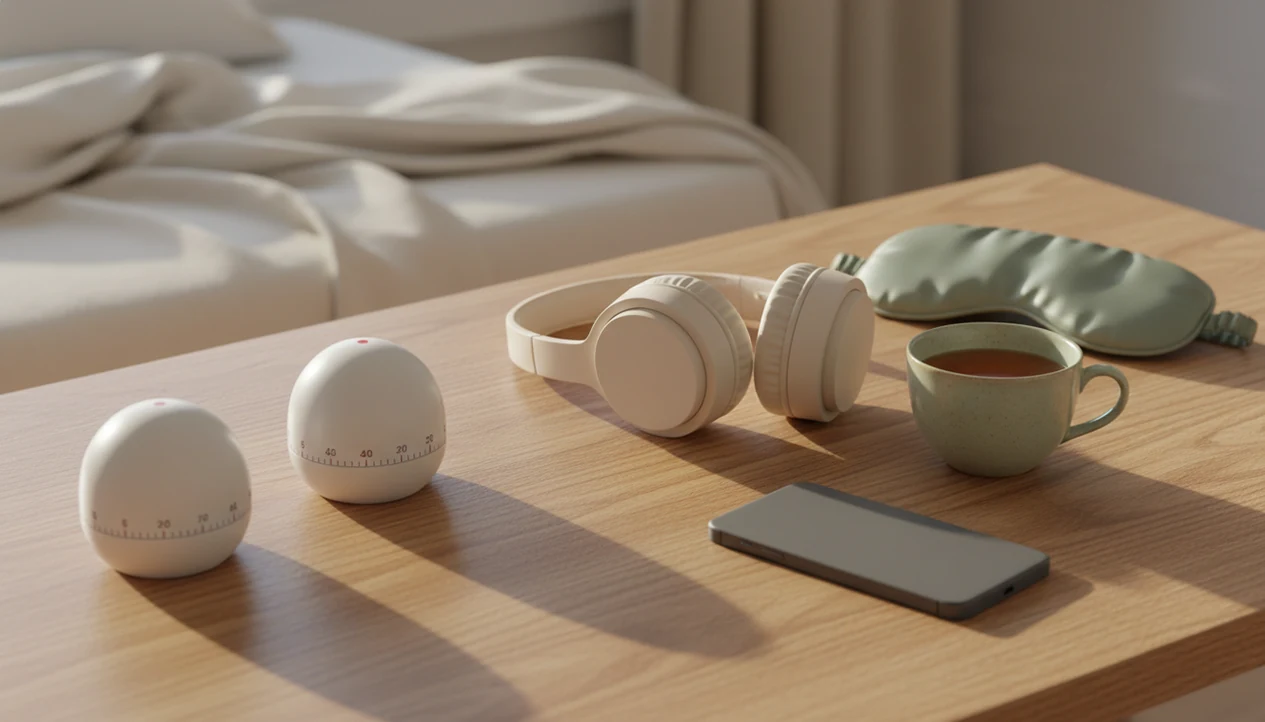
For beginners, how long should hypnosis sessions be depends on the goal: about 5-10 minutes for a quick reset, 15-20 minutes for most self-hypnosis practice, and 30-45 minutes for sleep or deeper habit routines. Consistency matters more than chasing the longest session, especially with app-based guided hypnosis.
Definition: HypnoApp provides guided hypnosis, self-hypnosis, meditation, and sleep audio sessions for adults seeking relaxation, focus, sleep support, and better habit routines.
- A 10 minute hypnosis session is useful for stress resets, confidence priming, and short daytime practice.
- A 20 minute self hypnosis session is often the best beginner length because it leaves time to relax, deepen focus, and hear suggestions.
- Longer 30-45 minute sessions are better suited to bedtime hypnosis, sleep routines, and more complex habit support.
Hypnosis session length at a glance
There is no single ideal hypnosis session length for every person. The useful length depends on your goal, your setting, and whether you can repeat the practice without forcing it.
| Session length | Best fit | What to expect |
|---|---|---|
| 5 minutes | Breathing reset, brief pause | A fast relaxation cue, not much room for deeper suggestion |
| 10 minutes | Quick resets, pre-event confidence, work breaks | Compact focus and suggestion, useful when the goal is narrow |
| 20 minutes | Beginner self-hypnosis, stress, focus, habit priming | Enough time for induction, deepening, suggestion, and return |
| 30 minutes | Bedtime wind-down, longer relaxation | More space to settle, but attention may fade |
| 45 minutes | Sleep hypnosis, layered habit support | Best when you can listen without interruption |
In-person hypnotherapy appointments often last 60-90 minutes total, but only part of that is formal trance work. Discussion, goal setting, and debriefing take time too.
Repetition matters. A 20-minute session used several times a week usually teaches the routine better than one unusually long recording.
How hypnosis session length works
A hypnosis session length works by dividing time across induction, deepening, suggestion, and return or sleep transition. In plain terms, the audio first helps you settle, then guides attention, then introduces the main idea, then brings you back or lets you drift.
Very short sessions must get to the point. A 10-minute track may use one breathing pattern, one relaxation cue, and one focused suggestion. There is less room for long imagery or multi-step habit rehearsal.
Longer is not automatically better. If attention drops after 18 minutes, a 40-minute track can become background sound. We see this often when a listener starts wondering, “Am I supposed to feel hypnotized?” instead of following the narrator.
Hypnosis can support relaxation, focus, and habit routines, not cure medical or mental health conditions. Formal hypnotherapy also includes conversation, planning, and review, which app audio does not replace.
Before choosing a hypnosis session length
What should you decide before choosing a hypnosis session length? Start with the goal: sleep, stress, confidence, focus, or habit support. A vague goal usually leads to a vague session choice.
Next, choose the listening context. A commute-free daytime window, work break, evening wind-down, and bedtime all ask for different lengths. A calendar alert before a reset break can support a 10-minute track. A quiet bedroom can support 30 minutes.
Do not listen while driving, operating machinery, supervising children in a way that needs alert attention, or doing anything safety-sensitive. Hypnosis audio is designed for inward focus, not divided attention.
If you are restless, skeptical, or new to hypnosis, start shorter. Choose a longer track only when the room, schedule, and your body can handle uninterrupted listening.
Phone face down helps.
How to use hypnosis session length for a beginner routine
Use one length long enough to settle, but short enough to repeat. Beginners usually learn more from a steady test week than from changing tracks every day.
- Set a goal: Choose one purpose, such as bedtime relaxation, work stress, confidence, focus, or habit support.
- Choose a starter length: Pick 10 minutes for a quick reset or 20 minutes for a fuller beginner session.
- Listen safely: Sit or lie down where you will not need to drive, respond quickly, or operate equipment.
- Repeat consistently: Use the same length several times before deciding whether it fits.
- Adjust after one week: Shorten if you quit early, or lengthen if relaxation begins right as the session ends.
Tools like HypnoApp can provide guided hypnosis, self-hypnosis, meditation, and sleep audio in different lengths, but the app is still a habit-support tool, not medical treatment. If you want the broader mechanics, our guide to how self-hypnosis apps work explains the structure in more detail.
Step 1: Match hypnosis session length to your goal
Match the session length to the job you want the audio to do. A short reset, a confidence routine, and a sleep transition do not need the same pacing.
Quick reset sessions
Use 5-10 minutes for a breathing reset, short anxiety time-out, or pre-meeting confidence cue. This format works well when note cards are trembling in one hand and you need a simple cue before speaking.
Habit and confidence sessions
Use 15-20 minutes for general self-hypnosis, focus, confidence, and habit priming. Habit work usually benefits from repetition, not one dramatic long session. For beginners, 20 minute self hypnosis is often easier than 45 minutes because it fits real schedules.
Sleep hypnosis sessions
Use 30-45 minutes for bedtime, sleep hypnosis, and longer wind-down routines. It should feel like a low-pressure practice, not a test you have to pass.
Step 2: Start with 10 minute hypnosis when time is limited
Is 10 minute hypnosis enough when time is limited? Yes, if the goal is compact: relax the body, shift attention, rehearse confidence, or pause a stress spiral.
A 10 minute hypnosis session works best when the script moves quickly into suggestion. There is not much space for a long induction, a detailed scene, and several habit themes. One job is better.
Good uses include a lunch-break reset, pre-call confidence, evening decompression, or a short breathing-led practice. We have tested sessions where the useful moment arrives when the narrator says to loosen the jaw and drop the shoulders. Small cue, real effect.
Still, 10 minutes is usually too short by itself for long-standing sleep problems, persistent anxiety patterns, or ingrained habits. Use shorter sessions more often rather than expecting one compact track to do everything.
Good hypnosis and self-hypnosis mobile apps with guided meditation, sleep sessions, anxiety relief, and habit-building audio programs deliver structured listening practice, not instant transformation or a substitute for care.
Step 3: Use 20 minute self hypnosis as the beginner sweet spot
A 20 minute self hypnosis session is a practical default because it gives the session room to breathe. It is long enough for structure, but not so long that most beginners avoid it.
- Twenty minutes usually allows a complete arc: induction, deepening, suggestion, and return can all fit without rushing.
- Twenty minutes is easier to repeat than 30-45 minutes: that matters when the goal is a routine, not a one-time experience.
- Twenty minutes fits confidence, stress regulation, focus, and habit-support audio: the track can include one clear theme and a few repetitions.
- Clinical research often studies repeated sessions over time: a 2016 systematic review and meta-analysis of 13 randomized controlled trials found hypnosis showed promise for stress and anxiety symptoms across structured use, not single-use listening (https://pubmed.ncbi.nlm.nih.gov/27585704/).
- The session should still feel tolerable: if the final five minutes feel like waiting for the end, choose a shorter track.
For beginners, 20 minute self hypnosis is often better than a longer session because it balances relaxation time with repeatability.
Step 4: Choose longer hypnosis sessions for sleep and habits
Choose 30-45 minute hypnosis sessions when the goal needs more settling time. Bedtime, deep relaxation, sleep transition, and multi-part habit routines often need slower pacing than a daytime reset.
A sleep track should front-load its important suggestions. Many listeners drift off early, especially with a bedroom speaker and lights already out. Falling asleep does not automatically mean the session failed. For sleep routines, the transition into rest may be part of the point.
Longer clinical formats can be very different from app listening. For example, gut-directed hypnotherapy trials have used structured multi-session protocols over weeks or months, which shows that repeated format and clinical support matter, not that a long app track produces the same outcome (https://pubmed.ncbi.nlm.nih.gov/27397586/).
If you want to compare listening styles, the guided hypnosis vs self-hypnosis guide explains why narrator-led and self-directed practice can feel different.
Step 5: Repeat the hypnosis session length you can sustain
The right hypnosis session length is the one you can use several times per week, or daily if it feels safe and comfortable. A consistent 10-20 minute practice can be more useful than rare long sessions that never become routine.
- Choose a repeatable window: Pick a time you can protect, such as after lunch, before study, or during evening wind-down.
- Track one outcome: Note perceived relaxation, sleep readiness, focus, or habit follow-through after each session.
- Keep the length stable: Use the same duration for 5-7 sessions before judging it.
- Shorten after repeated friction: If you quit early three times, the track is probably too long for that context.
- Lengthen when needed: If you only begin to relax as the session ends, add 5-10 minutes.
Clinical studies of hypnosis and self-hypnosis commonly examine multiple sessions over time. Clinicians typically recommend using hypnosis alongside appropriate professional care when symptoms are severe, persistent, or medically complex.
Common hypnosis session length mistakes
Most hypnosis session length mistakes come from treating duration like a score. It is not. The better question is whether the length supports attention, safety, and repetition.
- Assuming longer is always better: A restless 45-minute track may be less useful than a focused 15-minute practice.
- Using 10 minute hypnosis for every goal: Ten minutes can reset stress, but it may be too thin for layered sleep or habit work.
- Changing tracks every day: A routine needs time to settle before you can judge it fairly.
- Listening in unsafe contexts: Do not use hypnosis audio while driving, cycling in traffic, operating machinery, or needing fast reactions.
- Replacing professional care: Hypnosis should not replace therapy, medical diagnosis, medication, or crisis support.
The pocket check is real. Put the phone somewhere you will not keep reaching for it.
Signs your hypnosis session length is working
Your hypnosis session length is probably working if relaxation arrives more easily, restlessness drops, bedtime feels smoother, or the routine becomes easier to repeat. The sign is not always a dramatic hypnotic feeling.
Not remembering every word is not automatically a problem. Many listeners drift in and out, especially during sleep hypnosis. What matters is the pattern afterward: easier wind-down, calmer breathing, or better follow-through on the habit cue.
Shorten the track if you feel impatient, check the time, or repeatedly quit early. Lengthen it if your body only settles as the closing music begins. A playlist of short guided sessions can help you test this without overcommitting.
Judge patterns over a week or more. One interrupted session, such as a doorbell during the quietest part, does not tell you much.
For people comparing self-hypnosis with other audio practices, hypnosis vs meditation can help clarify what each format is designed to do.
Limitations
Hypnosis session length guidance is practical, but the evidence does not prove one exact minute count for everyone. Individual response varies, and app audio is not the same as practitioner-led care.
- No universal number exists: There is no strong clinical evidence proving one ideal minute count for all hypnosis sessions. - Research settings differ: Many studies examine practitioner-led hypnotherapy or structured programs, not the exact same thing as app-based audio. - Single sessions are easy to oversell: Many trials use multiple sessions, so one short recording should not be framed as a complete intervention. - Evidence varies by goal: Stress and anxiety support have more promising evidence than some habit-change claims, including claims around smoking or weight loss. For condition-specific questions, readers should compare claims against clinical sources such as the NIH National Center for Complementary and Integrative Health overview of hypnosis: https://www.nccih.nih.gov/health/hypnosis. - Professional care still matters: Hypnosis should not replace medical diagnosis, therapy, medication, or emergency care. - Some people need guidance first: People with complex trauma, psychosis, dissociation concerns, or severe symptoms should speak with a qualified professional before using hypnosis. - Preferences are personal: Attention span, sleep tendency, schedule, and comfort with hypnosis all affect the right length.
Reasonable expectations protect the practice.
FAQ
Is 10 minute hypnosis enough?
Yes, 10 minute hypnosis can be enough for a quick reset, focused breathing, or short confidence cue. It is usually limited for deeper habits, chronic sleep problems, or long-standing anxiety patterns.
Is 20 minute self hypnosis effective?
A 20 minute self hypnosis session is often practical because it leaves time for relaxation, focused suggestion, and return. Effectiveness depends on the goal, repetition, and safe listening context.
Can hypnosis sessions be too long?
Yes, hypnosis sessions can be too long if they cause restlessness, sleepiness at the wrong time, or poor consistency. A shorter session used regularly may fit better.
How often should I listen to hypnosis?
Many adults use hypnosis audio several times per week or daily when it feels safe and comfortable. Consistency matters more than finding a perfect time of day.
Should I use hypnosis before bed?
Bedtime hypnosis can be useful when the goal is wind-down, relaxation, or sleep transition. Choose a track that is safe for sleep and does not require alert attention afterward.
Does hypnosis work if I fall asleep?
Falling asleep does not automatically make a hypnosis session useless, especially for sleep routines. For goal-focused habit work, you may prefer a daytime session when you can stay more aware.
How long is a hypnotherapy appointment?
A formal hypnotherapy appointment often lasts about 60-90 minutes total. App-based self-hypnosis audio is usually shorter because it does not include intake, discussion, or debriefing.
Can I do hypnosis daily?
Daily app-based listening can be reasonable for many adults if it is comfortable, safe, and not used while driving or doing risky tasks. HypnoApp and similar tools should not replace professional care when symptoms are severe or worsening.