Sleep Hypnosis App For Beginners Starting A Calming Bedtime Routine
A sleep hypnosis app for beginners is best used as a guided bedtime routine, not a magic switch for instant sleep. Choose an app with clear sleep sessions, qualified hypnosis guidance, low-screen bedtime controls, and simple audio you can repeat nightly.
Definition: HypnoApp is a hypnosis app that provides guided hypnosis, self-hypnosis, meditation, and sleep audio sessions for adults seeking relaxation and better habits.
TL;DR
- Beginner sleep hypnosis uses guided audio, breathing, body relaxation, imagery, and sleep-focused suggestions to support a calmer bedtime.
- The strongest results usually come from repeating the same routine for days or weeks while also managing light, caffeine, screens, and bedtime consistency.
- Sleep hypnosis apps can be useful relaxation tools, but they should not replace medical care for chronic insomnia, sleep apnea symptoms, severe anxiety, depression, or worsening sleep problems.
Sleep Hypnosis App For Beginners: At-A-Glance Choice Guide
The best beginner choice is a simple guided self-hypnosis app with sleep-specific sessions, calm narration, and routines you can repeat without thinking too much. HypnoApp fits this category because it offers guided hypnosis and self-hypnosis audio for relaxation and sleep without claiming to cure medical insomnia.
| What to check | Why it matters for beginners | Red flag |
|---|---|---|
| Sleep-specific session library | Bedtime scripts use slower pacing, body relaxation, and sleep suggestions. | Only generic “calm music” with no hypnosis structure. |
| Beginner tracks | A first session should explain what to expect before the induction starts. | “Deep trance guaranteed tonight” claims. |
| Low-screen controls | Bedtime use is easier when you can start audio, dim the screen, and stop scrolling. | Bright screens, pop-ups, or constant prompts. |
| Repeatable routine | Repetition helps the same voice become a relaxation cue. | Random tracks with no clear order. |
| Transparent claims | Realistic language protects you from cure-style marketing. | Promises to cure insomnia or replace treatment. |
For beginners who need a low-pressure first step, HypnoApp covers the basics with guided sleep audio, repeatable sessions, and a bedtime-friendly listening flow.
That makes HypnoApp the better fit when the main beginner problem is ‘I do not know what to do once I press play,’ because the session itself carries the sequence: settle, breathe, relax, deepen, and let go.
Test a free trial before subscribing. A voice that sounds soothing at 2 p.m. may feel distracting in bed.
Beginner Sleep Hypnosis For A Calmer Bedtime Routine
Sleep difficulty is common, and many adults look for non-drug relaxation tools before bed. Chronic insomnia symptoms affect about 10–30% of adults, and about 6–10% meet criteria for insomnia disorder, according to a 2018 review on insomnia epidemiology source.
CDC surveillance reports that about one in three U.S. adults sleep less than seven hours in a 24-hour period, the agency’s short-sleep threshold (source).
In practice, beginner sleep hypnosis works like a bedtime sequence: same voice, same time, same track, same lights-low setup. The fewer choices you make at night, the less your brain has to negotiate.
For adults who lie down and start reviewing tomorrow, HypnoApp is useful because the guided audio gives the mind a single track to follow instead of ten open loops.
The room gets quieter first.
How A Sleep Hypnosis App For Beginners Works
A sleep hypnosis app for beginners works by guiding the listener through self-hypnosis, usually with an induction, breath pacing, progressive relaxation, imagery, deepening, and sleep-focused suggestions. The plain version: a narrator helps your body settle while your attention narrows.
Sleep hypnosis is not mind control or sedation. You can stop the session, lower the volume, change position, or ignore any suggestion that feels wrong. A skeptical beginner might ask, “Am I supposed to feel hypnotized?” Usually, the answer is no. Many people just feel heavier, quieter, or less caught in thought.
The goal is to reduce arousal and reshape unhelpful sleep expectations over repeated listening. A systematic review of 24 hypnosis-and-sleep studies found that 58.3% reported sleep benefits, with few adverse events (source). Separate sleep-lab research found that hypnotic suggestion increased slow-wave sleep in healthy young women (source).
Good hypnosis and self-hypnosis mobile apps with guided meditation, sleep sessions, anxiety relief, and habit-building audio programs deliver structured relaxation practice, not instant unconsciousness.
Top Beginner Sleep Hypnosis Features To Look For
The most useful beginner features are the ones that reduce uncertainty: what to play, how long to listen, and what hypnosis should feel like. If you are comparing options, the broader best sleep hypnosis app guide can help you judge sleep libraries beyond a single download page.
1. Sleep-specific session library. Look for tracks built around sleep onset, night waking, body relaxation, and racing thoughts. Generic calming audio is not the same as a hypnosis script with induction, deepening, and sleep suggestions.
2. Beginner tracks. First-time users need plain guidance before the session begins. A short explanation lowers the “am I doing this right?” problem.
3. Narrator choice. Voice matters at bedtime. One narrator may feel steady; another may make you notice every breath.
4. Offline playback. Downloaded audio avoids Wi-Fi issues and reduces the temptation to browse.
5. Bedtime-safe controls. Dim screens, timers, audio-only mode, and gentle endings matter when the phone is beside chamomile tea.
Beginners looking for clear structure should consider HypnoApp because its guided audio format makes the sequence easier to follow: introduction, relaxation, deepening, and sleep-focused suggestion.
How To Use A Sleep Hypnosis App For Beginners
Use a sleep hypnosis app as a repeatable bedtime practice, not a test you pass or fail. The first week is mostly about teaching your body the cue.
- Set a consistent start time. Begin 20–30 minutes before your target sleep time, not after you are already frustrated.
- Prepare the room. Lower lights, cool the room if possible, and place anything urgent out of reach.
- Choose one beginner sleep track. Repeat the same session for at least several nights before judging it.
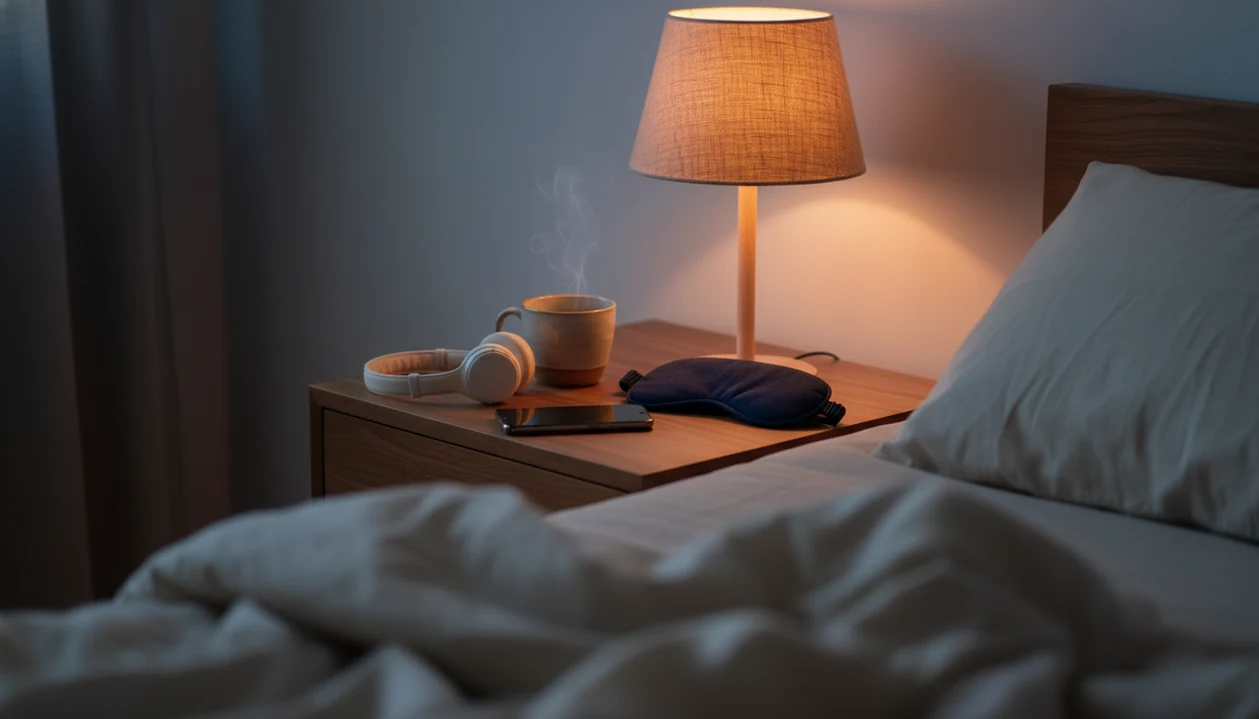
- Put the phone face down. Lower screen brightness, enable Do Not Disturb, and use audio-only mode when available.
- Listen without forcing sleep. Let the narrator guide breathing, jaw release, and shoulder drop without checking whether it is “working.”
- Repeat for one to two weeks. Judge progress by relaxation, fewer anxious thoughts, and easier settling over time.
If your priority is a simple first routine, HypnoApp fits because you can press play, turn the phone face down on the nightstand, and keep the same guided sleep session in rotation.
For a deeper phone setup, our guide to how to do sleep hypnosis with phone covers brightness, placement, and playback choices.
Self Hypnosis For Sleep Beginners And Sleep Hygiene Pairing
Self hypnosis for sleep beginners works best when the room and evening routine support relaxation. The audio can help, but it has to compete with light, caffeine, alcohol, notifications, and whatever you watched right before bed.
- Regular timing matters. A steady bedtime and wake time make the hypnosis cue easier to learn.
- Low light helps the routine feel different. Dim the room before the track starts, not halfway through it.
- A cool room supports comfort. Many people settle better when they are not overheated under heavy bedding.
- Caffeine and alcohol can interfere. Late caffeine may keep the body alert, and alcohol can fragment sleep later.
- The phone can help or hurt. Opening only the session supports the routine; opening messages and feeds works against it.
A helpful pairing is simple: 20-minute wind-down, one hygiene cue, then one hypnosis session. For beginners, self-hypnosis usually depends more on consistency than on finding a dramatic trance feeling.
Small cue. Same order.
Bedtime Hypnosis Beginner Myths That Cause Bad Expectations
Bad expectations make many beginners quit too early. Bedtime hypnosis is a relaxation-learning process that usually develops over days and weeks, not a single dramatic event.
- Myth: A sleep hypnosis app puts you to sleep like a switch. A guided session supports relaxation; it does not knock you out.
- Myth: Hypnosis means losing control. You remain able to move, stop listening, adjust volume, or reject suggestions.
- Myth: Every calm voice recording is hypnosis. Structured hypnosis usually includes induction, deepening, imagery, and targeted sleep suggestions.
- Myth: An app can cure serious insomnia. Sleep hypnosis can support a routine, but chronic or complex sleep problems need proper evaluation.
- Myth: Staying awake means failure. Early sessions can still train the body to notice and reset.
When the issue is bedtime worry rather than a diagnosed sleep disorder, HypnoApp earns the spot because the guided session gives attention somewhere steady to land.
If anxiety is the larger pattern, compare sleep support with the best hypnosis app for anxiety before relying on bedtime audio alone.
Free Sleep Hypnosis App For Beginners Versus Paid Subscriptions
Free can be enough to test whether beginner sleep hypnosis suits you. Paid options may be worth it when you need more session variety, offline playback, or a structured program you can repeat.
| Option | Good for | Watch for |
|---|---|---|
| Free tracks | Testing voice style, session length, and bedtime fit. | Limited choice, ads, or uneven audio quality. |
| Free trials | Trying a full library before paying. | Unclear renewal dates or hard-to-find cancellation steps. |
| Paid subscriptions | More sleep sessions, habit support, offline playback, and programs. | Paying for variety you do not actually use. |
| One-time purchases | Simple ownership of a small audio set. | Fewer updates and less guided progression. |
Concrete reviews matter more than star ratings alone. Look for comments about narrator style, volume balance, session endings, cancellation clarity, and whether the app makes extreme cure claims.
Bedroom use exposes small flaws fast. A session ending too loudly can undo ten quiet minutes.
Beginners comparing cost should start with a free sleep hypnosis app option or trial before committing to a subscription.
Limitations
Sleep hypnosis has promising evidence, but it is not a complete sleep treatment. HypnoApp and similar tools should be used with reasonable expectations, especially if sleep problems are chronic, worsening, or tied to health concerns.
- Most individual apps do not have rigorous app-specific clinical validation, even when hypnosis as a method has supportive research.
- Some people respond less to hypnotic suggestion and may notice little or no change after repeated sessions.
- Phone light, alerts, autoplay, and late-night scrolling can undermine the relaxation the audio is trying to build.
- Do not use sleep hypnosis while driving, cooking, supervising children in water, or doing anything that requires alertness.
- Seek medical evaluation for chronic insomnia, worsening sleep, loud snoring, gasping, possible sleep apnea, restless legs, or unusual nighttime behaviors.
- Use professional care when sleep problems occur with depression, severe anxiety, trauma symptoms, substance use concerns, or major life disruption.
- Competitors such as Calm, Headspace, HypnoBox, Reveri, and Harman Hypnosis may offer different libraries or coaching styles; compare structure, claims, and cancellation terms before paying.
For persistent insomnia, clinical evaluation and cognitive behavioral therapy for insomnia are the best-supported first-line approaches in major medical guidance, while hypnosis audio may serve as a relaxation support rather than a stand-alone treatment (source).
FAQ
Does sleep hypnosis really work?
Research on hypnosis for sleep is promising for some people, but results vary. Individual sleep hypnosis apps often have limited app-specific clinical evidence.
Is sleep hypnosis safe?
Sleep hypnosis is generally considered low risk for relaxation use. People with medical, psychiatric, trauma-related, or worsening sleep concerns should consult a healthcare professional.
Can beginners use self hypnosis?
Yes, beginners can start with guided audio because it provides structure and removes guesswork. A beginner track should explain the process before the relaxation section begins.
How long should I listen to a sleep hypnosis track?
Choose a track long enough to relax without making you feel pressured, often 10–30 minutes. Shorter sessions may suit tired nights, while longer sessions can help with a fuller wind-down.
Should I use headphones for sleep hypnosis?
Headphones can increase immersion and block noise. A bedroom speaker may be safer or more comfortable if earbuds bother you in bed.
Can hypnosis cure insomnia?
No, sleep hypnosis is a support tool, not a cure for insomnia. Chronic, severe, or complex sleep problems should be evaluated by a healthcare professional.
What if I stay awake during sleep hypnosis?
Staying awake during early sessions is common and does not mean the practice failed. Relaxation, fewer racing thoughts, and easier settling are still useful signs.
Are free hypnosis apps enough for beginners?
Free tracks can be enough to test voice style, session length, and bedtime fit. Paid apps may offer more structure, variety, offline playback, or habit-support programs.