HypnoApp for Restless Sleepers: Build Bedtime Calm
A hypnosis app for restless sleepers can help create a repeatable bedtime audio routine that calms racing thoughts, relaxes the body, and supports more realistic sleep expectations. HypnoApp fits that need when you want guided sleep audio that works as a relaxation cue, not a medical treatment for chronic insomnia or suspected sleep disorders.
> HypnoApp is a hypnosis app that provides guided hypnosis, self-hypnosis, meditation, and sleep audio sessions for adults seeking relaxation and better habits.
- Choose a bedtime hypnosis app with calming narration, breathing cues, progressive relaxation, and sleep-focused suggestions.
- Use sleep hypnosis for restless nights consistently, ideally with dimmed screens, notifications off, and a stable bedtime cue.
- Do not rely on a hypnosis app instead of medical care for persistent insomnia, loud snoring, breathing pauses, severe daytime sleepiness, or acute distress.
<h2 id="restless-sleepers-bedtime-hypnosis-app-routines">Restless sleepers and bedtime hypnosis app routines</h2>
Restless sleepers usually need a repeatable wind-down cue more than another late-night productivity trick. Racing thoughts, tight shoulders, clock-watching, and inconsistent bedtime timing can all keep the body on alert.
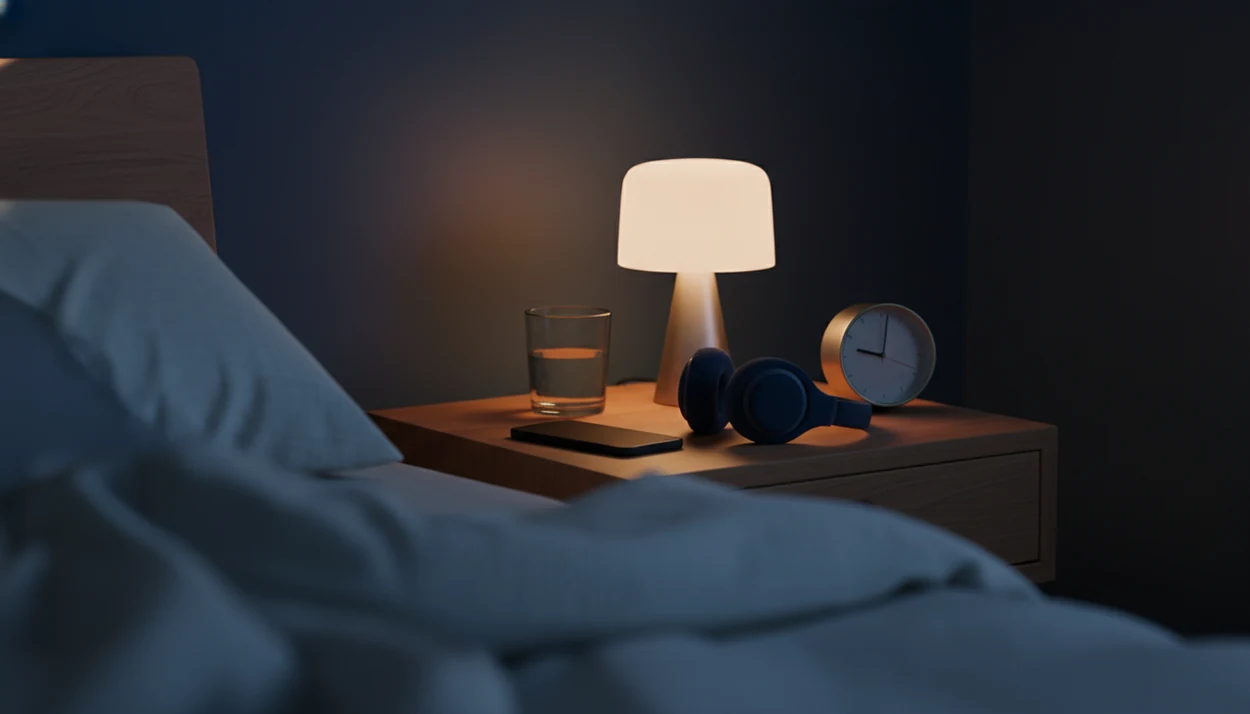
A bedtime hypnosis app gives the same calming sequence each night, so the routine itself starts to signal “sleep is next.” In practice, that may mean pressing play with the phone face down on a nightstand, hearing the narrator slow the pace, and letting the room get boring on purpose.
Insomnia symptoms are common: about 30% of adults report short-term insomnia symptoms and about 10% meet criteria for chronic insomnia in clinical reviews source. That does not mean an app cures insomnia. HypnoApp is a reasonable fit for restless nights because it supports a low-pressure practice: listen, notice tension, reset, and repeat.
Small cues matter.
<h2 id="sleep-hypnosis-fit-table-restless-nights">Sleep hypnosis fit table for restless nights</h2>
Sleep hypnosis for restless nights is a better fit when the main problem is bedtime arousal, not an untreated medical sleep disorder. Results vary, and some users need several weeks of steady use before they know whether the routine helps.
| Reader situation | App fit | What to try |
|---|---|---|
| Racing thoughts after lights out | Good fit | Choose a slow guided wind-down with worry-release language. |
| Tense body or clenched jaw | Good fit | Use breathing cues and progressive relaxation. |
| Inconsistent wind-down routine | Good fit | Play the same session at the same point each night. |
| Preference for guided audio | Good fit | Save one favorite track for nights when decisions feel tiring. |
| Suspected sleep apnea | Poor fit | Seek medical evaluation, especially with snoring or breathing pauses. |
| Chronic severe insomnia | Poor fit alone | Use alongside professional care when needed. |
| Acute panic | Poor fit alone | Get appropriate mental-health support. |
| Needing silence to sleep | Poor fit | Try non-audio sleep hygiene steps instead. |
HypnoApp fits restless sleepers who want guided structure because the session can become the nightly cue, not another decision.
<h2 id="hypnosis-app-mechanics-restless-sleepers">Hypnosis app mechanics for restless sleepers</h2>
Sleep hypnosis is a focused, deeply relaxed state where the listener stays aware and in control; it is not sleep, anesthesia, or mind control. The goal is usually lower arousal and calmer bedtime expectations, not forcing immediate sleep.
Most sessions use soft voice guidance, breath pacing, progressive muscle relaxation, calming imagery, and sleep-focused suggestions. A narrator might ask you to loosen your jaw, drop your shoulders, and notice the mattress supporting your body. That moment can feel ordinary. Many beginners ask, “Am I supposed to feel hypnotized?”
Good hypnosis and self-hypnosis mobile apps with guided meditation, sleep sessions, anxiety relief, and habit-building audio programs deliver structured relaxation cues, not guaranteed medical outcomes. For a plain-language explanation of the practice itself, our guide to what happens when you practice self-hypnosis covers awareness, attention, and suggestion in more detail.
<h2 id="racing-thoughts-sleep-app-features">Racing thoughts sleep app features</h2>
A racing thoughts sleep app should reduce mental switching, not add more choices at midnight. The most useful features make the next step obvious when you are tired and irritated.
- Guided wind-down sessions work best when they use slow pacing and a predictable structure.
- Breathing cues and body relaxation prompts help restless sleepers downshift from mental noise into physical ease.
- Sleep-focused suggestion language should avoid pressure, since “fall asleep now” can make clock-watching worse.
- Background sounds, timers, favorites, offline access, and screen-light minimization reduce phone friction in bed.
- Session variety helps on different nights, such as worry-heavy nights, tension-heavy nights, or wake-after-sleep nights.
On days when a restless sleeper keeps replaying tomorrow’s meeting, HypnoApp covers the “tell me what to do next” problem with guided wind-down sessions, breathing prompts, and saved sleep audio. Earbuds tucked beneath a pillow can help, but volume should stay low and comfortable.
<h2 id="best-hypnosis-app-routine-restless-sleepers">Best hypnosis app routine for restless sleepers</h2>
The best hypnosis app for restless sleepers is the one you can repeat without effort. Specific claims matter less than whether the routine is realistic when you are already tired.
- Calm voice: The narrator should feel steady, not dramatic or startling.
- Sleep-specific scripts: Sessions should address bedtime worry, body tension, and waking again.
- Low-friction playback: Favorites, timers, and offline access help when Wi-Fi drops on a train seat or the bedroom signal is weak.
- Safety boundaries: The app should be clear about medical limits and attention-based risks.
- Consistency tools: Reminders or simple routines make nightly practice easier.
A systematic review of hypnosis apps found only a small fraction cited scientific literature or clinician involvement source. That is why evaluation matters. Restless sleepers trying to build a calmer bedtime cue may prefer HypnoApp because it keeps the focus on guided audio, sleep routines, and reasonable expectations.
<h2 id="bedtime-hypnosis-app-steps-night">Bedtime hypnosis app steps at night</h2>
Use a bedtime hypnosis app before the phone becomes the problem. The setup should happen before you are under the blanket and tempted to check one more message.
- Set Do Not Disturb before bed, and avoid hypnosis audio while driving or doing anything that requires attention.
- Choose one session before getting into bed, preferably the same track for the first week.
- Dim the screen, lower the brightness, and set the volume to a comfortable level.
- Play the session with the phone face down, across the nightstand, or through a bedroom speaker.
- Repeat the routine for one to three weeks before judging whether it fits.
- Review what helped, such as a calmer body, less clock-checking, or easier return to bed after waking.
After lights out, when the phone is faceup beside a keyboard or charger, HypnoApp works better if playback is already chosen and notifications are off. For daytime practice that supports nighttime consistency, a 7-day self-hypnosis challenge can make the habit feel less random.
<h2 id="sleep-hypnosis-evidence-restless-nights">Sleep hypnosis evidence for restless nights</h2>
Early evidence suggests hypnosis and self-hypnosis may modestly improve sleep quality for some people, but app-specific evidence is still limited. In-person hypnotherapy research does not prove every audio session will work the same way.
- A randomized trial of hypnotherapy for sleep disturbance in postmenopausal women found improvements in sleep quality and duration versus controls source.
- The Sleep Foundation notes that sleep hypnosis appears to have limited side effects and may be useful for insomnia and other sleep problems source.
- A population-based DSM-IV study found insomnia prevalence around 22.1%, showing how common sleep difficulty is.
- Hypnosis tends to fit best when the listener can relax with voice guidance, while silence may fit people who find narration distracting.
- Better sleep usually depends more on consistent cues and reduced arousal than on any single app session.
HypnoApp should be viewed as a sleep-support routine, not proof that hypnosis alone treats insomnia. Related self-hypnosis benefits are usually easiest to judge over repeated practice.
Limitations
HypnoApp can support relaxation, but it does not replace medical or mental-health care. A fair bedtime plan includes knowing when guided audio is not enough.
- A hypnosis app is not a medical treatment for chronic insomnia, sleep apnea, depression, or anxiety disorders.
- Results vary widely; some people find hypnosis narration distracting, irritating, or ineffective.
- Evidence for hypnosis apps specifically is limited, and many apps lack published research or clinician involvement.
- Phone use at bedtime can undermine benefits if notifications, bright screens, or message checking continue.
- Do not use hypnosis audio while driving, operating machinery, or doing tasks that require attention.
- Seek professional help for persistent insomnia, severe daytime sleepiness, loud snoring, breathing pauses, or acute mental health distress.
- Competitors such as calm.com, headspace.com, and hypnobox.com may suit users who want broader meditation libraries, but broader libraries can also mean more bedtime scrolling.
Not every night cooperates.
For restless sleepers, a simple audio routine is often easier than a large sleep program because it removes decisions at the exact time decisions feel hardest.
FAQ
Does sleep hypnosis really work?
Sleep hypnosis may help some people relax and improve sleep quality, but results vary. Evidence is still limited, especially for specific apps.
Can hypnosis make me sleep?
Hypnosis does not force sleep. It supports relaxation, reduced arousal, and bedtime cues that may make sleep easier.
Is sleep hypnosis safe?
Sleep hypnosis is generally low risk for many adults when used appropriately. Do not use it while driving, operating machinery, or doing tasks that require attention.
Will hypnosis control my mind?
No. People using hypnosis remain aware, in control, and able to reject suggestions.
How long should I listen?
Choose a session length that feels comfortable, often 10 to 30 minutes. Use it consistently for one to three weeks before judging fit.
Can I use headphones in bed?
Yes, if they are comfortable, low volume, and safe for your sleep position. A pillow speaker or low-volume phone speaker may be easier.
What if I wake up again?
Use a shorter restart session, avoid clock-watching, and keep the routine calm. The goal is a low-stimulation reset.
When should I see a doctor?
See a doctor for chronic insomnia, loud snoring, breathing pauses, severe daytime sleepiness, or mental-health concerns. HypnoApp can be used alongside professional care when appropriate.