
Hypnosis App Vs Hypnotherapist: When Each Fits

Choose a hypnosis app for low-risk self-hypnosis goals like relaxation, sleep routines, confidence practice, and everyday habit support; choose a hypnotherapist when symptoms are severe, clinically complex, or tied to trauma, pain, IBS, major anxiety, depression, or other care. This hypnosis app vs hypnotherapist comparison is really about convenience versus individualized clinical judgment.
Definition: A hypnosis app is a consumer audio tool that provides guided hypnosis, self-hypnosis, meditation, and sleep sessions for adults seeking relaxation and habit support; it is not a substitute for licensed care.
TL;DR
- A hypnosis app is best for convenient, private, repeatable self-hypnosis practice for mild wellness goals.
- A licensed hypnotherapist is better for complex symptoms, clinical conditions, trauma history, or when screening and personalized treatment are needed.
- Clinical hypnosis has a stronger research base than consumer hypnosis apps, and many apps have limited evidence or unclear clinical involvement.
<h2 id="hypnosis-app-vs-hypnotherapist-at-a-glance">App Vs Hypnotherapist At A Glance</h2>
A hypnosis app is the practical winner for mild, self-guided wellness practice. A hypnotherapist is the safer choice when symptoms are complex, severe, diagnosed, or medically connected.
| Factor | Hypnosis app | Hypnotherapist |
|---|---|---|
| Personalization | Fixed or semi-interactive scripts | Individual assessment and tailored suggestions |
| Cost | Usually lower, often subscription-based | Usually higher per session |
| Access | Anytime, private, repeatable | Appointment-based, in person or telehealth |
| Privacy | Use alone with earbuds or bedroom speaker | Requires sharing history with a professional |
| Safety | Low-risk for many wellness uses | Better screening for clinical risks |
| Evidence | App-specific evidence is limited | Stronger clinical hypnosis research base |
| Best fit | Sleep routine, stress reset, confidence, habits | Trauma, pain, IBS, severe anxiety, depression, diagnoses |
Apps are not equivalent to licensed therapy or medical treatment. The difference is obvious when a session gets interrupted by a notification; an app keeps playing, but a clinician can pause and respond.
<h2 id="five-facts-clinical-hypnosis-vs-app-sessions">Five Facts About Clinical Hypnosis Vs App Sessions</h2>
Clinical hypnosis and app-based hypnosis both use focused attention, suggestion, and repetition, but they differ sharply in assessment, safety, and evidence. These five facts matter before you choose.
- Apps usually guide self-hypnosis: Most apps deliver prerecorded or semi-interactive scripts, while therapists assess your history, goals, triggers, and current symptoms.
- Clinical hypnotherapy has more evidence: Consumer hypnosis apps have far less rigorous research than clinical hypnosis delivered by trained professionals.
- Apps fit mild goals: Everyday stress, sleep preparation, confidence rehearsal, and habit reinforcement are reasonable app use cases.
- Professionals fit clinical complexity: Trauma, severe symptoms, diagnoses, chronic pain, IBS, and integrated treatment plans call for trained care.
- Hypnosis is not mind control: People usually remain aware, can reject suggestions, and can stop a session.
That last point helps beginners. The question “Am I supposed to feel hypnotized?” is common, and the honest answer is often: not in a dramatic way.
<h2 id="how-hypnosis-apps-and-hypnotherapists-work">How Hypnosis Apps And Hypnotherapists Work</h2>
Hypnosis is a relaxed, focused state that uses attention, imagery, suggestion, and repetition to support a chosen response. Hypnotherapy is the professional process of using that state within assessment, treatment planning, and live clinical judgment.
Apps use prerecorded or semi-interactive guided audio sessions, fixed scripts, reminders, and repeatable practice loops. In plain terms, the app helps you rehearse a relaxation cue or habit cue the same way each time. A listener might press play with the phone face down on a nightstand, then follow a narrator’s cue to loosen the jaw and drop the shoulders.
Hypnotherapists work differently. They gather history, screen risks, adapt language, observe responses, and integrate hypnosis with a broader plan. Good hypnosis and self-hypnosis mobile apps with guided meditation, sleep sessions, anxiety relief, and habit-building audio programs deliver structured practice and relaxation support, not individualized diagnosis or emergency care.
<h2 id="where-self-hypnosis-app-vs-therapy-makes-sense">Where A Self Hypnosis App Vs Therapy Makes Sense</h2>
“self hypnosis app vs therapy” usually comes down to risk level. For adults with mild wellness goals, an app can be a private, repeatable, lower-cost way to practice between normal daily demands.
Apps make sense for relaxation, sleep preparation, everyday stress management, confidence practice, and habit reinforcement. The useful part is not magic. It is availability. You can use earbuds on a bus, a bedroom speaker at night, or a ten-minute session in a parked car before going back into work.
Choose apps with transparent credentials, realistic claims, clear safety language, and no cure promises. Consumer tools can be considered alongside other guided hypnosis, self-hypnosis, meditation, and sleep audio options for adults. For mild self-guided goals, an app is often easier than hypnotherapy because it is available exactly when the routine needs practice.
<h2 id="where-hypnotherapy-vs-app-care-is-safer">Where Hypnotherapy Vs App Care Is Safer</h2>
In the hypnotherapy vs app decision, licensed care is safer when symptoms need screening, diagnosis-aware planning, or real-time response. That includes trauma, PTSD symptoms, major depression, severe anxiety, psychosis risk, dissociation, self-harm concerns, unexplained physical symptoms, chronic pain, IBS, or substance misuse.
A professional can ask follow-up questions, stop a technique that feels destabilizing, coordinate with other clinicians, and adapt suggestions while you respond. Clinicians typically recommend professional evaluation when symptoms are severe, worsening, risky, or connected to trauma or medical conditions.
The evidence distinction matters. A meta-analysis of 85 controlled studies found that adding hypnosis to cognitive-behavioral therapy produced a moderate adjunct benefit compared with CBT alone source. A randomized controlled trial of gut-directed hypnotherapy for severe refractory IBS reported improvement in 76% of hypnotherapy patients versus 15% of controls source. Those findings support clinical hypnotherapy in specific contexts, not consumer app efficacy.
<h2 id="hypnosis-app-vs-hypnotherapist-cost-access">App Vs Hypnotherapist Cost And Access Differences</h2>
Apps usually cost less, require less scheduling, and support repeated practice. Hypnotherapists cost more per session, but they include individualized assessment, live support, and clinical judgment.
| Practical factor | App route | Hypnotherapist route |
|---|---|---|
| Typical access | Anytime on phone or tablet | Scheduled sessions |
| Cost pattern | Often free trial or subscription | Per-session fee, sometimes insurance-dependent |
| Repetition | Easy to repeat daily | Practice may happen between appointments |
| Support level | Scripted guidance | Live adjustment and screening |
| Location | Private use at home, commute, or travel | In person or telehealth |
| Licensing | App quality varies widely | Licensing varies by region and provider type |
Insurance rules, professional titles, and scope of practice vary by location. If comparing app styles rather than clinical care, the hypnosis app vs meditation app distinction can help clarify whether you want suggestion-based audio or general mindfulness practice.
<h2 id="how-to-choose-hypnosis-app-or-hypnotherapist">How To Choose Between A HypnoApp And Hypnotherapist</h2>
Use this decision process when the choice feels unclear. The safest answer is based on severity first, then convenience.
- Name the goal and severity: Write one sentence, such as “I want help winding down before sleep,” or “panic is disrupting work.”
- Check for red flags: Choose professional care for trauma instability, self-harm concerns, psychosis risk, severe dissociation, substance misuse, major depression, or unexplained physical symptoms.
- Match the support level: Use app practice for mild relaxation, sleep, confidence, or habit support; use a clinician for complex or diagnosed concerns.
- Vet credentials and claims: Look for training, privacy policies, safety language, and realistic wording that avoids cure promises.
- Reassess results: If symptoms persist, worsen, or interfere with daily life, escalate care rather than just trying more sessions.
A helpful way to think about it: apps support practice, while clinicians manage complexity. The timer app beside lecture notes can help with study focus; it cannot assess panic attacks.
<h2 id="common-myths-hypnosis-apps-hypnotherapists">Common Myths About Hypnosis Apps And Hypnotherapists</h2>
Myths can make people either overtrust apps or avoid hypnosis entirely. Neither reaction is useful.
Myth 1: A good app is the same as a certified professional for serious mental health issues. It is not. Serious symptoms need screening, context, and often coordinated care.
Myth 2: App store availability means an app is clinically proven. A 2013 review of 407 mobile hypnosis apps found that only 7.4% reported health care professional involvement, and almost none cited scientific evidence source.
Myth 3: Hypnosis is mind control or can trap someone in trance. Hypnosis depends on consent, attention, and active participation.
Myth 4: One session should permanently fix a habit. Most habit work needs repetition, environmental support, and resets after slips. Reset the plan.
If you are comparing consumer options, pages like Headspace vs self-hypnosis app can show how general meditation differs from suggestion-based practice.
<h2 id="evidence-clinical-hypnosis-consumer-apps">Evidence For Clinical Hypnosis And Consumer Apps</h2>
The strongest evidence favors clinician-delivered hypnosis in defined clinical settings, not hypnosis apps as a category. Consumer app trials are still limited, often tied to one product, one script library, or one narrow outcome.
Clinical hypnosis studies are strongest when a trained clinician screens the person, targets a specific condition, and measures outcomes against a comparison group. The IBS and pain findings discussed above are good examples of condition-specific care: they support structured clinical hypnotherapy for selected patients, but they do not automatically prove that a bedtime app, confidence track, or habit audio will produce the same result.
To judge an app claim, use a simple evidence ladder:
- Check whether named clinicians, researchers, or qualified advisers are involved.
- Look for app-specific trials, not just general hypnosis research borrowed from hospitals or clinics.
- Compare the claim with the outcome measured: relaxation is not the same as treating IBS, pain, anxiety, or trauma.
- Prefer transparent methods, published results, realistic limits, and clear safety guidance.
- Avoid apps that turn small studies, testimonials, or clinical hypnosis findings into broad cure promises.
Credential transparency, clinical involvement, and evidence quality all matter. A polished voice and a calm background track are not the same as clinical validation.
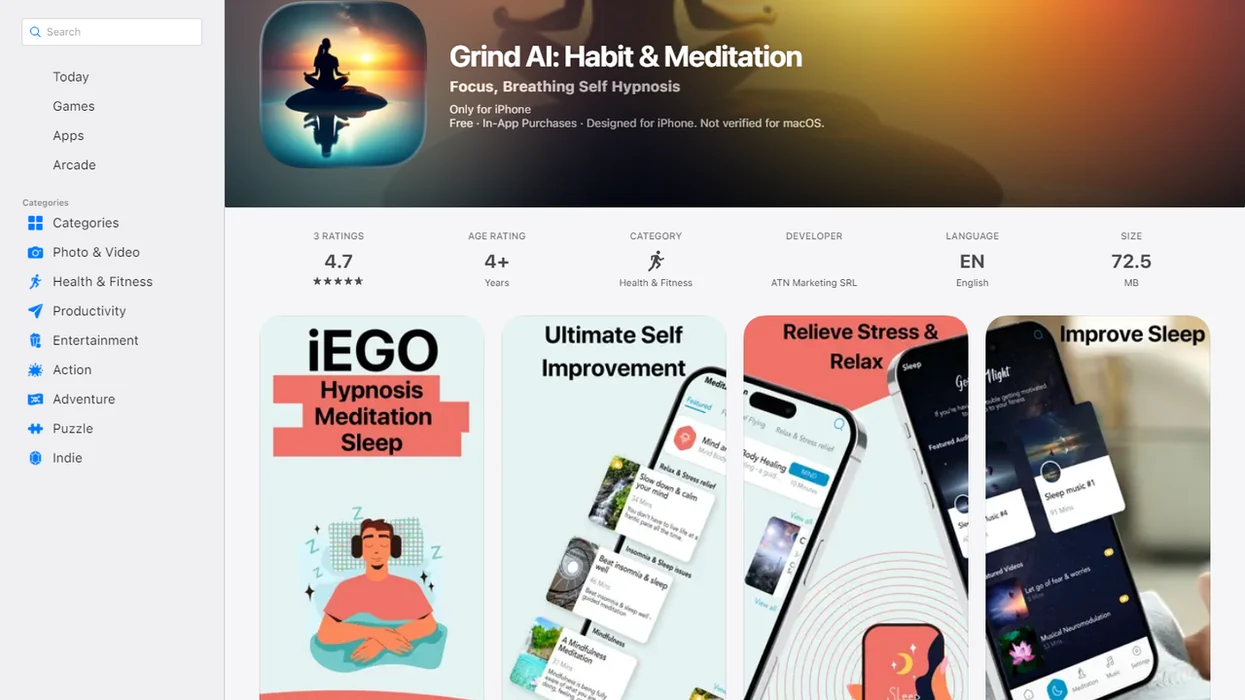
Hypnosis app vs hypnotherapist, side by side
Side-by-side captures of the compared products. Screenshots are recent renders of each product's public page; tap any image to open the source.
Limitations
This comparison is informational, not medical advice. It is meant to help adults set reasonable expectations before choosing app-based practice or professional support.
- Consumer hypnosis apps have limited rigorous controlled research compared with clinical hypnotherapy.
- Many apps may not involve health professionals, cite evidence, or explain how scripts were developed.
- Apps should not delay medical or psychological care for serious, worsening, risky, or unexplained symptoms.
- Hypnosis is not guaranteed and often requires repetition, consent, and supportive behavior changes.
- Hypnosis may be inappropriate without professional screening for psychosis risk, severe dissociation, or complex psychiatric conditions.
- Many apps blur hypnosis, meditation, relaxation, sleep audio, and hypnotherapy, which can confuse expectations.
- A session ending too loudly or being interrupted by a notification can break relaxation at exactly the wrong moment.
- Licensing, certification, and insurance coverage for hypnotherapy vary by location and provider background.
For a narrower safety discussion, is hypnosis safe covers adult use, red flags, and when to involve a clinician.
FAQ
Do hypnosis apps really work?
Hypnosis apps may help some adults with relaxation, bedtime routines, confidence practice, and habit rehearsal. App-specific evidence is limited, so they should be treated as wellness tools rather than proven treatment.
Is hypnotherapy better than an app?
Hypnotherapy is usually better for personalization, screening, and complex clinical concerns. Apps are more convenient for mild, self-guided practice.
Are hypnosis apps safe?
Hypnosis apps are generally low risk for many adults when used for relaxation or wellness goals. They are not appropriate as stand-alone support for severe, risky, or complex symptoms.
Can hypnosis apps replace therapy?
Hypnosis apps should not replace licensed therapy for diagnosed, severe, worsening, or risky mental health concerns. They may be used alongside professional care if the clinician agrees.
Who should avoid hypnosis apps?
People with psychosis risk, severe dissociation, trauma instability, self-harm concerns, or complex psychiatric symptoms should avoid self-guided hypnosis unless professionally screened. Medical symptoms should also be evaluated by a qualified clinician.
What does a hypnotherapist do?
A hypnotherapist assesses the person’s goals, history, symptoms, and risks before using hypnosis. They adjust suggestions in real time and may integrate hypnosis with broader medical or psychological care.
Is hypnosis mind control?
No, hypnosis is not mind control. People remain aware, can reject suggestions, and can stop participating.
How often should I practice self-hypnosis?
Many people practice self-hypnosis several times per week or daily for routine goals. Frequency should match the goal, personal comfort, safety, and any professional guidance.
How do I vet hypnosis apps?
Check whether the app lists relevant credentials, evidence, privacy practices, realistic claims, and clear safety disclaimers. Avoid apps that promise cures or discourage professional care.