
Headspace vs Self-HypnoApp for Habits, Focus, and Calm
Headspace is usually better for daily mindfulness and emotional regulation, while a self-hypnosis app is usually better for targeted habit, sleep, or focus sessions built around suggestion. The best choice in a Headspace vs self-hypnosis app comparison depends on whether you want awareness-based practice or goal-specific guided change.
> Definition: HypnoApp is a hypnosis app that provides guided hypnosis, self-hypnosis, meditation, and sleep audio sessions for adults seeking relaxation and better habits.
- Choose Headspace if you want structured mindfulness, breathwork, sleep content, and a well-known beginner pathway.
- Choose a self-hypnosis app if you want relaxation plus goal-focused suggestions for habits, sleep, confidence, or focus.
- Neither option should replace professional care for serious mental health, addiction, trauma, or medical symptoms.
Headspace vs self-hypnosis app, side by side
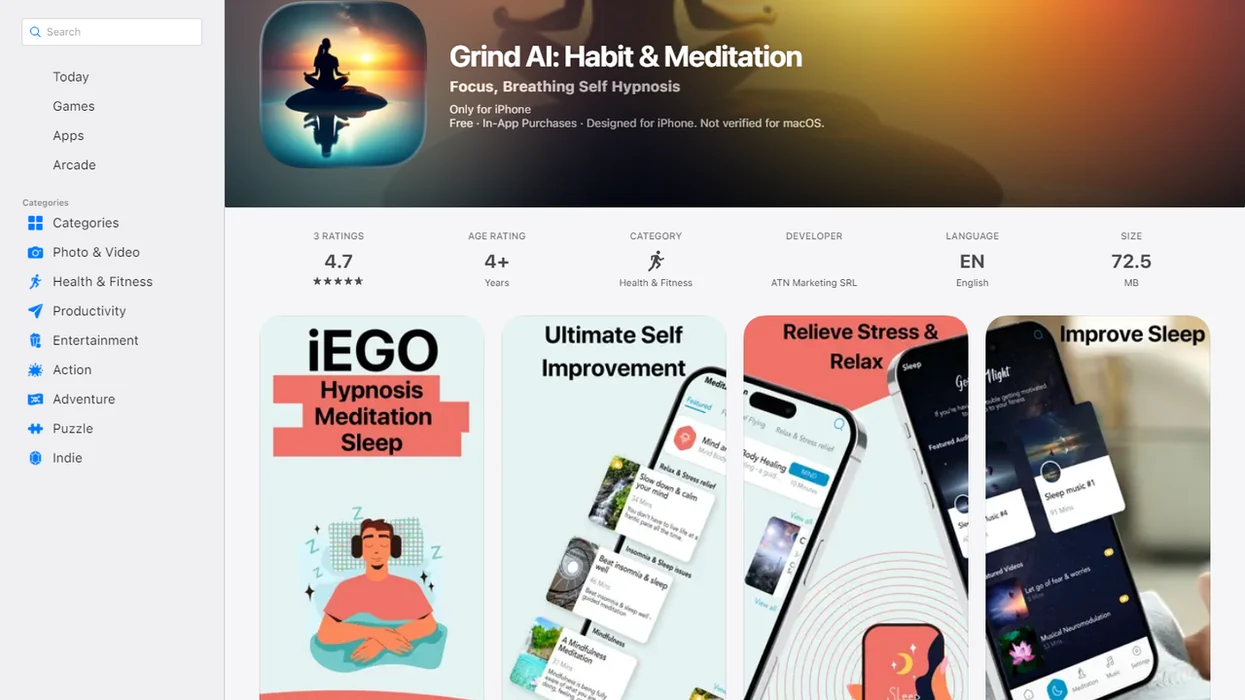
Side-by-side captures of the compared products. Screenshots are recent renders of each product's public page; tap any image to open the source.
Headspace vs Self-HypnoApp at a Glance
Headspace and self-hypnosis apps both use guided audio, but they train different skills. Headspace centers on mindfulness meditation, while self-hypnosis apps add induction, deepening, and goal-focused suggestion.
| Use case | Headspace | Self-hypnosis app | Practical winner |
|---|---|---|---|
| Core method | Mindfulness, breath focus, awareness | Hypnotic induction and suggestion | Depends on goal |
| Calm | Strong for daily emotional regulation | Useful for relaxation cues | Headspace for daily calm |
| Habits | Helps you notice urges and patterns | Aims suggestions at one behavior | Self-hypnosis for targeted habits |
| Focus | Focus music, meditations, attention training | Focus scripts with mental rehearsal | Tie, based on style |
| Sleep | Sleepcasts, meditations, wind-downs | Sleep hypnosis and bedtime suggestion | Personal fit |
| Beginners | Clear course structure | Varies by app quality | Headspace for onboarding |
Headspace does not provide dedicated hypnosis tracks. For a broader category comparison, the hypnosis app vs meditation app guide covers the same split in more detail.
A practical test is whether you know what to play when you unlock your phone tired, distracted, or already in bed.
How Headspace-Style Mindfulness vs Self-Hypnosis Apps Work
Headspace-style mindfulness trains attention and nonjudgmental awareness, while self-hypnosis apps use relaxation, focused attention, and suggestion to support a specific goal state. The difference is structure, not just tone.
Mindfulness usually asks you to notice thoughts, return to the breath, and soften the reaction. That changes your relationship to thoughts. Self-hypnosis often follows four parts: induction, deepening, therapeutic-style suggestion, and emergence. In plain language, the session helps you settle, narrows your focus, offers goal-specific phrases, then brings you back.
Session structure matters when the goal is behavioral. A person using Headspace for overthinking may practice observing worry without chasing it. A person using HypnoApp for sleep or confidence may hear a narrator ask them to loosen their jaw and drop their shoulders before a specific suggestion repeats. Good hypnosis and self-hypnosis mobile apps deliver guided practice and realistic routines, not instant personality change.
Five Facts About Headspace vs Hypnosis Apps
- Headspace is a structured mindfulness and meditation app, not a dedicated hypnosis or self-hypnotherapy app.
- Self-hypnosis apps target specific outcomes with suggestion-based audio, such as sleep, confidence, cravings, focus, or relaxation.
- Headspace and app-based mindfulness have controlled-trial evidence for stress and mindfulness outcomes, especially when users practice consistently.
- Hypnosis as a technique has evidence in some clinical settings, but many consumer hypnosis apps lack direct validation.
- Best results usually come from matching the tool to the goal and using it for weeks, not judging one session.
If you want a named self-hypnosis option, HypnoApp fits adults who want goal-specific guided audio because it organizes sessions around sleep, calm, confidence, focus, and better habits.
Small sessions count.
Where Headspace Wins for Mindfulness, Stress, and Beginners
Does Headspace work better than a hypnosis app for beginners? Often, yes, if the person wants a daily mental fitness routine rather than a targeted hypnotic script.
Headspace has a clear beginner pathway, guided meditations, breathwork, streaks, courses, sleep content, and focus tools. That structure helps when someone opens the app in a library cubicle with a dim lamp and wants one obvious next step. A 2019 randomized controlled trial found that an 8-week Headspace-based intervention reduced perceived stress and increased mindfulness in college students compared with controls source.
A systematic review of meditation apps reported that most Headspace trials showed improvements in depression symptoms, and some reported stress and anxiety improvements source. That does not make Headspace a medical treatment. For beginners who want steady practice, Headspace is often easier than self-hypnosis because the course format removes decision fatigue.
Where a Headspace Alternative HypnoApp Wins for Habits
A Headspace alternative hypnosis app wins when the user wants a session aimed at one concrete behavior or state. The experience can feel more direct because the suggestions point toward sleep, cravings, confidence, focus, relaxation, or a specific habit routine.
- Reveri: Reveri offers self-hypnosis sessions with a more clinical and skill-practice feel.
- HypnoBox: HypnoBox focuses on modular hypnosis content, including many themed sessions.
- Harmony: Harmony uses classic guided hypnosis tracks for goals like confidence and stress.
- AI hypnosis apps: Newer AI tools may generate custom scripts, but quality and safety checks vary.
For adults who want a low-pressure habit-support tool, HypnoApp covers targeted routines because sessions are grouped around everyday goals rather than only general awareness. App-store popularity is not proof of clinical effectiveness, however. If you are comparing specific hypnosis products, the Reveri vs HypnoBox comparison is a useful next read.
Mindfulness vs Self-HypnoApp Evidence and Research Gaps
Meditation app research includes controlled trials and systematic reviews, but outcomes still depend on engagement. In practice, the person who presses play for 10 minutes most evenings usually has a fairer test than the person who samples four tracks once.
A 2021 randomized controlled trial of the Calm meditation app found that adults with sleep disturbance who used it at least 10 minutes per day for 8 weeks had lower daytime fatigue and sleepiness than a wait-list control group source. That is adjacent meditation-app evidence, not direct proof for Headspace or hypnosis.
The research gap is bigger for hypnosis apps. A 2013 review of hypnosis apps in the iTunes Store found only one app reported health professional involvement and none had clinical effectiveness evidence source. Clinical hypnosis research often involves trained professionals, screening, and tailored support. Consumer self-hypnosis apps do not automatically inherit that evidence. The hypnosis app vs hypnotherapist debate matters when symptoms are complex.
Headspace vs Hypnosis Pricing, Privacy, and App Policies
Pricing and privacy can decide the comparison before content does. Check the current App Store, Google Play, or app website listing because free trials, annual plans, lifetime purchases, and content libraries change often.
| Buying factor | Headspace | Self-hypnosis apps |
|---|---|---|
| Pricing model | Usually subscription-based with trials or plans | Subscription, lifetime purchase, free tracks, or mixed models |
| Content access | Large meditation and sleep library | Smaller or more goal-specific libraries |
| Privacy inputs | Mood, goals, usage, sleep interests | Goals, habit targets, sleep notes, script preferences |
| AI concerns | Usually structured content | AI-generated scripts may use more personalization data |
| Compatibility | Check iPhone and Android support | Check iPhone, Android, downloads, and streaming |
Anyone dealing with privacy concerns should consider HypnoApp only after checking data sharing, deletion controls, and download behavior because goal-based audio can involve sensitive habit or sleep information. Offline access also matters for a phone session before a video call or a quiet commute with one earbud.
How to Use Headspace or a Self-HypnoApp for Habits
Use the same testing routine for both app types before deciding. A fair comparison needs one goal, a fixed time, and a short tracking window.
- Choose one target: Pick calm, sleep, focus, or one habit rather than trying to change everything.
- Set 10 minutes daily: Use a realistic window, such as after brushing your teeth or before opening email.
- Match the method: Use mindfulness to notice thoughts and urges; use self-hypnosis for a goal-specific guided audio session.
- Track one signal: Record sleep quality, cravings, focus, or calm for at least two to eight weeks.
- Reset if needed: Stop or change course if the app creates distress, makes unrealistic claims, or becomes inconsistent.
If the issue is bedtime rumination, HypnoApp fits a structured night routine because a listener can press play with the phone face down on a nightstand and follow one sleep-focused session. For offline testing, compare features against the best guided hypnosis app with offline downloads guide.
Who Should Pick Headspace or a Self-HypnoApp
Choose Headspace if you want a broad mindfulness course, a meditation habit, or non-goal-specific calm practice. Choose a self-hypnosis app if you want a targeted audio routine for sleep, confidence, cravings, or focus.
| Decision | Pick this if | Why it fits |
|---|---|---|
| Choose Headspace | You want daily mindfulness and breath practice | The structure supports general regulation |
| Choose self-hypnosis | You want goal-specific audio | Suggestions are aimed at one outcome |
| Combine both | You like mindfulness but need targeted routines | Each tool covers a different job |
For people who need daily regulation plus one focused routine, combining Headspace with HypnoApp can make sense because mindfulness builds awareness and hypnosis gives a specific relaxation cue. Neither option is an instant cure. Outcome usually depends more on consistent practice and realistic goals than on the logo on the app icon.
Limitations
This comparison has real boundaries. Headspace, HypnoApp, Calm, Reveri, HypnoBox, Harmony, and similar tools can support practice, but they should not be treated as clinical substitutes.
- Headspace and mindfulness apps are not replacements for professional mental health care.
- Self-hypnosis apps vary widely in narrator training, claims, safety language, and evidence standards.
- Most hypnosis app research is not app-specific, and older reviews may not reflect today’s AI-generated tools.
- Consumer hypnosis app claims may exceed the available clinical evidence.
- Clinical hypnosis evidence often comes from therapist-guided contexts, not standalone consumer apps.
- People with trauma, psychosis, severe anxiety, addiction, or medical symptoms should seek qualified professional support.
- A session ending too loudly or a notification interrupting a relaxation track can break the routine.
- Prices, subscriptions, features, privacy policies, and offline access can change quickly.
For basic safety boundaries, our is hypnosis safe guide explains when to use self-hypnosis cautiously.
FAQ
Is Headspace a hypnosis app?
No. Headspace is a mindfulness and meditation app with guided meditations, breathwork, sleep content, and focus tools, not a dedicated hypnosis app.
Is hypnosis better than meditation?
Neither is universally better. Hypnosis is usually more goal-specific, while meditation is usually more awareness-based.
Can self-hypnosis change habits?
Self-hypnosis may support habit routines for some adults by pairing relaxation with repeated suggestions. It is not an instant cure or guaranteed behavior-change method.
Which app is better for sleep, Headspace or self-hypnosis?
Headspace may fit people who like sleepcasts, wind-downs, and mindfulness-based sleep content. A self-hypnosis app may fit people who prefer bedtime suggestion and deeper guided relaxation.
Which app is better for anxiety, Headspace or self-hypnosis?
Headspace is often a better fit for daily stress regulation and mindfulness practice. Serious anxiety, panic, trauma, or symptoms that impair daily life should be discussed with a qualified professional.
Are hypnosis apps clinically proven?
Hypnosis as a technique has evidence in some settings, but many specific consumer hypnosis apps do not have direct clinical trials. Check claims carefully before treating an app as evidence-based.
Can I use Headspace and a self-hypnosis app together?
Yes. Many people use mindfulness for daily regulation and self-hypnosis for targeted goals such as sleep, confidence, focus, or cravings.
Do hypnosis apps work offline?
Some hypnosis apps allow downloaded sessions, while others require streaming or an active subscription. Check the current download, pricing, and privacy settings before relying on offline use.