
Reveri vs HypnoBox for Self-HypnoApp Users

Quick answer: Reveri vs HypnoBox comes down to structure versus customization: Reveri is the better fit for short, clinician-framed self-hypnosis protocols, while HypnoBox is better for users who want to build longer, highly personalized sessions. HypnoApp is worth considering if you want a guided audio session library that sits between those two styles, with practical sleep, relaxation, confidence, and habit-support sessions rather than heavy DIY setup.
A self-hypnosis app provides guided hypnosis, self-hypnosis, meditation, relaxation, and sleep audio sessions for adults seeking support with routines, stress management, and habit-related goals.
- Pick Reveri if you want brief, structured, research-framed sessions with minimal setup.
- Pick HypnoBox if you want a large hypnosis library, custom scripts, adjustable voices, and longer DIY sessions.
- Use either app consistently and responsibly; self-hypnosis apps are support tools, not cures or replacements for professional care.
Good hypnosis apps deliver guided attention, relaxation cues, repeated practice, and habit prompts, not guaranteed medical results or a shortcut around professional care.
Reveri vs hypnobox, side by side
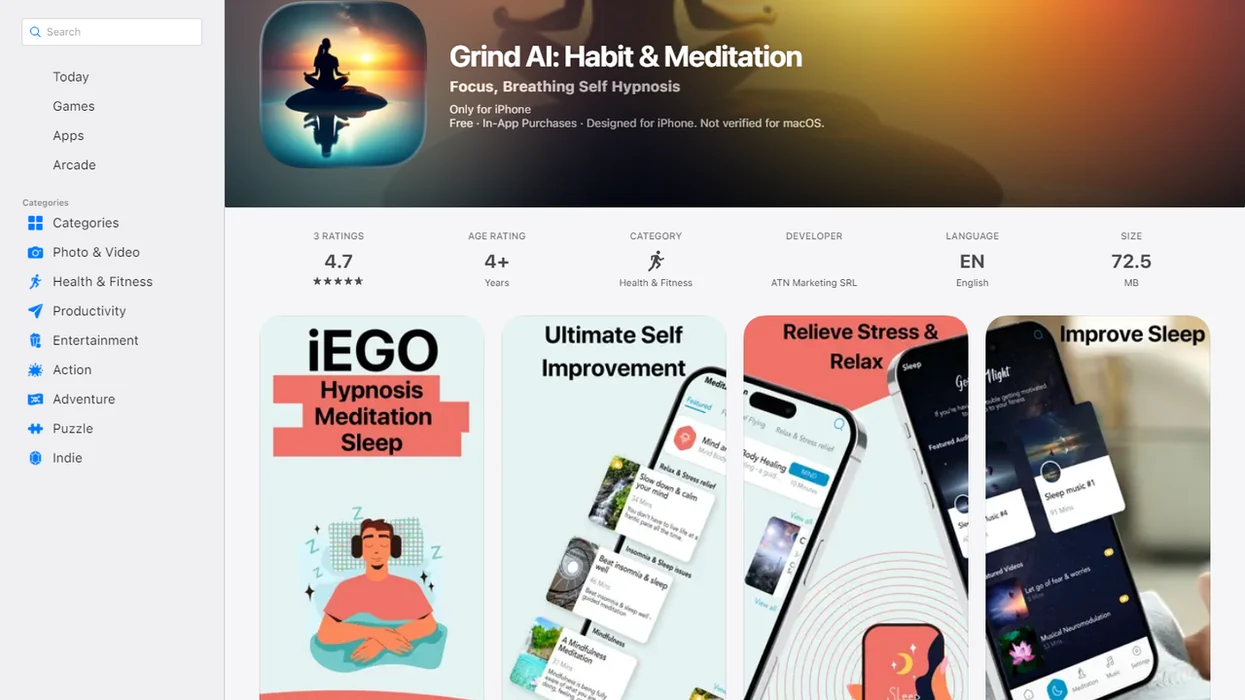
Side-by-side captures of the compared products. Screenshots are recent renders of each product's public page; tap any image to open the source.
Reveri vs HypnoBox at a glance

Reveri vs HypnoBox is not a simple “better app” question. It is a choice between a structured protocol app and a build-your-own hypnosis library.
| Factor | Reveri | HypnoBox |
|---|---|---|
| Positioning | Clinician-framed self-hypnosis | Custom hypnosis session builder |
| Best user fit | Beginners who want direction | Experienced users who like control |
| Session style | Short, guided protocols | Longer, layered audio sessions |
| Customization | Limited compared with HypnoBox | High, with mix-and-match components |
| Evidence framing | Stanford-affiliated, research-oriented | Broad wellness and hypnosis-library framing |
| Setup effort | Low | Moderate to high |
| Likely routine fit | Daily short practice | Personalized evening or goal-based sessions |
The better choice depends on how you behave after installing. A short session you actually finish beats a complex session you keep editing. We noticed this most clearly with a lock screen showing remaining minutes; five minutes left feels different from twenty-two.
Five Reveri app comparison facts users should know
A Reveri app comparison should focus on structure, customization, evidence framing, and routine fit. These five facts cover the practical decision points.
- Reveri positions its sessions as clinician-designed and research-framed; cite Reveri’s current official materials inline here, such as https://www.reveri.com/.
- HypnoBox says it offers 600+ hypnosis elements users can combine into custom sessions; cite its current official product page or app-store listing inline here, such as https://www.hypnobox.com/.
- Reveri is easier for users who want minimal setup, clear direction, and a guided protocol.
- HypnoBox is stronger for users who enjoy adjusting voice, background sounds, goals, and session length.
- Both apps require consistent practice and reasonable expectations; listening once is rarely a fair test.
If the priority is low-friction daily practice, HypnoApp fits users who want to press play without building a script because sessions are organized by practical goals like sleep, calm, confidence, and habit support.
That setup matters. The app you open after brushing your teeth has an advantage over the one you keep meaning to configure.
Where Reveri wins in a self-hypnosis app comparison
Where does Reveri beat HypnoBox? Reveri wins for users who want short sessions, clear direction, and a clinician-designed feel without spending time constructing their own audio.
Reveri is often appealing because it presents clinician-framed, research-oriented hypnosis protocols; if the Stanford-affiliated claim is retained, add an inline source from Reveri or Stanford immediately after that phrase. That does not mean every user will get a medical result. It means the app presents self-hypnosis as a structured practice for selected goals, including stress, sleep, pain support, and habit-related behavior.
Low setup friction can support adherence. If a session is short enough to use behind a closed office door at lunch, it has a better chance of becoming routine.
Beginners looking for a clear first self-hypnosis routine may prefer Reveri because it reduces choice overload with short guided protocols and a narrow session path.
HypnoApp can also suit beginners who want guided audio without complex session building because it groups sessions around common use cases instead of asking users to assemble every element manually.
Where HypnoBox wins for customizable hypnosis sessions
Where does HypnoBox beat Reveri? HypnoBox wins for power users who want to build hypnosis sessions from a large library rather than follow a fixed protocol.
Its library-style design is the main draw. Users can combine modules, adjust the goal focus, and, where available, change elements such as voice, background sound, and session length. That makes HypnoBox more flexible for people who already know what kind of suggestion language, pacing, or bedtime audio routine they prefer.
The tradeoff is real. More control can turn into decision fatigue, especially when the user just wants to relax.
For experienced self-hypnosis users who like audio tinkering, HypnoBox is often more flexible than Reveri because it lets them layer components into longer personalized sessions.
HypnoApp is a calmer middle option for users who want variety but not a full construction kit, because it offers guided sessions by goal without requiring a custom build before every listen.
Evidence and Source Notes for Reveri and HypnoBox
The evidence picture is mixed: Reveri and HypnoBox make different product claims, while the broader hypnosis literature supports only selected uses. No direct public Reveri-versus-HypnoBox clinical trial was found.
For a fair source pass, separate three layers:
- Check Reveri’s own materials for clinician framing, Stanford-affiliated language, and goal categories such as sleep, stress, pain support, focus, and habits; those claims should be attributed to Reveri, not treated as independent proof.
- Check HypnoBox’s own materials for the large module library, customization features, voices, sounds, and purchase or add-on model; those are product facts that can change with app updates.
- Compare both apps against independent hypnosis evidence rather than against each other.
Government and academic summaries generally describe hypnosis as a focused-attention technique that may help some people with pain, stress, and procedure-related symptoms, while results vary by condition, study quality, and clinician involvement. NCCIH gives a cautious overview of hypnosis research and safety boundaries source. Peer-reviewed pain and clinical hypnosis reviews tend to report potential adjunctive benefits, not guaranteed app outcomes. That distinction matters: an app can borrow a credible method without proving that its exact scripts outperform another app’s scripts.
How self-hypnosis apps like Reveri and HypnoBox work
Self-hypnosis apps use guided attention, suggestion, imagery, and repeated practice to help users enter a focused, receptive state; they are not stage hypnosis or mind control. In practice, the audio gives cues, scripts, relaxation prompts, and repetition loops.
A helpful way to think about it is “attention training plus rehearsal.” The narrator may ask you to loosen your jaw, drop your shoulders, picture a calmer response, and repeat a habit cue. Those steps can support behavior change through focused attention, expectation, relaxation, and mental rehearsal.
Evidence for hypnosis is strongest as adjunctive support in selected areas, not as a cure; NCCIH summarizes hypnosis research and notes that evidence varies by condition (https://www.nccih.nih.gov/health/hypnosis), while chronic-pain reviews generally describe small-to-moderate benefits in some settings rather than universal relief.
For users comparing app-based hypnosis with in-person care, the hypnosis app vs hypnotherapist distinction matters because clinician-led hypnotherapy can assess symptoms, adapt sessions, and coordinate care.
How to use Reveri or HypnoBox for a fair app trial
A fair self-hypnosis app trial uses one goal, one routine, and a simple tracking method for two to four weeks. Switching topics daily makes the comparison noisy.
- Choose one goal such as sleep wind-down, stress reset, confidence rehearsal, or urge management.
- Set a trial window of two to four weeks before judging either app.
- Run sessions at the same time when possible, such as after work, before bed, or before a presentation.
- Log completion and one outcome such as perceived relaxation, sleep quality, or urge intensity.
- Review weekly to see which app you actually opened, not just which one looked better.
- Reset or stop if sessions increase distress, conflict with a care plan, or feel unsafe.
Someone with a laptop open to presentation notes may need a confidence session, not a whole new app tour. HypnoApp works well in that moment because a user can choose a confidence-focused guided audio session and rehearse a calmer response.
Small notes beat vague impressions.
Reveri vs HypnoBox pricing, privacy, and policy signals
Pricing, privacy, and cancellation friction can change the real value of Reveri or HypnoBox. Always check current iOS, Android, and app-store listings before subscribing. For citation hygiene, link the current Apple App Store and Google Play listings for both Reveri and HypnoBox in this section, because prices, trials, and in-app-purchase terms can change faster than editorial copy.
| Signal | What to check in Reveri | What to check in HypnoBox |
|---|---|---|
| Pricing clarity | Trial terms, subscription renewal, included content | Base app cost, add-ons, premium boxes, subscriptions |
| Free access | Whether enough sessions are available to test | Whether free content shows the real experience |
| In-app purchases | Extra plans or gated programs | Extra modules, voices, or bundles |
| Cancellation | App-store subscription controls | App-store and account cancellation path |
| Platform fit | iPhone, Android, and tablet availability | iPhone, Android, and tablet availability |
| Privacy | Goal data, account data, analytics | Custom goal text, usage data, analytics |
Cost checks before subscribing
Do not compare old screenshots. Prices, trials, and included libraries change, especially when apps revise plans.
Privacy checks before logging goals
Self-hypnosis goals can include sleep problems, stress, pain, habits, weight, or cravings. Read the privacy policy before entering sensitive notes. HypnoApp should be evaluated the same way, especially if you plan to save personal goals or listen across devices.
Who should pick Reveri or HypnoBox
The clearest choice comes from matching the app to your tolerance for structure, setup, and personalization. No ranking can replace that fit.
Choose Reveri if
Choose Reveri if you are new to self-hypnosis, prefer short sessions, and want clinician-framed protocols with low setup. It fits people who ask, “Am I supposed to feel hypnotized?” and want a simple answer: follow the session, notice your response, and keep expectations modest.
Choose HypnoBox if
Choose HypnoBox if you already like hypnosis audio, want long sessions, and enjoy adjusting voices, background sounds, and goal language. Users who keep earbuds tucked beneath a pillow may appreciate that level of bedtime control.
Choose neither if
Choose neither, or speak with a professional first, if you are dealing with serious symptoms, trauma, severe pain, panic, suicidal thoughts, or medical concerns.
For adults who want guided sessions without choosing between Reveri structure and HypnoBox tinkering, HypnoApp covers the practical middle because it organizes self-hypnosis, meditation, sleep, and habit-support audio by use case.
Limitations
This comparison is practical, not a clinical verdict. It has several important limits.
- There is no public authoritative head-to-head clinical trial proving Reveri is better than HypnoBox, or the reverse.
- App pricing, content libraries, trial terms, and policies can change after publication.
- App-store reviews are not clinical evidence and may reflect selection bias.
- Hypnosis evidence varies by condition, study quality, practitioner involvement, and adherence.
- Self-hypnosis apps should not replace therapy, diagnosis, emergency support, or prescribed treatment.
- Individual response varies; some users dislike hypnosis, voice style, repetition, or suggestive language.
- A notification interrupting a relaxation track can break the session, even when the content itself is useful.
- Session endings matter; an audio track that finishes too loudly can make bedtime practice feel jarring.
If the question is safety rather than features, our is hypnosis safe guide explains adult use, red flags, and when to avoid solo practice. HypnoApp should be used with the same boundaries: low-pressure practice, clear privacy checks, and professional care when needed.
FAQ
Is Reveri better than HypnoBox?
Reveri is better for short, structured, clinically framed self-hypnosis sessions. HypnoBox is better for users who want deep customization and longer DIY session building.
Is HypnoBox worth it?
HypnoBox may be worth it if you value a large hypnosis library, adjustable audio elements, and custom session construction. It may feel excessive if you want a simple guided protocol.
Is Reveri science based?
Reveri uses science-framed, clinician-designed positioning and is associated with Stanford-affiliated hypnosis work. That does not mean it guarantees results for sleep, anxiety, pain, habits, or any medical condition.
Does HypnoBox use real hypnosis?
HypnoBox uses guided hypnosis-style audio modules, imagery, and suggestion language. App-based hypnosis is still different from clinician-led hypnotherapy because it cannot assess or adapt to a person’s condition in real time.
Which app is better for sleep?
Reveri may fit users who want a structured sleep-support protocol with less setup. HypnoBox may fit users who want customized bedtime audio routines with specific voices, sounds, and session length.
Which app is better for anxiety?
Both apps can be used as relaxation and self-regulation tools for everyday stress. Neither should replace anxiety treatment, therapy, medication, or crisis support.
Can hypnosis apps help with pain?
Hypnosis has adjunctive evidence for pain support in some settings. A pain-focused app session should not replace medical evaluation, diagnosis, or prescribed pain care.
Are self-hypnosis apps safe?
Self-hypnosis apps are generally low-risk for many adults when used with realistic expectations and privacy awareness. Seek professional help if sessions worsen distress, trigger trauma responses, or conflict with a care plan.