
How to Practice Confidence Hypnosis With Phone Audio
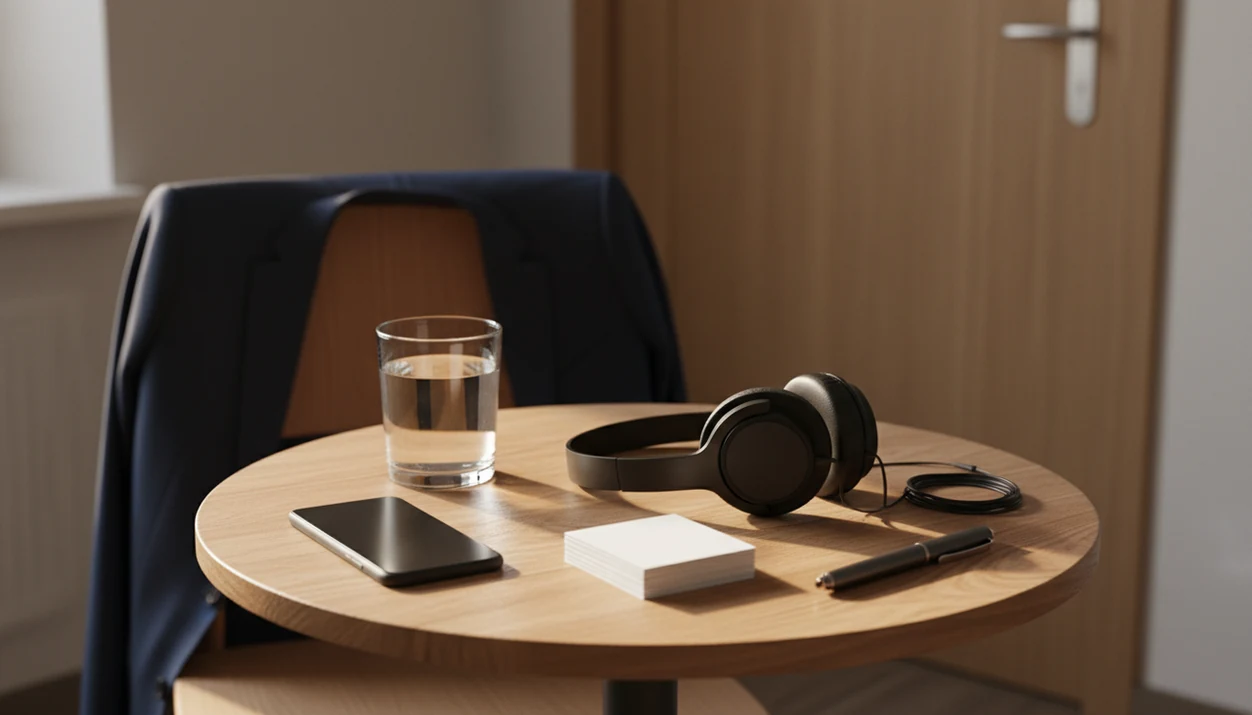
To practice how to practice confidence hypnosis with phone, choose a quiet place, play a structured confidence hypnosis track through headphones, rehearse your presentation or interview goal, and finish by reviewing one small action you will take next. Use it as a repeatable pre-event routine, not a one-time fix or a replacement for professional care.
Definition: Phone-based confidence hypnosis is a guided self-hypnosis routine that uses smartphone audio to combine relaxation, focused attention, confidence suggestions, and mental rehearsal before a performance situation.
TL;DR
- Use headphones, silence notifications, and sit upright in a place where you will not be interrupted.
- Practice for 10–30 minutes several times per week, then use a shorter 5–15 minute version before presentations or interviews.
- Pair the hypnosis session with real preparation: review talking points, rehearse out loud, and use one simple confidence cue before you begin.
Confidence Hypnosis Phone Routine Basics
How to practice confidence hypnosis with phone means using guided audio on a smartphone to enter a relaxed, focused state and rehearse confidence. It is commonly used before presentations, job interviews, phone calls, meetings, auditions, and sales conversations.
A basic confidence hypnosis phone routine includes breathing, body relaxation, goal setting, visualization, and confidence suggestions. The narrator may ask you to loosen your jaw, drop your shoulders, and picture the first minute of the event going steadily. You stay aware. You can pause the audio, open your eyes, or stop at any time.
Good hypnosis and self-hypnosis mobile apps with guided meditation, sleep sessions, anxiety relief, and habit-building audio programs deliver structured practice, not guaranteed confidence or medical treatment.
HypnoApp can fit this routine as one option for guided self-hypnosis, meditation, and sleep audio. Treat the app as an audio library, not as the source of the effect or a substitute for care.
Five Facts About Self Hypnosis for Confidence
- Fact 1: Hypnosis supports confidence through relaxation, focused attention, and suggestion. It does not install a new personality. It gives the mind a calmer place to rehearse a specific response.
- Fact 2: A good phone routine needs a clear goal. “I answer the first interview question slowly” works better than vague relaxing audio. A listener with a conference badge against a blazer needs something concrete.
- Fact 3: Repetition matters. Daily or several-times-weekly practice is more realistic than expecting one session to transform performance. Practice is the point.
- Fact 4: Short pre-event hypnosis may help with situational anxiety, but presentation-specific research is limited. Evidence is adjacent rather than speech-specific: NCCIH notes hypnosis has been studied for anxiety and pain (https://www.nccih.nih.gov/health/hypnosis), and a randomized trial found hypnosis reduced preoperative anxiety in adults (Saadat et al., 2006: https://pubmed.ncbi.nlm.nih.gov/16428534/). Those findings support pre-event calming as a plausible use, but they do not prove phone hypnosis for presentations will work for every speaker.
- Fact 5: Hypnosis is generally considered safe for many adults when appropriately delivered. The NCCIH describes hypnosis as a complementary approach used for issues such as anxiety, pain, and smoking cessation, but it is not a substitute for medical or psychological treatment (https://www.nccih.nih.gov/health/hypnosis). People with severe anxiety, psychosis, complex dissociation, or trauma-related instability should seek professional guidance before using hypnosis audio.
How Phone Hypnosis for Presentations Works
Phone hypnosis for presentations works by delivering a structured audio sequence: induction, relaxation, narrowed attention, suggestion, visualization, and reorientation. The phone is the delivery device, not the cause of the effect.
In practice, the audio helps you shift from scattered worry into a steadier attentional state. “Narrowed attention” just means you follow fewer inputs at once. The voice, your breathing, and the imagined event take priority over the usual mental noise.
Headphones help because they reduce distraction and make the guidance easier to follow. A microphone check behind closed curtains feels different when the cue phrase is already familiar. Brief hypnosis studies from 2012 and 2004 suggest short hypnotic relaxation can reduce state anxiety before stressful medical procedures. That supports the idea of pre-event calming, but it does not prove phone hypnosis for presentations will work for every speaker.
For public speaking, self-hypnosis usually works best when it is paired with real rehearsal, while stand-alone relaxation fits people who mainly need a short stress reset.
Before You Start a Confidence Hypnosis Phone Routine
Set up the session so your body can relax without creating a safety problem. Use a quiet location where sitting still is safe, and never use hypnosis audio while driving, cycling, operating equipment, or supervising children.
Silence notifications. Turn on Do Not Disturb. Download the track if the venue has weak Wi-Fi or patchy mobile data. A doorbell, text alert, or calendar alarm can pull you out of the session at the worst moment.
Use comfortable headphones at a moderate volume. Choose one event-specific goal before pressing play: a confident opening line, a steady voice, calm breathing, or clear interview answers. If interviews are the target, a guide such as app to help me prepare for an interview can help you connect audio practice with actual questions.
Sit upright but relaxed. Lying down may work for sleep hypnosis, but it can make pre-event confidence practice too drowsy. Add a timer buffer, so you are not rushing from trancey calm into a room full of people.
How to Use Phone Audio for Confidence Hypnosis
Use phone audio for confidence hypnosis by pairing a clear performance goal with a short guided audio session and one immediate action afterward. The routine should feel simple enough to repeat on a normal weekday, not only before a major event.
- Set your event goal in one sentence, such as “I speak clearly for the first two minutes.”
- Put the phone on Do Not Disturb and sit upright with both feet supported.
- Play a 10–20 minute confidence hypnosis track through headphones at a moderate volume.
- Follow the breathing, relaxation, and visualization prompts without trying to force trance.
- Repeat one tailored confidence suggestion during or after the track, such as “I pause before answering.”
- Review your first practical action immediately afterward, such as your opening slide, handshake, or first answer.
A skeptical beginner may ask, “Am I supposed to feel hypnotized?” Not necessarily. Most useful sessions feel like calm attention plus rehearsal. Phone face down on the nightstand or desk, voice in the headphones, next action ready.
Minute-by-Minute Phone Hypnosis for Presentations
The closer the event is, the lighter the routine should be so you stay alert and ready. Phone hypnosis for presentations works better as a preparation aid than as a last-second escape hatch.
| Timing | What to do | Best use |
|---|---|---|
| 30 minutes before | Use the restroom, silence phone, play a 15-minute track, then review key points. | Presentations, interviews, auditions |
| 10 minutes before | Use 4–6 minutes of breathing and confidence suggestion, then stand and rehearse the first line. | Meetings, sales calls, panel answers |
| 5 minutes before | Skip deep hypnosis. Use a cue phrase, posture reset, and one visualization. | Walking into the room |
30 minutes before
This is the best window for a full short session because you still have time to reorient. If public speaking is your main use case, a hypnosis app for public speaking routine should include both calm breathing and first-line rehearsal.
10 minutes before
Keep it brief. Try one breathing count, one suggestion, and one mental image of starting well.
5 minutes before
No deep session now. Stand tall, exhale slowly, and picture recovering smoothly if one sentence comes out wrong.
Best Confidence Suggestions for Phone Self Hypnosis
Confidence suggestions should be believable, specific, and tied to behavior. The most useful lines sound like something you can actually do under pressure.
- The pause cue: “I pause before answering.” This helps during interviews, hard questions, and sales conversations.
- The voice cue: “My voice can be steady.” It aims at one physical behavior, not total emotional control.
- The opening cue: “I know my first sentence.” This is useful when anticipatory anxiety spikes right before speaking.
- The reset cue: “I can return to calm breathing.” This builds coping confidence if you lose your place.
Avoid exaggerated claims such as “Everyone will love me” or “I will never feel nervous.” They often create an argument in the mind. Better scripts include the room, posture, first words, eye contact, recovery from a mistake, and a successful close.
For most beginners, a believable coping suggestion is easier to use than a grand confidence affirmation because it gives the body a specific next move.
Common Mistakes in Self Hypnosis for Confidence
Several common mistakes make self hypnosis for confidence less useful, even when the audio itself is fine. The quick fix is usually to make the practice more specific and less dramatic.
| Mistake | Quick fix |
|---|---|
| Expecting one session to create instant charisma | Practice several times before the event. |
| Using generic relaxing music | Choose structured hypnosis audio with suggestions and mental rehearsal. |
| Practicing only on the event day | Schedule short sessions two to four weeks ahead. |
| Lying down before a presentation | Sit upright with both feet supported. |
| Using the app while avoiding real practice | Rehearse out loud after the session. |
| Leaving notifications on | Use Do Not Disturb and download the track. |
Cold coffee beside open tabs is a familiar scene for late preparation. Still, audio alone cannot replace speaking the answer out loud. If performance nerves are hard to name, a resource on what app identifies performance nerves may help you sort stress patterns before choosing a routine.
How to Check Whether Your Confidence Hypnosis Routine Works
Check whether your confidence hypnosis routine works by tracking ratings, body signs, and behavior over several sessions. Do not judge the whole method from one nervous presentation.
Before and after each session, rate your confidence from 1 to 10. Then note physical signs: breathing pace, voice steadiness, shoulder tension, and whether you can begin the first sentence without restarting three times. Shoulders dropping during a desk session is a useful sign, but it is not the only measure.
Track behavior outcomes too. Did you practice out loud? Did you answer the first question? Did you complete the presentation? Did you recover after a mistake? These are stronger signals than simply feeling “more confident.”
Compare several sessions over two to four weeks. If nothing changes, adjust one variable: shorten the session, choose a different voice, make the script more specific, or add more real-world rehearsal. The useful part is consistency: repeat the same track, goal, and post-session action long enough to see whether anything changes.
When to Seek Professional Help
Seek professional help when presentation anxiety is intense, persistent, or starts shrinking your life. Phone hypnosis can support practice, but it cannot diagnose anxiety disorders, trauma responses, panic, or dissociation.
Some nerves before a talk are normal. It is different when you are avoiding interviews, calling in sick before meetings, having panic attacks, losing time, feeling detached from your body, or noticing trauma symptoms such as flashbacks, shutdown, or sudden fear that does not fit the room. Coaching may help with speaking skills and rehearsal. Therapy or medical support may be a better fit when symptoms are severe, recurring, or linked to wider mental health concerns.
- Stop the audio if a session leaves you distressed, confused, dissociated, or worse afterward.
- Write down what happened in plain terms: the track, timing, body sensations, and any triggers.
- Pause deep hypnosis practice until you have steadier support or a clinician’s guidance.
- Contact a licensed therapist, doctor, or qualified mental health professional if anxiety is disrupting work, sleep, relationships, or daily choices.
- Use emergency or crisis support now if you might harm yourself, feel unsafe, or cannot stay grounded.
Limitations
Phone-based confidence hypnosis has real limits, and those limits matter. Treat it as a relaxation and habit-support tool for adults, not a cure or a substitute for care.
- There is limited high-quality research specifically on phone hypnosis for presentations or interviews.
- Hypnosis audio is not a substitute for therapy, medical care, coaching, or skills practice when those are needed.
- People with psychosis, complex dissociation, trauma-related instability, or severe anxiety should seek professional guidance before using hypnosis.
- Interruptions, incoming calls, noisy rooms, and multitasking can reduce the value of a session.
- Some people do not respond strongly to hypnosis, and results vary.
- Overreliance on an app can become avoidance if the person never rehearses real speaking behaviors.
- Do not use hypnosis audio while driving, commuting in unsafe settings, or doing tasks that require full attention.
- Avoid cure claims. A confidence hypnosis phone routine should support preparation, not promise personality change.
Clinicians typically recommend professional assessment when anxiety is severe, disabling, trauma-linked, or causing major avoidance. Use app-based practice alongside professional care when needed.
FAQ
Does phone hypnosis really work?
Phone hypnosis can help some people with relaxation, focused attention, and mental rehearsal. Results vary, and it should not be treated as a guaranteed outcome.
How long should confidence hypnosis sessions be?
Most practice sessions are 10–30 minutes. Before an event, many people use a shorter 5–15 minute version.
Should I use headphones for phone hypnosis?
Headphones usually improve focus, voice clarity, and privacy. They also reduce small distractions from the room around you.
Can hypnosis stop presentation anxiety?
Hypnosis may reduce situational stress for some people, but it should not be framed as a guaranteed cure. Severe or persistent anxiety may need professional support.
When should I practice confidence hypnosis before an event?
Practice several times per week before the event, then use a shorter routine on the day itself. The closer you are to starting, the lighter the routine should be.
Can I write my own confidence hypnosis script?
Yes, if the suggestions are specific, believable, and tied to behavior. Guided audio may be easier if you are new or unsure how to structure the session.
Is self hypnosis safe to do on my phone?
Self hypnosis is generally considered safe for many adults when used appropriately. Seek professional guidance if you have psychosis, complex dissociation, trauma-related instability, or severe anxiety.
What if I fall asleep during hypnosis audio?
Sleepiness is common, especially if you listen lying down or late at night. Use an upright posture, shorter sessions, and daytime practice if your goal is confidence rather than sleep.