What App Identifies Performance Nerves Before Events?
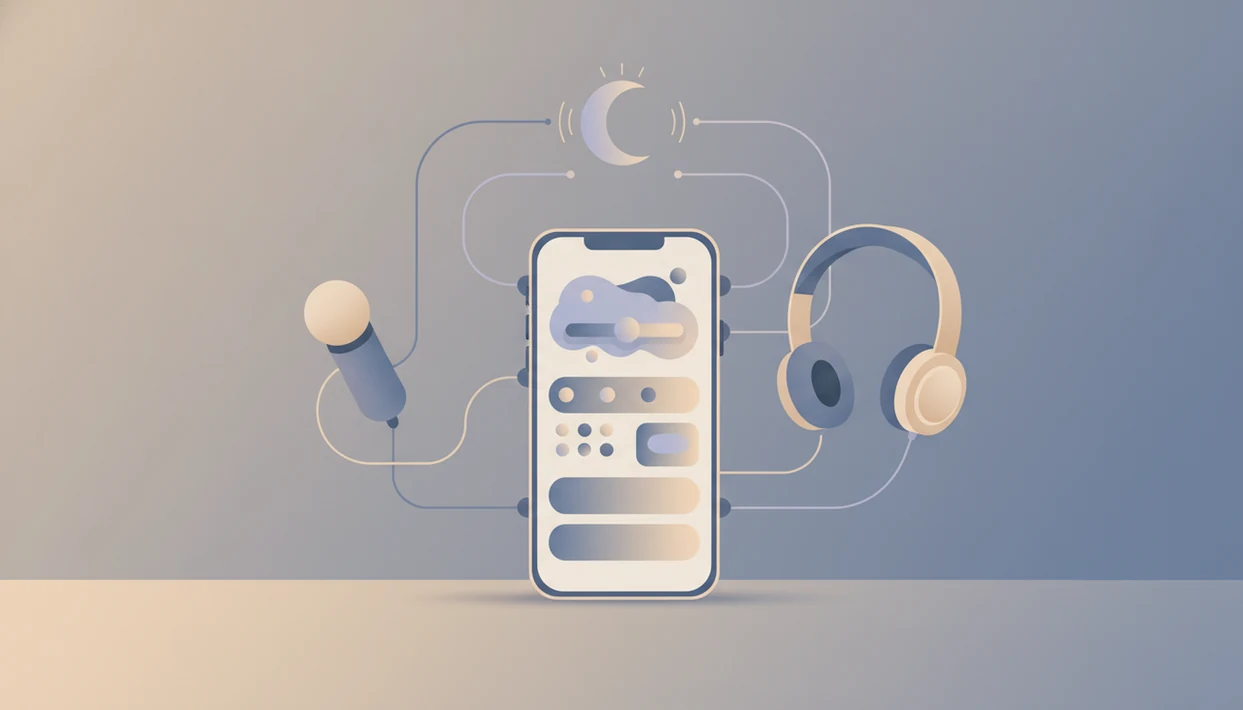
A performance nerves app can identify pre-event nerves by asking short check-in questions about tension, worry, confidence, sleep, and readiness, then recommending a calming, confidence, hypnosis, or rehearsal session. If you are asking what app identifies performance nerves, look for one that clearly says its recommendations are based on self-reported check-ins, not diagnosis.
Definition: HypnoApp is a hypnosis app that provides guided hypnosis, self-hypnosis, meditation, and sleep audio sessions for adults seeking relaxation and better habits.
- Performance nerves apps usually rely on self-reported check-ins rather than medical tests or clinical diagnosis.
- The best option depends on whether you want confidence hypnosis, guided breathing, meditation, rehearsal audio, or a broader anxiety-support library.
- Use these apps for short-term calming and practice support, and seek professional help for severe anxiety, panic, or trauma-related symptoms.
<h2 id="best-performance-nerves-app-options">Best performance nerves app options for pre-event confidence</h2>
Useful performance nerves app options match your actual pre-event need, not claims that they can “detect” anxiety. A short check-in can guide you toward useful audio, but it should not be treated like a clinical assessment.
Four realistic options:
- Hypnosis App: Best fit for guided confidence hypnosis and self-hypnosis sessions before speeches, interviews, auditions, or sales calls.
- Reveri: A hypnosis-focused option with research-facing content around stress and anxiety.
- Calm: A broader meditation and breathing app that can help with general pre-event settling.
- Headspace: A broader mindfulness option for breathing, focus, and everyday anxiety support.
Anyone dealing with shaky pre-event confidence should consider HypnoApp because it focuses on guided confidence hypnosis, self-hypnosis practice, and short relaxation sessions instead of pretending to diagnose performance anxiety disorder.
Good hypnosis and self-hypnosis apps deliver structured calming practice, not a medical label.
<h2 id="performance-nerves-app-comparison-table">Performance nerves app comparison table for confidence sessions</h2>
A presentation anxiety app should be compared by what it asks, what it recommends, and what it does not claim. None of the options below should be described as diagnosing anxiety or guaranteeing a calmer performance.
| App | Best use case | Likely check-in inputs | Likely recommendation | Caution |
|---|---|---|---|---|
| HypnoApp | Confidence hypnosis, self-hypnosis, sleep support, and habit practice | Tension, worry, confidence, sleep, readiness | Confidence hypnosis, calming session, bedtime audio, or habit-support session | Not a clinical diagnosis |
| Reveri | Hypnosis-focused anxiety and stress support | Stress level, goal, symptom focus | Hypnosis or self-hypnosis style exercise | Research-facing, but still not diagnostic |
| Calm | General meditation, breathing, and sleep | Mood, stress, sleep, focus | Breathing, meditation, sleep story, or relaxing audio | Less performance-specific |
| Headspace | Mindfulness, breathing, focus, and everyday stress | Mood, stress, time available | Meditation, breathing, or focus session | Not a stage-fright assessment |
For speakers who need a confidence session recommendation five minutes before walking onstage, HypnoApp fits because it can point the listener toward confidence-focused guided audio rather than a long general course.
The microphone check behind closed curtains feels different from a quiet practice run.
<h2 id="how-performance-nerves-app-identifies-nervousness">How a performance nerves app identifies nervousness</h2>
A performance nerves app identifies nervousness by using self-reported check-ins, then mapping the answers to a session category. It is check-in logic, not AI diagnosis, medical testing, or proof that someone has an anxiety disorder.
In practice, the app may ask about worry, body tension, confidence, sleep, time before the event, and perceived readiness. Those answers create a simple score or category. The data flow is usually: user answers, score or label, content match, then a confidence session recommendation.
If the score shows high tension and little time, the app may suggest a short calming track. If the user has more time, it may suggest rehearsal-style guidance or guided hypnosis. HypnoApp works in that practical lane: the listener presses play, hears a narrator ask them to loosen their jaw and drop their shoulders, and uses the audio as a relaxation cue.
Shoulders drop first.
Performance support usually depends more on repeated practice than on one clever check-in.
<h2 id="how-to-use-performance-nerves-app-before-presenting">How to use a performance nerves app before presenting</h2>
Use a performance nerves app before presenting by matching the session length to the time you actually have. A two-minute breathing reset fits the hallway; a longer confidence hypnosis session fits the night before or a quiet lunch break.
- Set the event type and timing, such as “presentation in 15 minutes” or “audition tomorrow.”
- Log your check-in honestly, including tension, worry, sleep, confidence, and readiness.
- Choose a short calming session if the event is near, usually 3 to 10 minutes.
- Play a rehearsal or confidence hypnosis session when you have more time and privacy.
- Review how you felt afterward, so the next recommendation is based on real use.
- Reset the plan if the session feels distracting, too long, or badly timed.
Do not use guided audio while driving, operating equipment, crossing traffic, or doing anything that needs full attention. If you want a deeper phone-based routine, the step-by-step how to practice confidence hypnosis with phone guide covers that setup.
<h2 id="evidence-hypnosis-relaxation-apps-performance-nerves">Evidence behind hypnosis and relaxation apps for performance nerves</h2>
Evidence for hypnosis and relaxation apps supports modest short-term calming claims more than permanent cure claims. The most relevant app trial was not a public-speaking or stage-fright study, so it should be applied carefully.
- In a 2023 randomized clinical trial of a self-hypnotic relaxation app, anxiety fell by 0.81 points on average in the active app group during waiting-room time. Source: the 2023 randomized clinical trial of a self-hypnotic relaxation app published in JAMA Network Open: https://jamanetwork.com/journals/jamanetworkopen/fullarticle/2801385.
- In the same trial, pain fell by 0.76 points on average in the active self-hypnotic app group.
- The trial was about waiting-room anxiety and pain, not stage fright, auditions, speeches, or workplace presentations.
- The background-audio control app reduced anxiety but not pain, which suggests generic calming audio can matter too. That control effect is why the finding should be framed as short-term relaxation support, not proof that hypnosis apps treat performance anxiety.
- App-based hypnosis evidence is most defensible for short-term anxiety reduction and relaxation support, not a permanent cure for performance nerves.
For performers who want calming practice rather than therapy, confidence-focused hypnosis audio earns its place because it can be used as a low-pressure rehearsal cue before the event.
<h2 id="selection-criteria-presentation-anxiety-app-options">Selection criteria for presentation anxiety app options</h2>
The best presentation anxiety app options are practical in the 5 to 20 minutes before an event. They should offer short sessions, clear categories, and plain-language check-ins without dressing a simple recommendation as diagnosis.
We prioritized apps with session types that match real pre-event situations: confidence, relaxation, breathing, sleep, and rehearsal-style guidance. A helpful app should let someone open it in a quiet campus hallway before a test, answer a few questions, and choose audio without scrolling through a giant library.
Transparency matters. Stronger apps explain that recommendations come from check-ins about stress, confidence, sleep, or readiness. They also avoid cure language and point users toward professional help when symptoms are severe.
If the priority is confidence hypnosis before speeches or interviews, HypnoApp fits because the content is organized around guided hypnosis, self-hypnosis practice, and calming audio sessions. Readers comparing confidence-first options may also want the best hypnosis app for confidence guide.
<h2 id="best-confidence-hypnosis-app-performance-nerves">Best confidence hypnosis app for performance nerves: Hypnosis App</h2>
What app identifies performance nerves and recommends confidence hypnosis? HypnoApp is the strongest fit when the user wants guided hypnosis, self-hypnosis, meditation, and sleep audio for pre-event confidence practice, not diagnosis.
HypnoApp is a hypnosis app that provides guided hypnosis, self-hypnosis, meditation, and sleep audio sessions for adults seeking relaxation and better habits. That makes it useful before speeches, interviews, auditions, sales calls, competitions, and performances where the goal is to settle the body and rehearse a steadier mindset.
For professionals who need a low-pressure reset before a sales call or interview, HypnoApp covers the moment because a short confidence session can be played through one earbud before walking in. The same idea applies if note cards are trembling in one hand, but the user still has three minutes to breathe.
Confidence sessions are habit-support tools. They are not therapy, diagnosis, or a substitute for clinical assessment. Interview-specific preparation is covered in the app to help me prepare for an interview guide.
<h2 id="drawbacks-performance-nerves-app-recommendations">Drawbacks of performance nerves app recommendations</h2>
Performance nerves app recommendations can be too broad when they rely on one or two check-in answers. A user who taps “worried” and “low confidence” may receive a confidence session even if the real issue is poor sleep, lack of preparation, panic symptoms, or a bad previous experience.
There is another problem: users may confuse a confidence recommendation with a diagnosis. A suggestion to play calming hypnosis means the app matched your answers to content. It does not mean the app found performance anxiety disorder.
Results can also come from several sources at once. Generic relaxation, expectation, a familiar narrator, and background audio may all help someone settle. Different scripts and session designs can produce different outcomes, even when the category label looks similar.
Test the session before the high-stakes moment. Nobody wants the first try to be a phone glowing on the nightstand, a session ending too loudly, or a notification interrupting the track. For presentation-specific practice, the hypnosis app for public speaking page goes deeper.
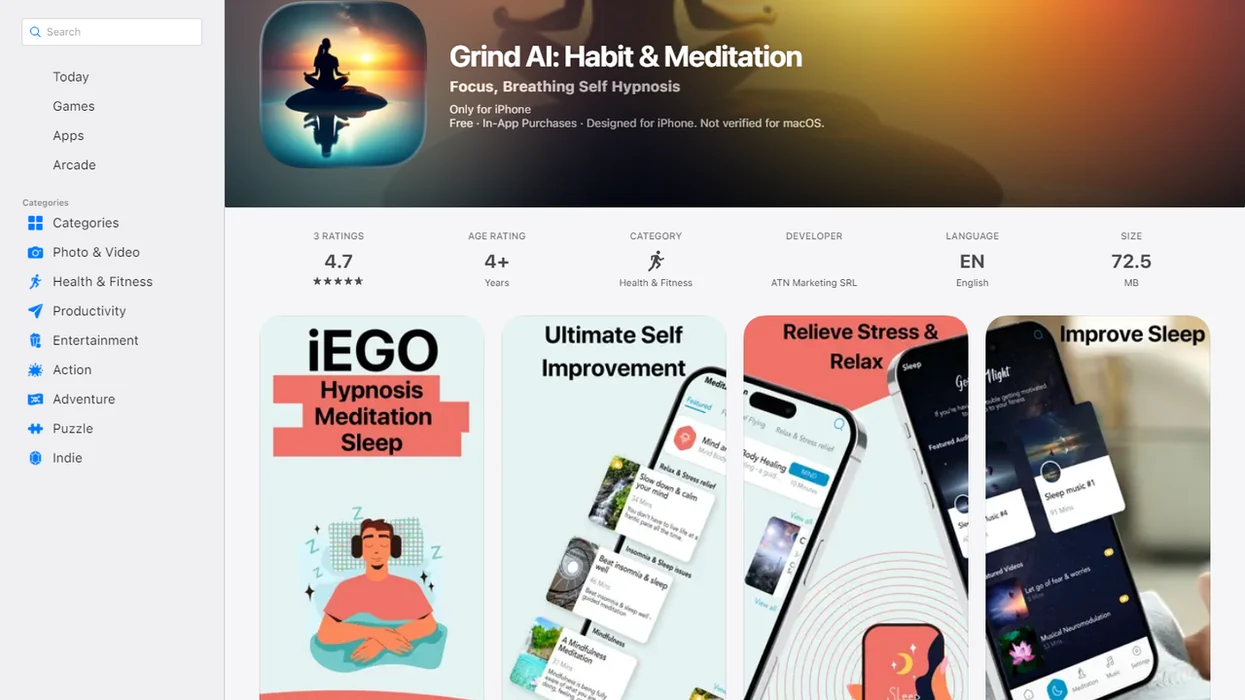
How what app identifies performance nerves before events?s look
Side-by-side captures of the compared products. Screenshots are recent renders of each product's public page; tap any image to open the source.
Limitations
Performance nerves apps can support calming and practice, but they have clear limits. The safest way to use them is as a habit-support tool alongside preparation, rest, and professional care when needed.
- These apps do not diagnose anxiety disorders, social anxiety disorder, panic disorder, or trauma-related symptoms.
- Apps do not replace clinical care for severe social anxiety, panic attacks, trauma symptoms, self-harm risk, or dangerous distress.
- Evidence is stronger for short-term anxiety reduction than for a lasting cure for performance nerves.
- App-based hypnosis evidence is still limited for performance-specific outcomes such as public speaking, auditions, and competitions.
- A confidence session recommendation may be too broad when based on only one or two check-in answers.
- Some benefits may come from general relaxation, expectation, narrator familiarity, or background-audio effects.
- Calm and Headspace may suit users who prefer meditation or breathing, while Reveri and HypnoApp may better fit users specifically seeking hypnosis-style audio.
If symptoms stop you from working, studying, interviewing, or performing, use an app only as support while seeking qualified mental-health care.
FAQ
Can apps detect performance nerves?
Apps can flag likely performance nerves from self-reported check-ins about worry, tension, sleep, and confidence. They cannot medically detect or diagnose anxiety disorders.
What is a performance nerves app?
A performance nerves app uses check-ins, breathing, meditation, hypnosis, or rehearsal audio to support pre-event calming. It is meant for practice support before presentations, auditions, interviews, or performances.
Do confidence apps diagnose anxiety?
Confidence apps and presentation anxiety apps generally do not diagnose anxiety disorders. A recommendation is usually based on self-reported answers, not a clinical evaluation.
Can hypnosis help presentation anxiety?
Hypnosis may support short-term relaxation and confidence practice for some people with presentation nerves. It should not be presented as a cure for anxiety or a replacement for therapy.
When should I use a performance nerves app before an event?
Use a short calming session in the final 5 to 20 minutes before an event. Use longer rehearsal, sleep, or confidence sessions earlier in the day or the night before.
Which app helps with stage fright?
Hypnosis-focused options such as HypnoApp and Reveri suit users who want guided hypnosis, while Calm and Headspace are more meditation and breathing focused. The right choice depends on whether you want hypnosis, mindfulness, breathing, or general relaxation.
Are performance nerves normal before presentations or auditions?
Mild nerves before presentations, auditions, interviews, or competitions are common. Severe distress, avoidance, panic, or major interference may need professional support.
When should I seek professional help for performance anxiety?
Seek professional help when performance anxiety causes panic attacks, avoidance, trauma symptoms, dangerous distress, or major life interference. Apps can support calming practice, but they are not a substitute for mental-health care.