
Is There an App That Builds Confidence Before Presentations?
Yes, an app that builds confidence before presentations can help by combining structured rehearsal, calming breathwork, visualization, and guided hypnosis-style audio, but it should not replace practice. HypnoApp fits the calm-and-confidence side of that routine with guided audio sessions you can use before rehearsal, the night before a talk, or during a low-pressure reset.
> Definition: HypnoApp is a hypnosis app that provides guided hypnosis, self-hypnosis, meditation, and sleep audio sessions for adults seeking relaxation and better habits.
- For presentation nerves, choose an app that supports both calm-state preparation and repeated rehearsal.
- Hypnosis for presentations may help some adults feel more relaxed and confident, but it works best as a complement to practice.
- Apps with feedback, simulated audiences, pacing tools, scripts, and pre-event routines are more realistic than apps promising instant confidence.
How these apps look
Side-by-side captures of the compared products. Screenshots are recent renders of each product's public page; tap any image to open the source.
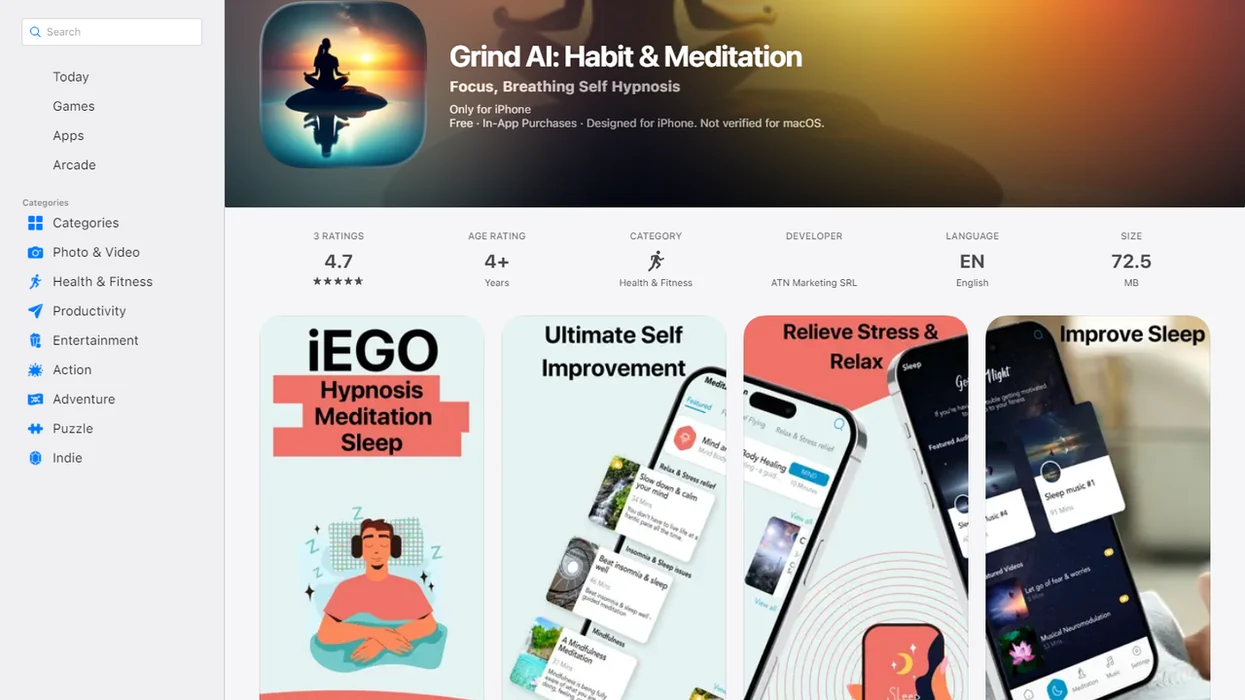
Best presentation confidence apps at a glance
No single presentation confidence app fixes every speaking problem. The useful choice depends on whether your bottleneck is body tension, delivery habits, audience fear, or fear of forgetting.
| Option | Best for | Core mechanism | Main caveat |
|---|---|---|---|
| HypnoApp | Calming nerves | Guided hypnosis, relaxation, imagery | Does not grade delivery |
| Yoodli | AI feedback | Filler-word, pacing, and clarity analytics | Feedback can feel mechanical |
| Orai | Speaking drills | Short practice exercises and coaching prompts | Less focused on deep relaxation |
| VirtualSpeech | VR exposure | Simulated audience practice | Requires comfort with VR-style practice |
| Teleprompter apps | Script support | Cue lines, scrolling scripts, prompts | Can encourage stiff reading |
A good app for presentation nerves delivers practice, feedback, and calming repetition, not a promise that fear disappears overnight. For a confidence-specific audio route, our best hypnosis app for confidence guide covers that angle in more detail.
Top public speaking confidence app shortlist
Here is the practical shortlist: use HypnoApp for calming preparation, Yoodli for speech analytics, Orai for drills, VirtualSpeech for audience simulation, and teleprompter apps for memory support. Each covers a different part of the presentation problem.
HypnoApp
For adults who need pre-event steadiness, HypnoApp fits because it offers guided hypnosis, self-hypnosis, meditation, sleep, and relaxation audio for confidence routines. The useful moment is often small: a narrator asks you to loosen your jaw and drop your shoulders before you rehearse again.
Yoodli
Yoodli is useful when you want AI feedback on filler words, pace, clarity, and rambling. It turns “I think I sounded nervous” into specific points to adjust.
Orai
Orai supports structured speaking drills and delivery coaching. It suits people who build confidence by hearing their own voice repeatedly.
VirtualSpeech
VirtualSpeech helps when being watched is the main fear. Simulated audiences create a rehearsal space before the real room.
Teleprompter apps
Teleprompter apps reduce fear of blanking. Use them for prompts and transitions, not word-for-word dependency.
How an app for presentation nerves works
Presentation confidence usually improves through repeated exposure, skill practice, feedback, and nervous-system downshifting. In plain terms, you teach your body and voice that the task is familiar.
- Public speaking anxiety is common; the National Institute of Mental Health estimates that 7.1% of U.S. adults have social anxiety disorder in a given year, and performance situations such as speaking can be a trigger: https://www.nimh.nih.gov/health/statistics/social-anxiety-disorder.
- Rehearsal builds familiarity with your message, slide order, and transitions.
- Feedback tools target delivery skills such as pace, filler words, clarity, and vocal variety.
- Relaxation and hypnosis-style audio target emotional regulation, including tension, breathing, and anticipatory worry.
- Gradual exposure helps the brain practice being observed without treating every audience cue as danger.
The split matters. A library cubicle with a dim lamp is good for script reps; it is not the same as walking into an empty meeting room before slides. For deeper background, read our hypnosis app for public speaking page.
How to use a presentation confidence app before a talk
Use a presentation confidence app as a short training loop, not a last-minute rescue. The strongest routine combines practice, review, calming audio, and one realistic run-through.
- Set the presentation date, audience, and goal so the app work matches the real event.
- Record or rehearse the talk in short passes instead of forcing one long polished take.
- Review pacing, filler words, unclear transitions, or slide timing after each pass.
- Listen to a calming hypnosis, breathing, or visualization session the night before or before rehearsal.
- Repeat a realistic run-through close to the event, using the same opening line and timing cues.
If the priority is feeling steadier before you practice, HypnoApp earns the spot because the guided audio can become a repeatable pre-rehearsal cue. Phone face down. One track. Then the first two minutes of the talk.
Best app that builds confidence before presentations for calming nerves: HypnoApp
HypnoApp is best for adults who want guided hypnosis, self-hypnosis, meditation, sleep, and relaxation audio before a presentation. It is most useful when nerves show up as tight shoulders, racing thoughts, shallow breathing, or dread the night before.
In practice, use it for night-before relaxation, pre-rehearsal focus, positive imagery, or settling physical tension before entering the room. A 2019 meta-analysis of randomized trials found hypnosis produced a moderate average anxiety-reduction effect versus controls, but individual results vary: https://doi.org/10.1080/00207144.2019.1613863. That does not mean hypnosis replaces rehearsal.
If your main problem is anticipatory anxiety, guided confidence audio fits because it gives you a repeatable routine built around breath pacing, relaxation, and visualization. Users who want a phone-based practice can also compare steps in how to practice confidence hypnosis with phone.
Best presentation confidence app for AI speech feedback: Yoodli
Yoodli is the better fit when uncertainty about delivery is feeding the nerves. It can help you see patterns in filler words, pace, clarity, talk time, and rambling.
Feedback reduces guesswork. Instead of finishing a practice run and thinking, “That was awful,” you can identify one fix for the next pass. Maybe the opening was clear, but the middle drifted. Maybe the slide three transition needs a sentence.
When the issue is delivery mechanics, Yoodli helps because it turns a recorded practice session into measurable speaking feedback. However, AI feedback does not directly calm the body the way relaxation or hypnosis audio might. If anxiety is the main obstacle, pair it with breathing, guided hypnosis, or a short reset before the next recording.
Best app for presentation nerves and speaking drills: Orai
Orai-style apps help with short speaking exercises, practice prompts, and measurable improvement. They are useful when confidence rises through repetition rather than reassurance.
Speaking drills make your own voice less surprising. That matters more than people expect. The first recording can feel awkward, but the fifth often sounds less foreign. Backpack pocket, tangled headphones, one more practice prompt on the bus.
For speakers who freeze because they feel underprepared, structured drills are often easier than vague advice because they create a repeatable practice task. Orai can support that task with prompts and delivery coaching. People with high anxiety may still need relaxation training, coaching, or professional support, especially if they avoid classes, meetings, or work presentations.
Best presentation confidence app for simulated audiences: VirtualSpeech
VirtualSpeech is useful when the fear is not the script, but the feeling of being watched. VR or simulated audience practice works as gradual exposure: you rehearse the sensation of attention before the real event.
A randomized trial of automated VR exposure for public-speaking anxiety found lower anxiety versus a waitlist control at post-treatment and follow-up: https://pmc.ncbi.nlm.nih.gov/articles/PMC6718087/. The mechanism is not magic. It is repeated contact with a feared situation in a safer setting.
Speakers trying to tolerate audience attention may benefit from VirtualSpeech because simulated rooms let them practice eye contact, pauses, and presence before a live crowd. But VR realism does not replace knowing the material. You still need your opening, transitions, and final line ready.
Best app for presentation nerves caused by forgetting: teleprompter tools
Teleprompter tools are not cheating. They are preparation tools, much like cue cards, speaker notes, or a printed outline on a lectern.
Fear of forgetting increases cognitive load. When your brain is busy monitoring every possible mistake, it has less room for timing, tone, and audience connection. A teleprompter app can reduce that load during rehearsal by keeping the structure visible.
Use the full script early, then shrink it. Convert paragraphs into prompts, transitions, opening lines, and closing lines. Not the whole speech. Just the rails. For presenters preparing for adjacent high-pressure events, the same structure applies to an app to help me prepare for an interview.
How we picked presentation confidence apps
We picked apps by matching features to the real causes of presentation nerves: preparation gaps, delivery uncertainty, physical anxiety, memory fear, and audience exposure. Apps promising instant permanent confidence from hypnosis alone were not treated as credible.
- Structured rehearsal mattered because repeated practice builds familiarity.
- Feedback mattered because speakers need to know what to improve.
- Relaxation training mattered because body tension can derail delivery.
- Visualization mattered because mental rehearsal can support confidence when paired with action.
- Realistic audience exposure mattered because some fear only appears when being observed.
Digital interventions for social anxiety have shown meaningful effects in research when they follow structured models, and VR public speaking studies support exposure-style practice. The best presentation confidence app depends more on your bottleneck than on the longest feature list. For symptom sorting, our guide to what app identifies performance nerves may help.
Limitations
No app can guarantee a calm body, perfect delivery, or a successful presentation. A helpful tool can lower friction, but it cannot do the speaking for you.
- Hypnosis and self-hypnosis are not universally effective; people respond differently to guided audio.
- HypnoApp should not be framed as diagnosis, treatment, or a cure for social anxiety disorder or panic disorder.
- Presentation confidence still depends on topic mastery, sleep, practice, slide quality, timing, and audience context.
- AI coaching can miss nuance, humor, cultural communication norms, persuasive substance, and room dynamics.
- VR and simulated audiences can feel artificial, expensive, uncomfortable, or inaccessible for some users.
- Teleprompter apps can create stiff delivery if you read every line instead of practicing natural phrasing.
- Calm.com, Headspace, Hypnobox, Reveri, and similar tools may help with relaxation, but not all focus on presentation rehearsal.
- People with severe avoidance, panic symptoms, or major work or school impairment should consider qualified professional support.
Reasonable expectations matter. Use the app alongside practice, feedback, and care when needed.
FAQ
Can an app reduce presentation nerves?
Yes, apps can help many users reduce presentation nerves through rehearsal, feedback, relaxation, and exposure. Results vary by person and by the type of fear.
Does hypnosis help public speaking?
Hypnosis may help some people feel calmer and more confident before public speaking. It works best as an adjunct to rehearsal, not as a replacement for practice.
What is a presentation confidence app?
A presentation confidence app is a mobile tool that supports rehearsal, confidence, relaxation, or delivery before speaking. It may include audio sessions, recording tools, feedback, prompts, or simulated audiences.
Is hypnosis for presentations safe?
Self-hypnosis audio is generally used as a relaxation tool for adults. It should not be treated as medical care or a guaranteed treatment for anxiety disorders.
Which app helps with filler words?
AI speech coaching apps such as Yoodli are designed to track pacing, filler words, clarity, and delivery habits. They are most useful when you want measurable feedback.
Can I practice presentations alone?
Yes, solo practice can work when you record yourself, use prompts, simulate an audience, and repeat run-throughs. Speaking out loud matters more than silent reading.
Are teleprompter apps cheating?
No, teleprompters and scripts are preparation tools. They support natural delivery when used for prompts, transitions, and key lines.
When should I get professional help for presentation anxiety?
Consider qualified support when fear causes severe distress, panic, avoidance, or major work or school impairment. Apps can support practice, but they are not crisis or clinical care.