
Self Hypnosis for Anxiety App Use Without Overclaims
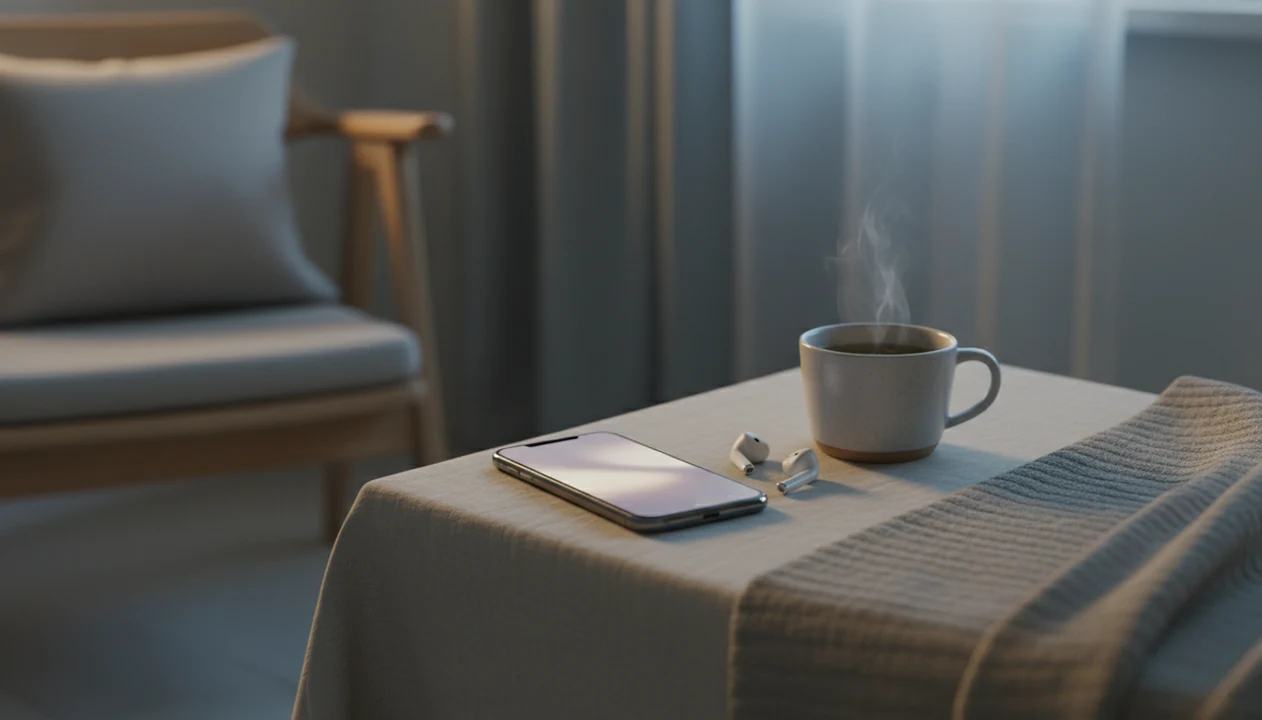
A self hypnosis for anxiety app can be a practical calming tool for adults who want guided relaxation, focused attention, and realistic suggestions for everyday worry or stress. It should be used as support, not as a cure or replacement for therapy, medication, crisis care, or medical advice.
> Definition: A self hypnosis for anxiety app is a mobile app that guides adults through relaxed focus, breathing, imagery, and calming suggestions to support anxiety-related stress management.
TL;DR
- Use self-hypnosis audio when you are safe, seated or lying down, and not driving or multitasking.
- Treat hypnosis app sessions as complementary anxiety support, especially alongside CBT skills, therapy, medication plans, sleep routines, or other professional guidance.
- Escalate to a licensed clinician or emergency support if anxiety becomes severe, disabling, panic-heavy, trauma-linked, or connected to self-harm thoughts.
Self hypnosis for anxiety app basics at a glance
A self hypnosis for anxiety app is guided audio support for adults, not a medical treatment plan. It usually combines relaxation cues, focused attention, imagery, and suggestion so the listener can practice a calmer response to worry.
You do not hand over control. Most people remain aware, can hear the narrator, and can stop the session if they want to. A skeptical beginner might still ask, “Am I supposed to feel hypnotized?” Often the answer is simpler: you may just feel quieter, heavier, or less pulled into the next anxious thought.
The need is real. NIMH estimates that 31.1% of U.S. adults experience an anxiety disorder at some point in life source, and APA’s 2023 stress survey found many adults reported anxiety or overwhelm during the prior month source. Clinicians typically recommend evidence-based care, such as CBT, for anxiety disorders; self-hypnosis fits better as complementary practice.
Five facts about self hypnosis anxiety support
- Self-hypnosis is a trainable skill. It teaches relaxed attention, body settling, and realistic inner suggestions, rather than forcing a special state.
- Apps turn the method into repeatable audio. A playlist of short guided sessions can make practice easier than remembering every step alone.
- Mayo Clinic treats hypnosis as complementary. Mayo Clinic notes hypnosis may help people cope with stress and anxiety, but it is usually used with other care rather than instead of it source.
- Consumer app evidence is thinner. Clinician-delivered hypnosis has more formal study than most store-listed apps.
- Fit matters. For everyday worry, a short session tied to the actual trigger is often easier to use than a general relaxation track because the suggestion matches the moment.
Practice is the boring part. It also matters most.
How a self hypnosis for anxiety app works
A self hypnosis for anxiety app works by guiding the listener through induction, focused attention, relaxation, imagery, and goal-directed suggestion. The behavioral aim is to reduce arousal and rehearse a calmer response before anxiety takes over the whole room.
In practice, the narrator may ask you to loosen your jaw, drop your shoulders, breathe more slowly, and picture a manageable version of the situation. Those cues can interrupt the anxiety loop: trigger, body alarm, worried thought, more alarm. The app is not making you sleep, performing stage hypnosis, or playing passive background music.
Good hypnosis and self-hypnosis mobile apps with guided meditation, sleep sessions, anxiety relief, and habit-building audio programs deliver structured calming practice, not diagnosis, crisis support, or guaranteed symptom removal.
Quality varies. Some tracks labeled “hypnosis” are really ambient music with a few soothing phrases. Structured sessions usually have a clear opening, focused suggestions, and a return to alertness.
Before using a hypnosis app for worry
“Should I use a hypnosis app for worry when I feel anxious?” Use one only when you are in a safe place, seated or lying down, and free from tasks that require alert attention. Not in the car. Not while operating equipment.
Set reasonable expectations first. The session may help you notice and reset, but it may not remove symptoms on demand. A phone alarm labeled evening routine can help you practice before worry becomes a full bedtime spiral, rather than after two hours of checking the ceiling.
Choose the session by trigger. Bedtime worry, social tension, exam stress, and work stress need different language. If your main problem is tracking when anxiety appears, a guide to what app identifies stress patterns may be more useful than choosing audio at random.
Keep prescribed therapy, medication, or clinician guidance in place. Self-hypnosis anxiety support works best as a low-pressure practice inside a broader plan.
How to use a self hypnosis for anxiety app safely
Use a self hypnosis for anxiety app safely by choosing a calm setting, starting short, and stopping if distress rises. The point is steady practice, not pushing through discomfort.
- Choose a safe setting where you can sit or lie down without driving, cooking, supervising hazards, or multitasking.
- Start with a short session of about 5 to 10 minutes, especially if hypnosis is new or anxiety is already high.
- Use headphones if helpful, but keep the volume gentle and avoid anything that blocks safety awareness in public spaces.
- Notice your response afterward by naming one body change, one thought shift, or one thing that did not help.
- Practice regularly a few times per week, then adjust the session type to match your actual anxiety trigger.
- Stop the session if panic, dissociation, trauma memories, or fear increases.
For phone-based routines, our guide to how to calm anxiety with phone hypnosis covers simple session timing and setup.
Common mistakes when using self hypnosis for anxiety
The most common mistake is waiting until anxiety is already at full volume, then expecting one audio session to fix it. Self-hypnosis usually works better as rehearsal: short, safe, repeated practice before symptoms peak.
- Practice early when worry is building, not only during panic. Once your body is in full alarm, breathing cues and imagery may feel harder to follow.
- Match the session to the real trigger. A generic “relax deeply” track may miss the mark if the problem is bedtime rumination, social dread, travel anxiety, or a specific work situation.
- Protect attention by listening only when you are not driving, cooking, multitasking, or supervising children near water, stairs, traffic, heat, tools, or other hazards.
- Keep treatment in place if you use therapy, medication, exposure work, CBT skills, or clinician guidance. Feeling calmer for 12 minutes is useful, but it is not the same as treating an anxiety disorder.
- Test several short practices before deciding it does nothing. One neutral session may mean the voice, pacing, timing, or topic was wrong, not that the skill is useless.
Red flags a stress relief hypnosis app cannot handle
A stress relief hypnosis app cannot handle emergencies, severe impairment, or symptoms that need diagnosis. If any red flag appears, stop treating the app as the main support.
- Self-harm or suicidal thoughts. If you might hurt yourself, feel unsafe, or cannot stay alone safely, contact emergency services or a crisis line now.
- Daily functioning breaks down. Panic or anxiety that prevents work, caregiving, eating, sleeping, or basic errands needs licensed assessment.
- Trauma symptoms intensify. Flashbacks, dissociation, nightmares, or feeling back inside a past event should be handled with trauma-informed care.
- Major depression or substance misuse appears. A guided audio session cannot manage these risks by itself.
- Psychosis symptoms are present. Hearing voices, paranoia, or losing contact with reality requires professional support.
Noise-canceling headphones in a break room can help ordinary stress. They are not enough for danger.
Common myths about hypnosis app anxiety support
Misunderstandings make some people avoid helpful practice and make others expect too much. These four myths are the ones we see most often.
- Myth: hypnosis takes over your mind. Most listeners remain aware, hear the session, and can open their eyes or stop playback.
- Myth: an app can cure anxiety instantly. A hypnosis app for worry may support relaxation, but anxiety disorders usually need broader care.
- Myth: hypnosis is the same as sleep. Hypnosis is more like relaxed focus. You may feel drowsy, but the session is built around attention and suggestion.
- Myth: every calming track is clinical hypnosis. Some audio is meditation, music, or breathwork with a hypnosis label.
A useful comparison is simple: meditation often trains present-moment awareness, while hypnosis usually adds a specific suggestion, such as handling tomorrow’s meeting with steadier breathing. For confidence-specific situations, a best hypnosis app for confidence guide may fit better than general anxiety audio.
Evidence behind self hypnosis for anxiety support
The evidence is strongest for hypnosis delivered by trained clinicians as part of care, and much thinner for consumer apps used alone. Self-hypnosis audio may help relaxation and coping, but that is not the same as treating an anxiety disorder.
Clinician-delivered hypnosis has promising evidence in some stress, pain, medical-procedure anxiety, and coping contexts, especially when combined with standard care. For anxiety disorders, established guidance still points first to treatments such as CBT, exposure-based therapy, medication when appropriate, and clinician assessment. Relaxation can lower arousal for a while; it does not prove that the core disorder, avoidance patterns, panic cycles, or trauma responses are being treated.
Use the evidence in this order:
- Separate the setting: ask whether a study tested a licensed clinician, a supervised self-hypnosis protocol, or a public app store product.
- Check the outcome: look for anxiety symptoms, functioning, panic frequency, or avoidance, not only “felt relaxed.”
- Treat app claims cautiously: app evidence is promising for access and practice, limited for diagnosis-level anxiety, and not established for emergency or severe symptoms.
- Keep safety boundaries: follow medical advice for worsening distress, suicidal thoughts, psychosis symptoms, trauma reactions, or medication questions.
Quality checks for a self hypnosis for anxiety app
A quality self-hypnosis tool makes realistic claims, explains the session goal, and does not pressure users to abandon care. Check the app before you use it when you are already anxious.
| Quality check | Better sign | Caution sign |
|---|---|---|
| Claims | Says it supports stress management | Promises to cure anxiety |
| Credentials | Names creators, reviewers, or clinical input | No author information |
| Session design | Clear goal, gentle pacing, return cue | Vague “mind control” language |
| Privacy | Explains data collection and storage | Hard-to-find privacy terms |
| Care boundaries | Says it is not medical care | Tells users to stop treatment |
A systematic review of 407 hypnosis apps found that 19.9% targeted relaxation or stress reduction, making stress relief a common app goal source. Tools like HypnoApp, Calm, Headspace, and Reveri may differ widely in how they describe hypnosis, meditation, and safety boundaries. If cost is your first filter, compare options in our free hypnosis app for anxiety guide before choosing.
Limitations
Self-hypnosis apps have real limits, and those limits matter most when anxiety is severe. A calming track can support a routine, but it cannot assess risk, diagnose symptoms, or replace a clinician.
- Evidence for consumer hypnosis apps is limited compared with clinician-delivered hypnosis and established anxiety treatments.
- Not everyone finds hypnosis easy, comfortable, or useful.
- Apps should not be the sole treatment for moderate to severe anxiety, trauma symptoms, major depression, substance misuse, psychosis, or suicidal thinking.
- Claims about curing anxiety or replacing CBT, medication, psychiatrists, or licensed therapists are not supported.
- Listening while driving, multitasking, caregiving around hazards, or using machinery is risky.
- Results depend on practice consistency and whether the session matches the anxiety trigger.
- Some sessions end too loudly or get interrupted by notifications, which can break relaxation.
A guided self-hypnosis tool can be part of a calmer routine for adults, but it should sit beside professional care when symptoms call for it.
FAQ
Does self hypnosis help anxiety?
Self-hypnosis may help some adults manage stress and anxiety by supporting relaxation, focused attention, and calmer self-talk. It is not a guaranteed cure for anxiety disorders.
Is hypnosis safe for anxiety?
Hypnosis is generally low risk for many adults when used in a safe setting and with realistic expectations. Severe, worsening, trauma-linked, or unsafe symptoms require professional care.
Can hypnosis apps stop panic attacks?
Hypnosis apps may support calming practice before or after panic symptoms. They should not be relied on alone for frequent, severe, or disabling panic attacks.
Do hypnosis apps replace therapy?
No. Hypnosis apps do not replace CBT, licensed therapy, psychiatric care, crisis support, or prescribed medication.
Can I listen during driving or other alert tasks?
No. Do not use hypnosis audio while driving, operating machinery, cooking, supervising hazards, or doing anything that requires alert attention.
How often should I practice self hypnosis for anxiety?
Many adults start with short sessions a few times per week. Consistency usually matters more than long sessions.
Will I lose control during hypnosis?
Most people remain aware during hypnosis and can stop the session. Hypnosis does not give an app or narrator control over your mind.
Is hypnosis the same as meditation?
Hypnosis and meditation can both use relaxation and focused attention. Hypnosis usually adds goal-directed suggestions, such as rehearsing a calmer response to worry.
When should I get professional help for anxiety?
Get professional help if anxiety involves suicidal thoughts, inability to function, severe panic, trauma symptoms, substance misuse, depression, psychosis symptoms, or worsening distress. HypnoApp and similar tools are not emergency services.