How To Calm Anxiety With Phone Hypnosis Safely
To use how to calm anxiety with phone hypnosis safely, listen only when you are seated or lying down in a safe place, follow a short guided breathing-and-relaxation session, and stop if you feel more panicked, dissociated, or triggered. Phone hypnosis can support everyday anxiety relief, but it is not a cure or a substitute for professional mental health care.
Definition: Phone hypnosis for anxiety means using a smartphone-based guided hypnosis or self-hypnosis audio to enter a relaxed, focused state and practice calming suggestions for everyday stress.
- Use phone hypnosis only when you can fully focus, never while driving, working, or multitasking.
- A safe self hypnosis anxiety routine includes grounding, slow breathing, body relaxation, calm suggestions, and a clear return to alertness.
- Stop the audio and seek professional help if symptoms intensify, traumatic memories surface, or you have severe anxiety, PTSD, psychosis, or suicidal thoughts.
Phone hypnosis for anxiety at a glance
Phone hypnosis for anxiety is guided audio that helps you slow breathing, relax muscles, reduce mental noise, and practice calmer self-talk. It is meant for everyday stress or mild to moderate anxiety moments, not emergencies or severe mental health symptoms.
Stat callout: NIMH estimates that 31.1% of U.S. adults experience an anxiety disorder at some point, and about 19.1% have one in a given year source. Anxiety is common, but common does not mean simple.
In practice, phone hypnosis usually sounds like a narrator asking you to loosen your jaw, drop your shoulders, and notice your breathing. Good hypnosis and self-hypnosis mobile apps with guided meditation, sleep sessions, anxiety relief, and habit-building audio programs deliver structured relaxation practice, not guaranteed medical treatment.
The strongest evidence is for hypnosis and hypnotherapy broadly. Evidence for every consumer app is thinner, so use reasonable expectations.
Five safety facts about phone hypnosis for anxiety
- Hypnosis uses relaxed focus plus suggestions. The aim is to influence anxious thoughts and body arousal, not remove your awareness or control.
- A safe phone routine has a clear arc. It should include a quiet setting, breathing, relaxation, calm suggestions, and re-alerting before you stand up.
- Research supports hypnosis for anxiety broadly. A 2019 meta-analysis of 15 randomized controlled trials found hypnosis reduced anxiety with a moderate-to-large weighted effect size of 0.79 source.
- Hypnosis usually fits alongside proven care. Clinicians typically recommend evidence-based options such as CBT for anxiety disorders, with self-hypnosis used as a support skill when appropriate.
- Stop if your nervous system escalates. More panic, dissociation, trauma activation, or loss of grounding are reasons to pause and get help.
A helpful way to think about it is simple: the audio is a practice space, not a diagnosis tool.
Phone hypnosis effects on the anxiety nervous system
Phone hypnosis works by combining relaxed attention, reduced distraction, guided imagery, progressive muscle relaxation, and present-tense suggestions. In plain language, it gives your mind one calm track to follow when anxiety is pulling attention everywhere else.
Anxiety often involves sympathetic arousal. That is the “alarm system” side of the nervous system, with faster breathing, tense muscles, and scanning for threat. Relaxation practices may support parasympathetic calming, which is the body’s rest-and-settle mode. A 2024 narrative review reported that hypnosis and hypnotherapy may reduce sympathetic activation and increase parasympathetic tone source.
That does not mean an app treats, diagnoses, prevents, or cures anxiety disorders. It means a guided audio session may help some listeners notice and reset body arousal. The moment your shoulders drop during a desk session can be useful, but it is still self-care.
Before you start a self hypnosis anxiety routine
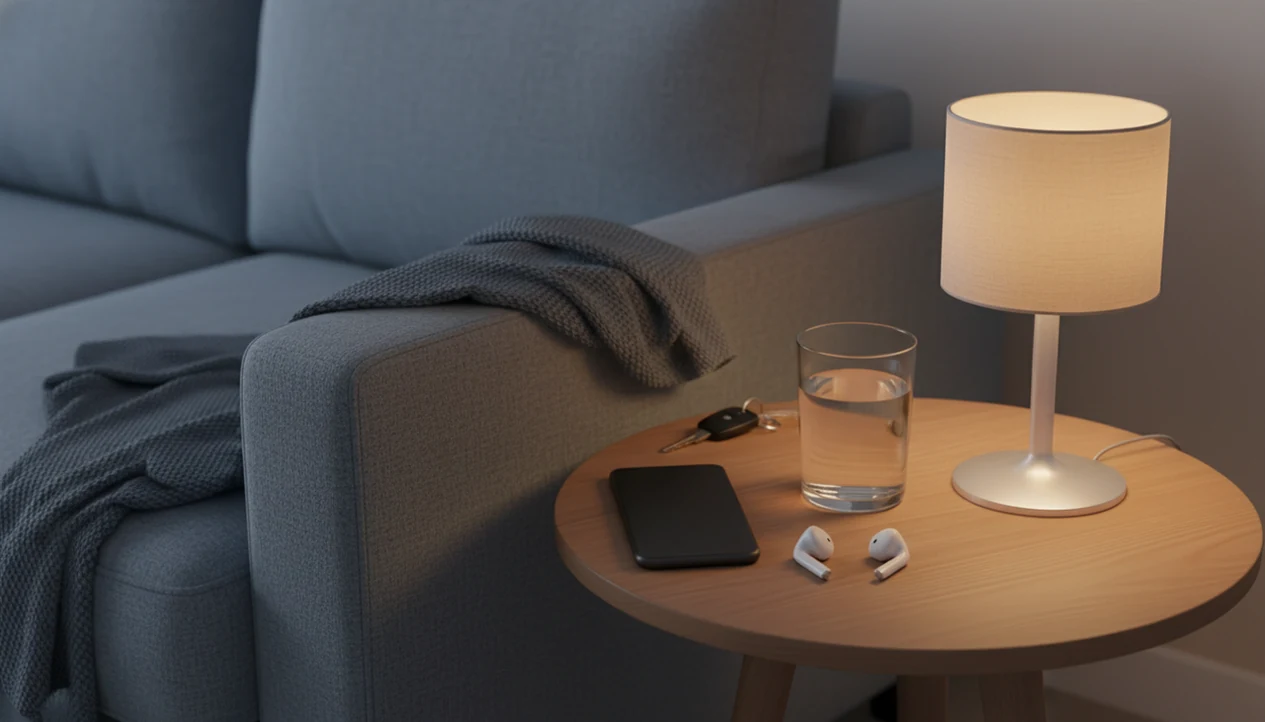
Before you press play, choose a seated or lying position in a private, safe, low-interruption place. A bedroom chair, quiet corner, or parked-at-home couch is better than a busy sidewalk.
Keep it short at first. Five to twelve minutes is enough for an anxiety reset, especially if you are new and wondering, “Am I supposed to feel hypnotized?” You do not need to chase a special state.
Use headphones only if they feel comforting and do not block important safety awareness. Turn on do-not-disturb, dim the screen, and place the phone face down if checking it becomes compulsive. The notification banner for bedtime audio can wait.
Do not use hypnosis audio while driving, operating equipment, supervising children, cooking, or doing work that requires attention. If you want a broader setup guide, a self hypnosis for anxiety app routine can help you compare session types.
How to use calming hypnosis on phone in six steps
Use calming hypnosis on phone as a short, structured reset, not as background sound. The steps should begin with safety and end with full alertness.
- Set a safety context by sitting or lying down and deciding you can stop anytime.
- Start with grounding by naming three things you see, two things you hear, and one thing you feel.
- Breathe slowly with a longer exhale than inhale, such as four in and six out.
- Relax major muscle groups from face to shoulders to hands to belly to legs.
- Repeat simple present-tense suggestions such as “I am safe in this moment” or “I can let this wave pass.”
- Return to alertness by counting up, opening your eyes, stretching, and checking where you are.
For many people, phone hypnosis is easier than unguided relaxation because the voice keeps the sequence moving when anxious thoughts interrupt. A blank notebook page before revision can feel loud. The same is true of silence during anxiety.
Step 1: Set a safe context for phone hypnosis for anxiety
“Am I physically safe, able to pause, and free from urgent responsibilities for the next few minutes?” Ask that before any phone hypnosis for anxiety session. If the honest answer is no, choose eyes-open grounding instead.
Avoid closing your eyes during active panic if that makes symptoms worse. Look around the room, name objects, feel your feet, and keep the session optional. Control remains with you. You can pause, open your eyes, change position, or stop at any time.
Guided hypnosis apps can provide relaxation, self-hypnosis, meditation, and sleep audio sessions for adults seeking support with stress and habits. They should not be framed as treating or curing anxiety disorders. If you are comparing options, an app that calms stress with hypnosis guide can help you check for safety language before you download.
Step 2: Use breathing and muscle relaxation for calming hypnosis on phone
Breathing and muscle relaxation are the bridge from anxious arousal into a calmer listening state. Try inhaling for four counts and exhaling for six counts, repeated for five to eight cycles.
Then scan the body gently: jaw, shoulders, hands, chest, belly, legs, feet. Do not force calm. Notice tension, soften what you can, and leave the rest alone. Sometimes the jaw releases before the thoughts do.
A narrator may say, “Let the shoulders drop,” and that small cue can work better than arguing with every worry. Treat anxiety sensations as passing body signals, not proof of danger. The racing heart is uncomfortable. It is not automatically an emergency.
If you track patterns over time, a tool that explains what app identifies stress patterns may help you notice when resets are most useful.
Step 3: Add anxiety hypnosis suggestions without fighting thoughts
Anxiety hypnosis suggestions should be short, believable, and present tense. Avoid exaggerated promises like “I will never feel anxious again,” because your mind will probably reject them.
Use phrases that support coping: “I can slow down,” “This feeling can rise and fall,” “My feet are on the floor,” and “I can take the next small step.” These statements do not deny the problem. They give your attention something steadier to hold.
Suggestions should never override medical advice or pressure you to ignore real danger. If a therapist has taught CBT skills, pair the audio with thought labeling, cognitive reframing, or planned exposure when applicable; NIMH lists CBT and exposure-based approaches among common evidence-based treatments for anxiety disorders source. For example, label “catastrophe thought,” breathe once, and return to the next instruction.
Note cards trembling in one hand before a presentation may still tremble. The goal is functioning with less fear, not becoming numb.
Common myths about phone hypnosis for anxiety
Phone hypnosis is often misunderstood, which can lead to unsafe expectations. The safer reality is more practical and less dramatic.
| Myth | Safer reality |
|---|---|
| Phone hypnosis can cure every anxiety disorder by itself. | It may support relaxation, but anxiety disorders often need therapy, skills practice, medication discussion, or other professional care. |
| Hypnosis means losing control of your mind. | Most people remain aware and can pause, open their eyes, or stop the session. |
| Every app-store hypnosis audio is evidence-based and safe for everyone. | Scripts, credentials, safety design, and evidence standards vary widely across apps and creators. |
| Hypnosis audio is safe background sound while driving or multitasking. | It should never be used during driving, work tasks, cooking, or anything requiring attention. |
If cost matters, a free hypnosis app for anxiety can be worth reviewing, but free still needs safety checks. A session ending too loudly or a notification interrupting the track can undo the reset fast.
When to seek professional help for anxiety
Seek professional help when anxiety feels unsafe, severe, confusing, or bigger than self-care can hold. Phone hypnosis can be a support skill, but it should not delay diagnosis or evidence-based care.
Some signs are urgent: suicidal thoughts, urges to harm yourself, hearing or seeing things others do not, feeling detached from your body or reality, or losing time and orientation. A trauma history, PTSD symptoms, or sessions that bring up flashbacks are also reasons to use hypnosis only with clinician guidance.
If panic gets worse during a session, do not push through it.
- Stop the audio and open your eyes if they are closed.
- Reorient by naming where you are, the date, and three objects in the room.
- Ground through your feet, a cold drink, or a steady object in your hand.
- Contact a therapist, doctor, crisis line, or emergency services if you cannot settle or stay safe.
- Plan follow-up care if anxiety is frequent, disabling, trauma-linked, or interfering with sleep, work, school, or relationships.
Severe anxiety deserves proper assessment. Treatment may include therapy, exposure-based skills, medication discussion, or coordinated care, not just another audio track.
Limitations
Phone hypnosis has real limits, and those limits matter most when anxiety feels intense. Use it as a low-pressure practice, not as your whole care plan.
- Research supports hypnosis for anxiety broadly, but evidence is limited for consumer smartphone app delivery specifically. - Phone hypnosis is not primary treatment for severe anxiety disorders, PTSD, psychosis, self-harm risk, or suicidal thoughts. - Results vary. Some people calm down quickly, while others feel little effect or dislike guided audio. - Over-reliance on an app can delay diagnosis, therapy, exposure practice, problem-solving, or medication discussions when needed. - App quality, practitioner credentials, scripts, safety design, and evidence standards vary widely. - Stop immediately and contact a licensed professional or crisis support if hypnosis increases panic, triggers trauma memories, causes dissociation, or creates unsafe urges. If you might hurt yourself or cannot stay safe, call or text 988 in the U.S. and Canada, or contact local emergency services; see 988 Lifeline guidance at source. - Longer sessions are not automatically better, especially when you are tired, overwhelmed, or checking the phone repeatedly.
If you decide to download anxiety hypnosis app sessions, review safety notes before the first listen.
FAQ
Does phone hypnosis help anxiety?
Phone hypnosis may help everyday anxiety for some people by combining relaxation, breathing, and calming suggestions. It is not guaranteed and should not be treated as a cure.
Is phone hypnosis safe?
Phone hypnosis is generally safest when used seated or lying down in a quiet place, with clear permission to stop. People with severe symptoms should use it only alongside professional support.
Can hypnosis stop panic attacks?
Hypnosis may support calming between episodes, but it should not be relied on to stop acute or worsening panic. Eyes-open grounding and professional care may be needed.
How long should phone hypnosis sessions last?
Short reset sessions of 5 to 12 minutes is a reasonable starting point for anxiety moments. Longer sessions should be used only when you are safe and comfortable.
Can I use hypnosis daily for anxiety?
Daily use can be reasonable for relaxation if it does not replace treatment, sleep, social support, or active coping. HypnoApp and similar tools should remain support tools.
Can I drive while listening to hypnosis?
No. Hypnosis audio should never be used while driving or doing any task that requires attention.
What should anxiety hypnosis suggestions say?
Use short, believable statements such as “I can slow down,” “My feet are on the floor,” or “I can take the next small step.” Avoid promises that deny real problems.
Is YouTube hypnosis enough for anxiety?
Free videos can feel calming, but quality and safety standards vary. Significant anxiety, trauma symptoms, or depression with anxiety need professional guidance.
When should I stop a hypnosis session?
Stop if you feel more panicked, dissociated, trauma-activated, confused, unsafe, or unable to reorient. Seek licensed support or crisis help when safety is uncertain.