AI Hypnosis App Vs Prerecorded Sessions: Safety, Privacy, And Fit
AI hypnosis app vs prerecorded sessions is not a simple winner-take-all choice: AI hypnosis can fit your goals more closely, while prerecorded sessions are easier to review, repeat, download, and keep private. Choose AI-personalized hypnosis when customization matters and the app has strong guardrails; choose prerecorded hypnosis sessions when consistency, offline use, and predictable content matter more.
> Definition: HypnoApp is a hypnosis app that provides guided hypnosis, self-hypnosis, meditation, and sleep audio sessions for adults seeking relaxation and better habits.
TL;DR
- AI hypnosis apps personalize scripts from your goals, context, and feedback, but that usually means more personal data processing.
- Prerecorded hypnosis sessions are fixed audio tracks that are easier to quality-check and use offline, but they cannot adapt to your exact situation.
- Neither option should be treated as a proven medical treatment or replacement for qualified professional care.
AI hypnosis app vs prerecorded sessions, side by side
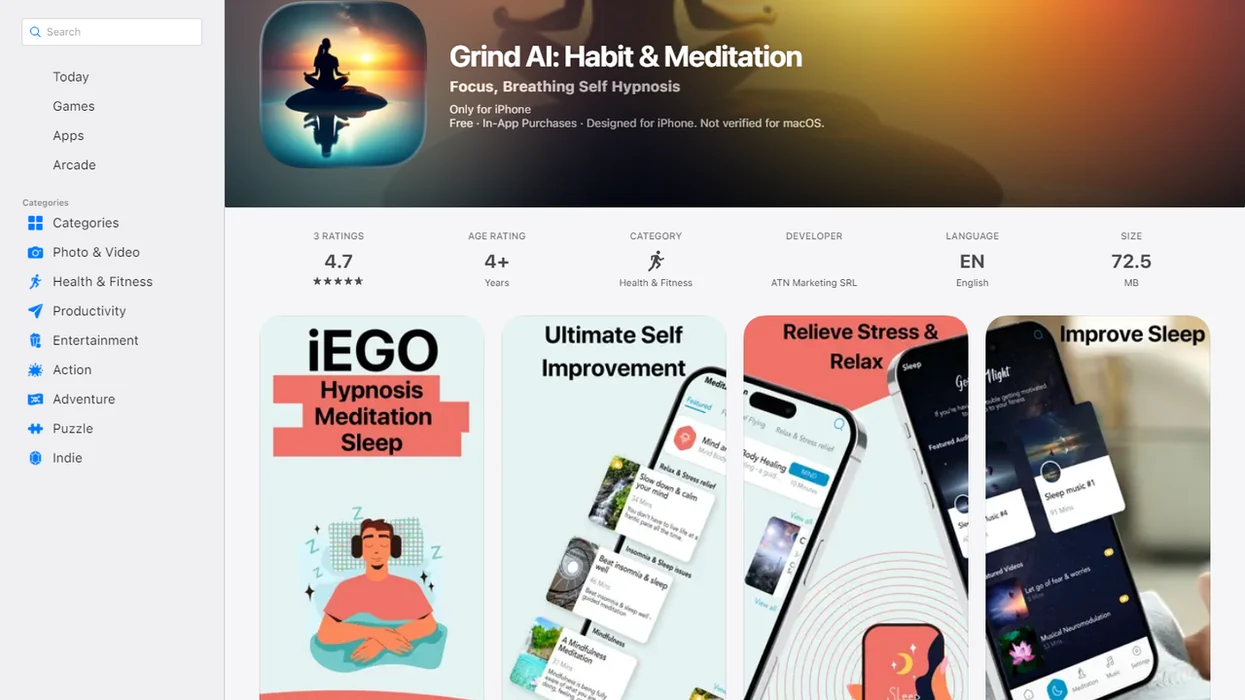
Side-by-side captures of the compared products. Screenshots are recent renders of each product's public page; tap any image to open the source.
AI Hypnosis App Vs Prerecorded Sessions At A Glance
| Factor | AI hypnosis app | Prerecorded hypnosis sessions |
|---|---|---|
| Personalization | Adapts to goals, prompts, and feedback | Same track for every listener |
| Quality control | Harder to review every output | Easier to review before release |
| Privacy | Often needs more personal input | Can reduce data sharing if downloaded |
| Offline access | Varies by app and model design | Often easier to download |
| Consistency | May change each session | Highly repeatable |
| Voice quality | Synthetic or mixed | Often human-narrated |
| Safety guardrails | Depends on filters and review process | Depends on fixed script quality |
| Best fit | Specific situations and changing goals | Sleep routines, repeat practice, privacy |
AI wins for flexible personalization, while prerecorded sessions win for predictability and easier pre-review. Many apps marketed as AI are actually prerecorded libraries with recommendation logic, not tools that generate a fresh hypnosis script. If your phone is face down on the nightstand, that difference matters less than whether the session feels safe, calm, and usable.
The right choice depends on your goal, data comfort, and need for repeatable content.
Five Facts About AI Hypnosis Safety And Prerecorded Hypnosis Sessions
- A true AI hypnosis app generates or adapts scripts from user input; many so-called AI apps only recommend existing tracks.
- Prerecorded hypnosis sessions are easier to review in advance and usually have consistent structure and voice quality.
- AI personalization may improve relevance by using names, imagery, goals, and feedback, but poor prompts can create awkward or inappropriate suggestions.
- There is no strong head-to-head clinical evidence proving AI-generated hypnosis is better than prerecorded hypnosis audio.
- AI personalization often requires cloud processing of sensitive goals, habits, or emotions, while downloaded prerecorded sessions can reduce ongoing data exposure.
In a 2013 systematic review of 407 hypnosis-related apps, only 7% mentioned health care professional involvement, and none reported evidence of clinical effectiveness (PubMed: https://pubmed.ncbi.nlm.nih.gov/23859091/). That old app-store finding still shapes reasonable expectations today. The pocket check is real: before listening on a bus or at bedtime, check what the app actually does with your input.
How AI Hypnosis Apps And Prerecorded Hypnosis Sessions Work
An AI hypnosis app is a system that can use user inputs, preferences, feedback, and sometimes generative models to create or adapt a hypnosis script and audio. Prerecorded hypnosis sessions are fixed audio files organized by categories such as sleep, stress, confidence, habits, or relaxation.
A typical guided audio session includes an induction, deepening, goal-focused suggestions, and emergence. In plain terms, it helps you settle, focus, hear repeated suggestions, then return to normal alertness. The narrator might ask you to loosen your jaw and drop your shoulders; that cue can feel familiar whether the script is AI-made or fixed.
Recommendation AI
Recommendation AI chooses a track from a library based on tags, ratings, or your stated goal. It is not the same as fully personalized generative hypnosis.
Script-Generation AI
Script-generation AI writes or adapts the words of a session from your prompt. This is where prompt safety and content boundaries matter most.
Full Audio-Generation AI
Full audio-generation AI creates both the script and spoken audio. Voice synthesis can sound natural, but session endings, volume shifts, and pacing still need review.
Personalized HypnoApp Use Cases
AI hypnosis can adapt to specific goals, current situations, triggers, preferred imagery, tone, and feedback. It may fit a listener calming pre-flight nerves, trying to reduce late-night snacking, winding down after work, or building a confidence routine before a presentation.
For people comparing a personalized hypnosis app with a fixed audio library, relevance is the main appeal. A session that mentions the exact situation can feel easier to start. Note cards trembling in one hand before a speech is different from general “be confident” advice.
Personalization is a fit advantage, not proof of superior clinical effectiveness. Strong AI hypnosis apps should include content boundaries, safe prompt handling, realistic claims, and clear privacy settings. Well-designed hypnosis or self-hypnosis apps can support structured relaxation practice, sleep routines, and habit cues, but they should not promise anxiety treatment, diagnosis, emergency care, or guaranteed symptom relief.
Tools like HypnoApp can sit in this practical category when used as low-pressure practice.
Prerecorded Hypnosis Session Advantages
Prerecorded hypnosis sessions win when users want predictable wording, repeatable routines, offline access, and content that can be reviewed before release. Fixed tracks are easier for app teams, clinicians, or editors to quality-check than AI-generated scripts because the words do not change after approval.
Human narration and professional production also matter. A steady voice, clean pacing, and gentle music bed can make a bedtime routine easier to repeat. Favorite track saved for nights, same opening phrase, same relaxation cue. Familiarity does some of the work.
For sleep routines, repeatability is often the point. The body learns the sequence. However, prerecorded tracks may feel generic and cannot adjust to changing context or feedback. If you want more detail on offline listening, the best guided hypnosis app with offline downloads guide covers that practical tradeoff.
Privacy Differences In AI Hypnosis Apps And Prerecorded Sessions
Does AI hypnosis require more personal data than prerecorded hypnosis? Usually, yes, because AI hypnosis often needs inputs such as goals, habits, stressors, memories, preferences, and session feedback to personalize the session.
Cloud-based models may process that information unless the app clearly states otherwise. If an app does not clearly explain whether prompts are stored, used for model improvement, shared with vendors, or deletable, treat sensitive prompts as potentially retained. Privacy risk is about both the audio session and the text you type before it. A prompt like “help me calm down after a conflict with my manager” is more revealing than tapping a generic relaxation track. Closed office door at lunch, headphones in, one careful sentence typed into the app.
Prerecorded hypnosis sessions can often be downloaded and used offline, reducing ongoing data sharing. That does not mean prerecorded apps are automatically private. They may still collect account data, purchase data, device analytics, or listening history.
Use this checklist before choosing: read the privacy policy, check deletion controls, minimize sensitive prompts, avoid entering crisis details, and prefer offline mode when privacy is the top priority. The broader is hypnosis safe discussion also applies here.
Safety Guardrails For AI Hypnosis Apps
Hypnosis apps should be framed as relaxation, self-hypnosis, sleep, and habit-support tools for adults, not diagnostic or curative medical products. Clinicians typically recommend professional assessment for serious symptoms, crisis risk, or medical concerns rather than relying on a wellness app.
For general consumer context, the National Center for Complementary and Integrative Health describes hypnosis as a complementary approach with mixed evidence depending on the condition, not a stand-alone emergency or diagnostic service: https://www.nccih.nih.gov/health/hypnosis.
Strong guardrails include:
- No emergency use: The app should tell users not to use it for crisis support.
- No replacement-for-care claims: It should not present audio as therapy, diagnosis, or treatment.
- Crisis signposting: It should direct users to appropriate urgent support when needed.
- Human-reviewed templates: Core scripts should be reviewed before AI adapts them.
- Prompt filters: The app should block unsafe requests, self-harm content, and medical instructions.
- Age limits and stop controls: Adults should be able to pause, exit, or stop a session easily.
AI hypnosis safety includes hallucination risk, but not visual hallucinations. Here, “hallucination” means generated claims, unsafe advice, or inappropriate suggestions. Prerecorded sessions reduce that generative content risk because the words are fixed. A 2013 app review found limited reporting of health professional involvement and clinical effectiveness, so cautious claims still matter.
When To Seek Professional Help Instead Of A HypnoApp
Use professional help instead of a hypnosis app when there is crisis risk, self-harm concern, severe anxiety, trauma symptoms, or unexplained medical symptoms. Apps are not appropriate for diagnosis, treatment decisions, or urgent support, even when the voice sounds calm and the session feels personalized.
If a session brings up distressing material, stopping is a valid safety choice. This applies to AI-generated scripts and prerecorded tracks: AI prompt safety can reduce unsafe outputs, but it cannot understand your full history, and a fixed script cannot adjust when a memory, body sensation, or suggestion lands badly.
- Stop the session if the content feels frightening, shaming, disorienting, or too intense.
- Move to immediate safety if you might hurt yourself or someone else, and contact emergency services or a local crisis line.
- Contact a licensed clinician for severe anxiety, trauma reactions, persistent panic, depression, substance concerns, or symptoms that interfere with daily life.
- Seek medical care for chest pain, fainting, breathing trouble, neurological symptoms, severe pain, or new physical symptoms.
- Use apps only as support after risk is addressed, keeping prompts general and choosing reviewed, non-clinical relaxation content.
Five Steps To Choose Between AI Hypnosis And Prerecorded Sessions
Follow these five steps before choosing between AI hypnosis and prerecorded sessions:
- Set one non-medical goal, such as sleep wind-down, relaxation, confidence practice, or habit support.
- Decide whether personalization or repeatability matters more for that goal.
- Review privacy settings, offline access, account controls, and data deletion options.
- Test a short session while alert enough to stop if the content feels wrong.
- Reset your choice if the app makes unrealistic claims, asks for overly sensitive data, or feels uncomfortable.
Pick AI for customization; pick prerecorded for predictable, private, repeatable listening. For beginners comparing formats, AI hypnosis usually works best when the situation changes often, while prerecorded hypnosis fits people who want the same safe script each night.
If you are comparing app audio with in-person support, the hypnosis app vs hypnotherapist guide explains when professional care is the better fit.
Common Myths About AI Hypnosis Apps
Myth: if an app says AI, it must generate personalized sessions. Reality: many use recommendation logic over static audio, not true generative scripts.
Myth: AI hypnosis is automatically more effective. Reality: evidence is not strong enough for that claim. Most users are comparing comfort, relevance, privacy, and routine fit, not proven superiority.
Myth: hypnosis apps replace therapy or medical care. Reality: they are self-help and relaxation tools, not replacements for appropriate care. If symptoms are serious, professional support comes first.
Myth: AI hypnosis is mind control. Reality: reputable sessions are consensual guided audio using standard self-hypnosis structures. A skeptical beginner may still ask, “Am I supposed to feel hypnotized?” Often, you just feel focused or calmer.
Myth: prerecorded means outdated. Reality: fixed audio can be a strength when quality control and consistency matter. For adjacent comparisons, the hypnosis app vs meditation app debate can help clarify format differences.
Evidence Behind AI Hypnosis And Prerecorded Audio
The evidence is stronger for hypnosis as a broad clinical and research topic than for consumer mobile hypnosis apps. Direct AI-versus-prerecorded clinical comparisons are still limited, so superiority claims should be treated carefully.
A practical reading of the evidence looks like this:
- Separate the category first: hypnosis has been studied in clinical settings for selected uses, while app-based hypnosis is a newer delivery format with much less direct validation.
- Check the source type: PubMed-indexed reviews and NCCIH summaries are more useful than app-store copy, testimonials, or “AI-powered” badges.
- Ask what was tested: a human-delivered protocol, a fixed recording, a self-hypnosis app, and a generative AI script are not the same intervention.
- Treat personalization as engagement evidence: a session that uses your goal, preferred imagery, or recent feedback may feel more relevant and easier to finish, but that does not prove better clinical outcomes.
- Watch the claim language: promises to treat anxiety, cure insomnia, replace therapy, or guarantee results go beyond what the available app evidence can support.
Good evidence should narrow uncertainty. Marketing often widens it, especially when “personalized” is used as a shortcut for “proven.”
Limitations
Both AI hypnosis and prerecorded hypnosis have real limits. Keep these in view before trusting any app with sensitive goals or late-night worries.
- There is no strong head-to-head clinical research proving AI-generated hypnosis outperforms prerecorded hypnosis sessions.
- Many hypnosis apps have historically provided limited evidence of clinical effectiveness or health professional involvement.
- AI output quality depends on prompts, model behavior, safety filters, voice synthesis, and product review processes.
- Prerecorded sessions can be too generic for specific triggers or changing daily context.
- Privacy policies vary widely, and AI personalization may increase exposure of sensitive personal information.
- Hypnosis apps are not appropriate substitutes for emergency support, medical diagnosis, psychotherapy, or treatment for serious symptoms.
- Some users may dislike hypnosis-style language, repetition, or voice tone, regardless of whether the session is AI-generated or prerecorded.
- Session design matters in small ways. A track ending too loudly can break relaxation fast.
Apps such as HypnoApp, HypnoBox, Reveri, Calm, and Headspace vary in how they present self-hypnosis, meditation, and sleep audio. Compare claims carefully, especially when a feature sounds more clinical than it is.
FAQ
Is AI hypnosis safe?
AI hypnosis safety depends on app guardrails, prompt handling, user context, and avoiding medical or crisis use. It should be used as guided relaxation or self-hypnosis practice, not emergency support.
Are prerecorded hypnosis sessions safer?
Prerecorded hypnosis sessions are easier to review and repeat because the words are fixed. Safety still depends on script quality, narrator style, claims, and user suitability.
Is AI hypnosis more effective?
There is no strong evidence proving AI hypnosis is more effective than high-quality prerecorded hypnosis audio. Personalization may improve fit or engagement for some users.
Do hypnosis apps really use AI?
Some hypnosis apps use AI only to recommend existing tracks. True generative AI hypnosis creates or adapts a script from user input.
Can hypnosis apps replace therapy?
No. Hypnosis apps, including HypnoApp, should not replace professional mental health care, medical care, or diagnosis when those are needed.
Is AI hypnosis private?
AI hypnosis often processes personal input such as goals, habits, emotions, or preferences. Users should review privacy policies, deletion options, and cloud-processing details.
Can prerecorded hypnosis work offline?
Many prerecorded hypnosis tracks can be downloaded and used offline. Offline listening may reduce ongoing data exposure, but account and purchase data may still be collected.
What is personalized hypnosis?
Personalized hypnosis is guided audio adapted to a user’s goals, preferences, context, and feedback. In an app, it may use prompts, tags, or generative AI.
Who should avoid hypnosis apps?
People in crisis, people with serious symptoms, or anyone needing diagnosis or treatment should seek appropriate professional support. HypnoApp and similar tools are not substitutes for urgent or clinical care.